Van Security and Anti-Theft: How to Protect Your Camper Van
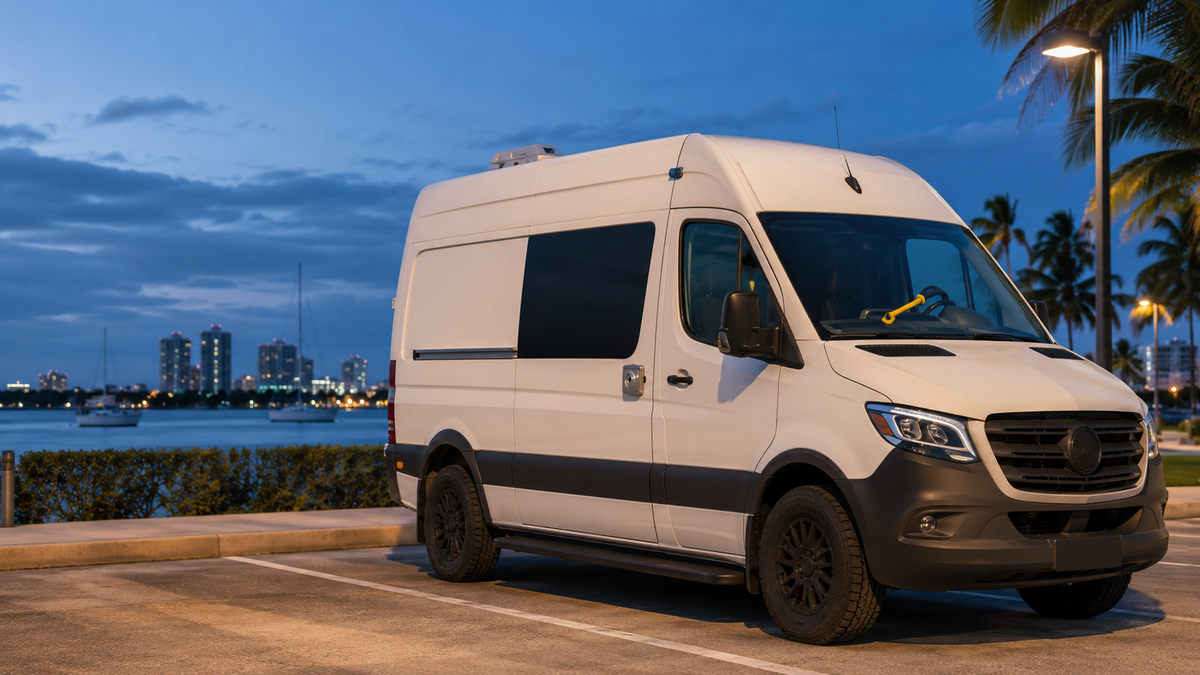
Effective van security and anti-theft protection does not come from finding one best device. A stronger approach uses multiple security layers to deter thieves, slow forced entry, detect suspicious activity, prevent vehicle theft, and support recovery if a van is stolen. At Mango Vans, security can be considered alongside the rest of a camper van's design, including access points, storage, electrical systems, and the interior layout. Planning security during a conversion produces a more integrated result than treating it entirely as an afterthought.
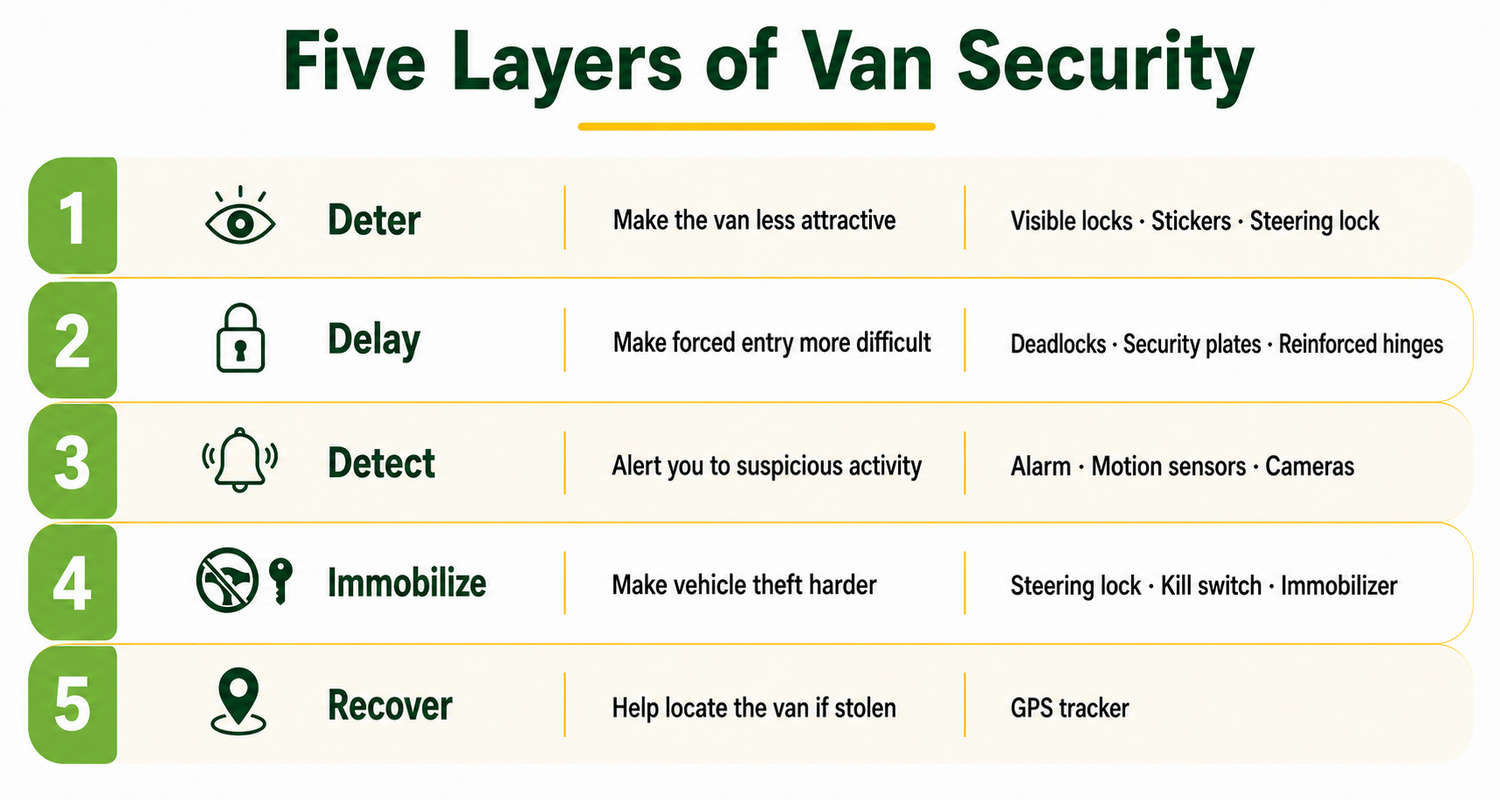
The Best Van Security Uses Multiple Layers
No single device covers every theft scenario. A layered approach addresses different risks simultaneously.
Van security maintenance matters alongside installation. Locks that are not engaged, alarms that are disabled, or cameras with dead batteries provide no protection.
What Are You Protecting Your Van Against?
Understanding the threat type helps match the right security measure to each risk.
Whole-vehicle theft. Someone attempts to steal the camper van itself. Steering wheel locks, immobilizers, and kill switches target this scenario.
Break-ins. Someone forces entry through a door or window to access the interior. Upgraded locks, deadlocks, and reinforced access points target this scenario.
Theft of valuables. Someone targets electronics, bikes, outdoor gear, or personal items inside or on the van. Secure and discreet storage, secure parking locations, and reducing visible valuables target this scenario.
A GPS tracker does not serve the same purpose as an upgraded door lock. Each layer serves a specific threat.
Physical Security: Locks, Doors and Windows
Physical security measures are the first line of defense and the most important layer for preventing break-ins.
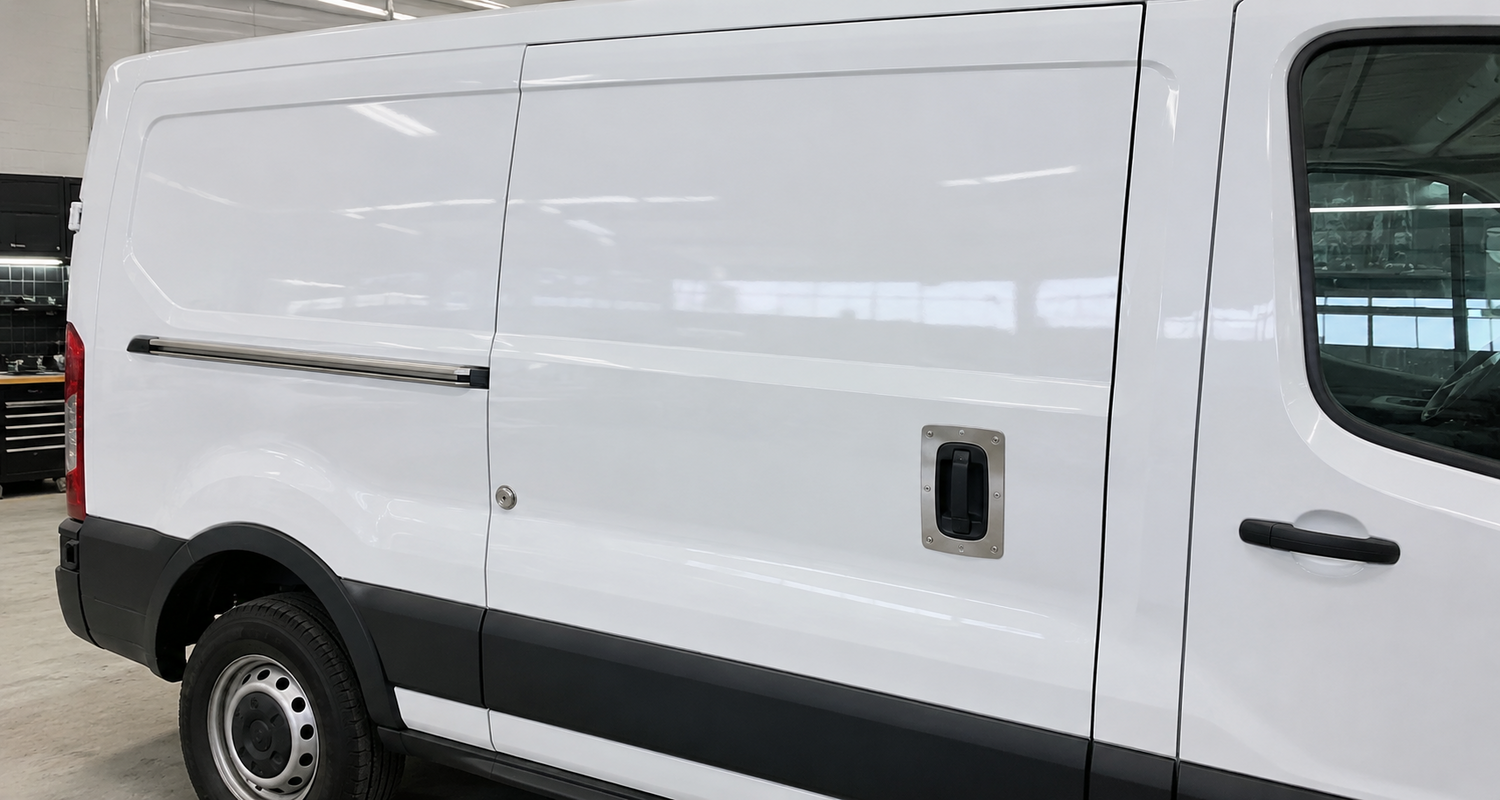
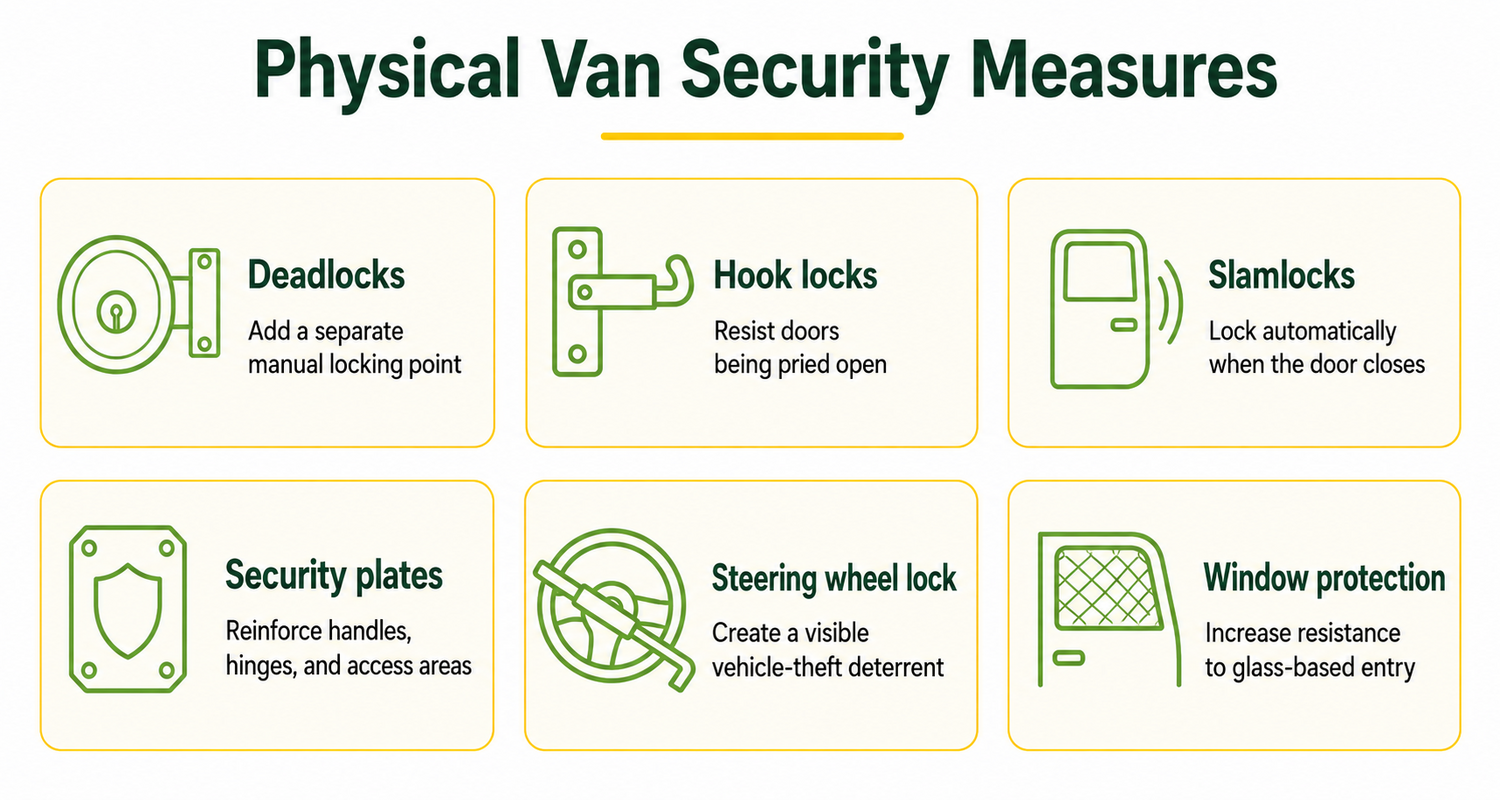
A van deadlock guide explains how deadlocks, hook locks, and slamlocks each serve a different role. Factory van locks are designed for convenience as much as security. Aftermarket upgrades reinforce the most vulnerable entry points.
The most effective physical measures depend on the primary risk. If whole-vehicle theft is the main concern, a steering wheel lock or immobilizer addresses that directly. If break-ins are the concern, door deadlocks and window protection are more relevant.
Alarms, Cameras and GPS Tracking
Electronic security measures detect activity, monitor the van, and support recovery after theft.
Alarm systems and sensors alert you or those nearby to unauthorized entry attempts. Motion sensors and shock sensors detect impacts before a door is opened. An audible alarm can deter opportunist thieves. Alarms detect. They do not physically prevent entry.
Security cameras monitor the exterior and interior of the van. Van camera installation requires routing power, choosing a mounting location, and managing footage storage. Cameras record events and can deter theft, but they do not stop someone who is determined to enter.
GPS trackers support recovery of a stolen van. They do not physically prevent theft or break-ins. A GPS tracker is most valuable as the recovery layer in a broader security setup.
Locks make access harder. Alarms and cameras help detect activity. Immobilization measures target vehicle theft. GPS tracking supports recovery.
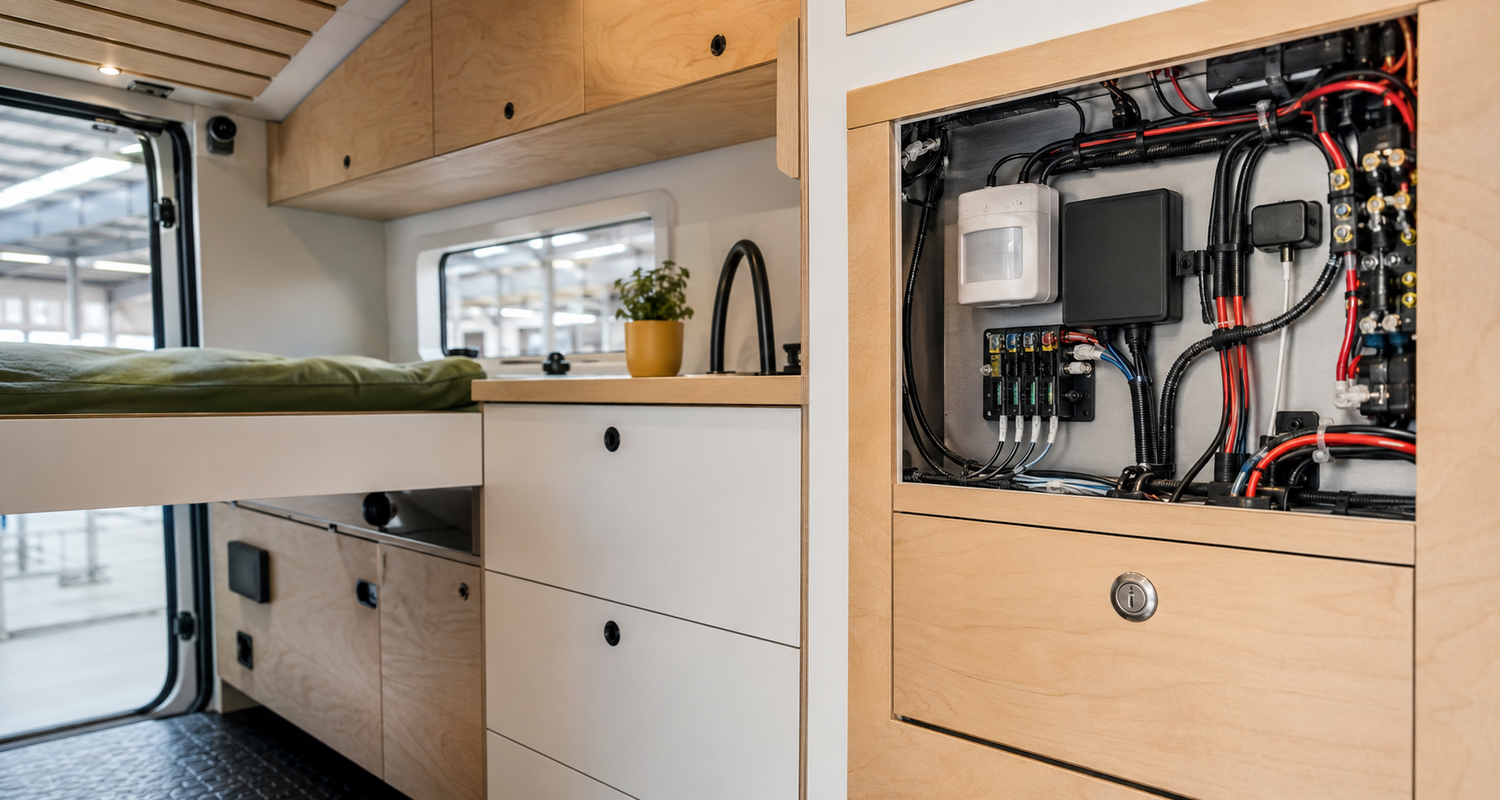
Build Security Into Your Camper Van Conversion
Most van security content focuses on devices added to a finished vehicle. Security by design considers these issues during the conversion itself.
Secure van storage built into the cabinetry makes it possible to keep valuables discreetly locked rather than relying entirely on exterior perimeter security. Storage designed around specific gear, electronics, and equipment during the conversion produces a cleaner result than retrofitted lockboxes.
Other security considerations benefit from early planning.
Camera mounting locations and power routing during the build
Electrical infrastructure for powered security devices
Window placement and privacy glazing
Reinforcement of door frames and hinge points before walls and panels are installed
Access-point decisions before the interior is finished
A professional conversion cannot guarantee theft prevention. What it can do is coordinate security considerations alongside cabinetry, electrical systems, windows, storage, and overall layout from the start.
Everyday Van Theft Prevention
Equipment and habits work best in combination.
Park in well-lit, visible locations where possible
Avoid leaving valuables visible inside the van
Lock all doors and windows consistently, even for short stops
Use multiple visible deterrents to raise the effort required for entry
Don't rely on one security measure alone
Van parking rules and restrictions vary by location. Knowing where overnight van parking is permitted and choosing well-used areas over isolated spots reduces exposure to opportunist theft.
Professional custom van builds can integrate security considerations into the overall conversion plan. Mango Vans designs and builds custom Sprinter, Transit, and ProMaster conversions out of South Florida. Contact Mango Vans to discuss a conversion designed around how you actually travel.
Frequently Asked Questions
What is the best security system for a camper van?
A layered system combining physical locks, alarms, cameras, immobilization measures, and GPS tracking is more effective than any single device. The right combination depends on the primary threat.
What is the most effective anti-theft device for a van?
It depends on the threat. Deadlocks and hook locks address break-ins. Steering wheel locks and immobilizers address vehicle theft. GPS tracking supports recovery.
What are the best security locks for vans?
Deadlocks, hook locks, and slamlocks each serve a different purpose. The right choice depends on the van, its doors, and how frequently the vehicle is accessed.
Do GPS trackers prevent van theft?
No. GPS trackers are primarily a recovery tool. They help locate a van after it has been stolen. They do not physically stop theft or forced entry.
Are steering wheel locks effective?
Yes, as a visible deterrent aimed at whole-vehicle theft. They are most effective as part of a layered system rather than as a standalone measure.
How can I protect valuables inside my camper van?
Use discreet locked storage, reduce the visibility of valuables from outside, lock the van consistently, and combine interior protection with exterior security measures.
How do you secure a camper van while sleeping inside?
Lock appropriate access points from the inside. Maintain at least one accessible emergency exit. Cameras and alarms can monitor the exterior while you sleep.
Can van security be added during a camper conversion?
Yes. Planning security during the build allows for integrated storage, camera infrastructure, reinforced access points, electrical routing for security devices, and privacy glazing.