Choosing Van Roof Racks That Work With Your Entire Roof
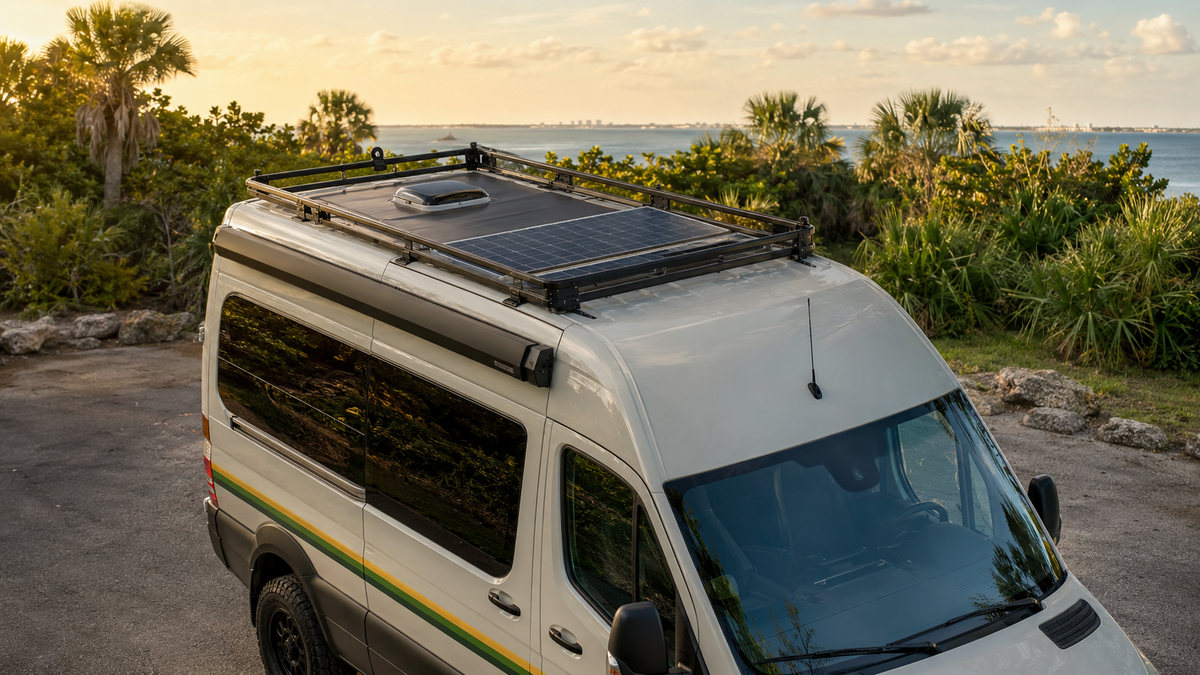
Choosing the right van roof rack is harder than it looks. The rack itself is only part of the decision. Vent fan location, solar panel placement, and height clearance all feed into that same decision. Van roof racks that work well are those selected after the rest of the roof is planned, not before.
Types of Van Roof Racks
Crossbar Systems
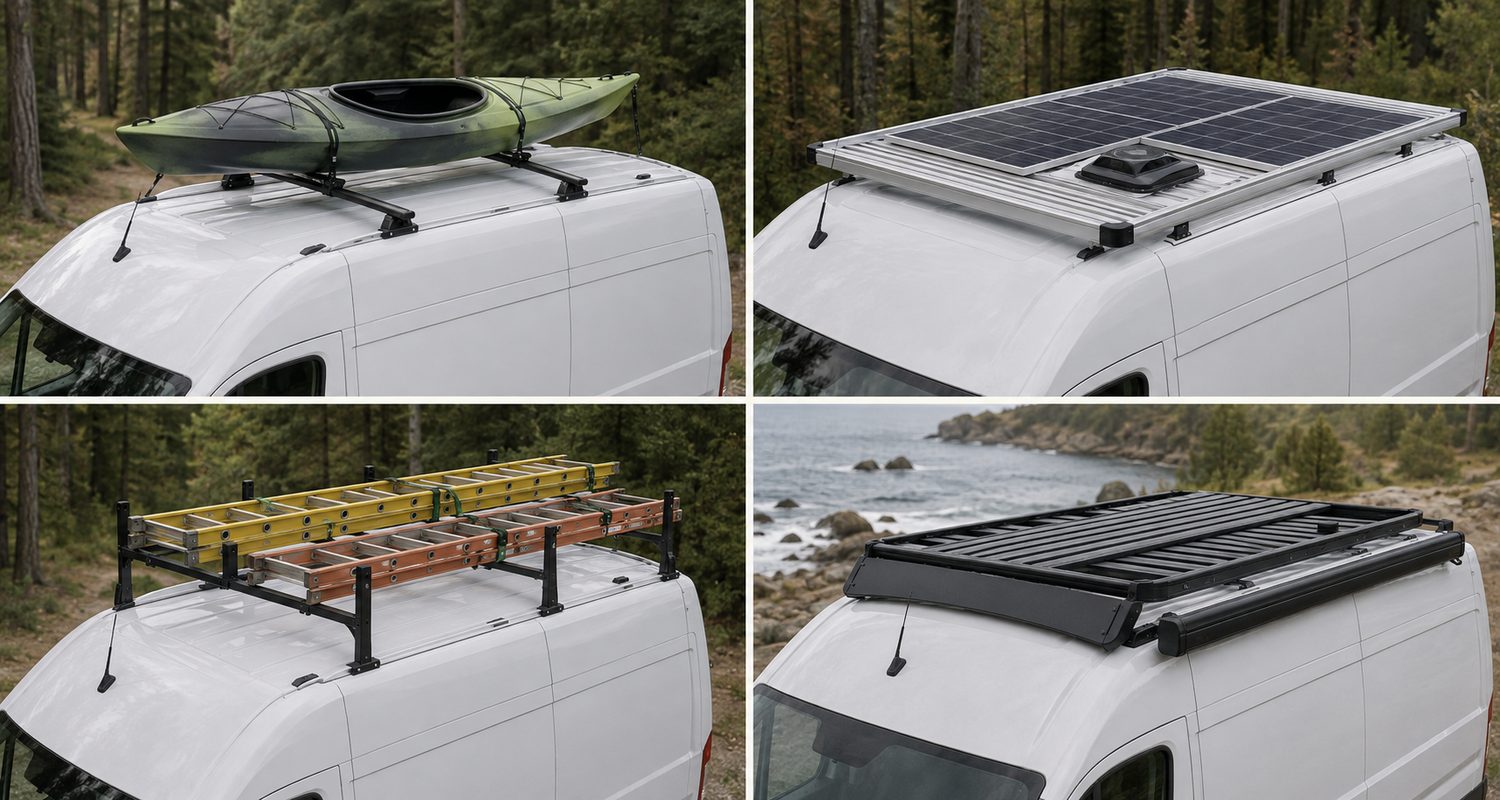
Crossbars are the lowest-profile option. Two or more horizontal bars span the van's width, mounting to factory tracks or clamping to the raised roof ribs. They suit lighter loads and occasional gear transport. Solar panels, kayaks, cargo boxes, and boards all work with crossbar systems. They add less height than full platform racks, which matters on high-roof vans.
Full Platform or Modular Racks
A full platform rack covers most or all of the roof with a walkable deck. These systems are the most versatile for mounting solar panels, vents, AC units, lights, and accessories in a coordinated layout. They add the most height and weight and require the most planning for cutouts around existing roof features.
Commercial Ladder Racks
Ladder racks are designed for commercial van use. They mount high above the roof to carry ladders, pipes, and long materials. They are not suited for camper van conversions where solar panels, vent fans, and lower clearance are priorities.
Awning-Ready Racks
Some racks include integrated side rails or bracket points for side awnings. This is a useful feature when an awning is part of the build plan. Adding an awning to a rack without this provision requires additional hardware.
Fitment: Make Sure the Rack Fits Your Van and Roof Height
Not all van roof racks fit all van models. Sprinter, Transit, and ProMaster each have different roof profiles, mounting rail positions, and available widths. Low-roof, medium-roof, and high-roof variants require different racks.
Sprinter-specific rack options differ from Transit or ProMaster options because the mounting rail geometry is different on each platform.
Confirm the rack is designed for the specific van model, year range, and roof height before ordering. Verify whether installation uses factory mounting tracks, rain gutters, or requires drilling. Drilling-free installation is preferable for leak risk and resale value.
What Will You Put on the Roof?
The rack type and size should follow from what needs to be mounted, not the other way around.
Van solar panel mounting can be done directly to the roof or via a rack's crossbars or deck. A rack raises them above the roof surface, improving airflow and keeping a vent fan below the panel plane.
Other common roof items to account for before choosing a rack are listed below.
Roof vent fans (require a cutout in the rack if a platform is used)
Rooftop air conditioning units (require a dedicated structural cutout and mounting footprint)
Antennas and communication equipment
Lights
Side awning bracket points
Aluminum vs Steel for Van Roof Racks
The material choice affects weight, durability, corrosion resistance, and cost.
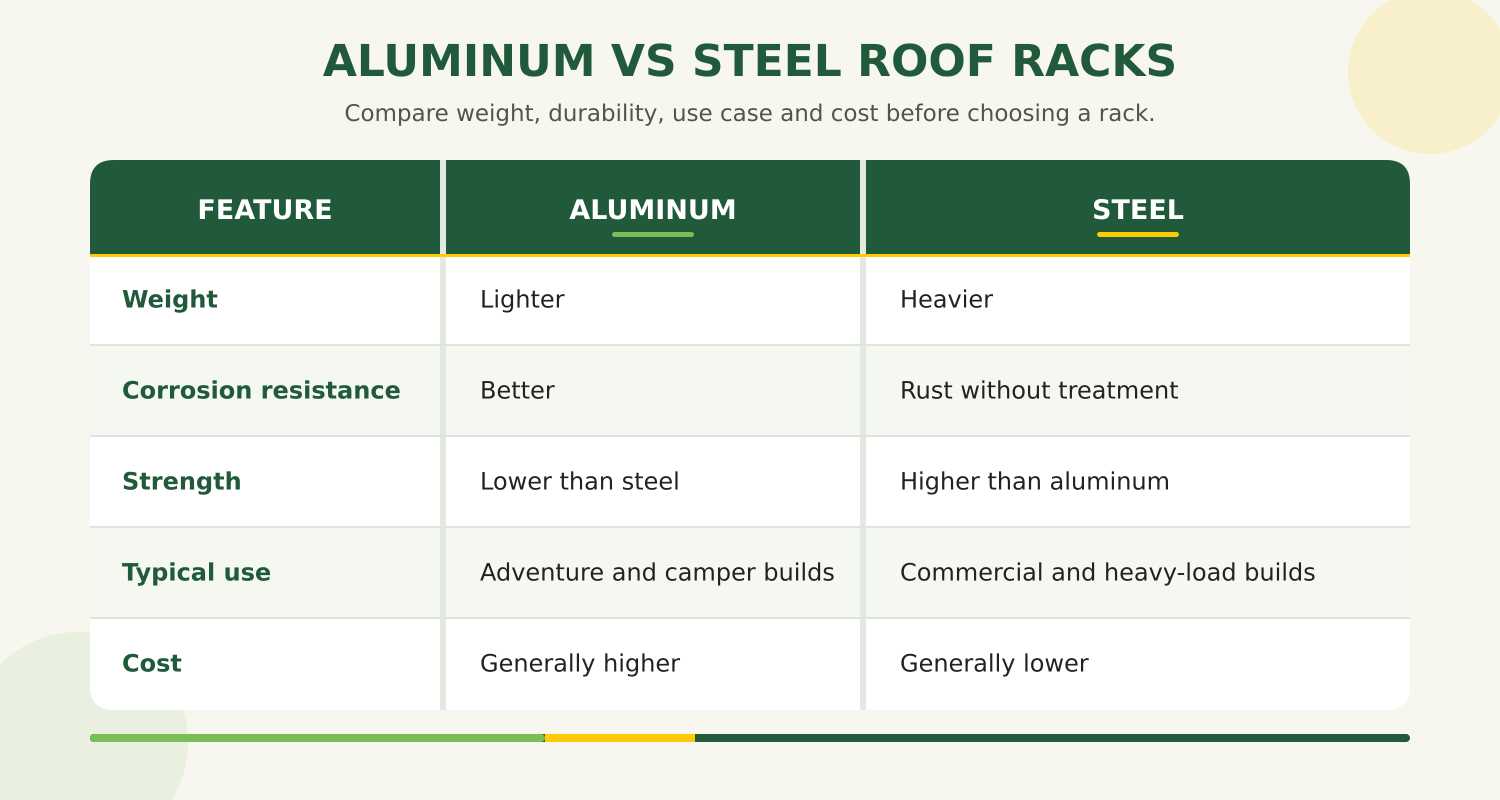
Sprinter platform racks in aluminum are available from builders who specialize in van-specific systems. Weight matters on high-roof vans where GVWR headroom is limited.
For most camper van conversions, aluminum is the practical choice. Steel suits commercial builds that prioritize load capacity.
Load Capacity and Height Clearance
Both factors are often underestimated before a roof rack is installed.
Van manufacturers publish a static load rating (while parked) and a dynamic load rating (while driving). The dynamic rating is always lower. The rack's own weight counts against it before any cargo is added.
Roof weight and handling are directly connected on high-roof vans. A full platform rack loaded with solar panels and gear raises the center of gravity. This affects cornering stability and crosswind response. This is a reason to keep roof loads as light as the use case allows.
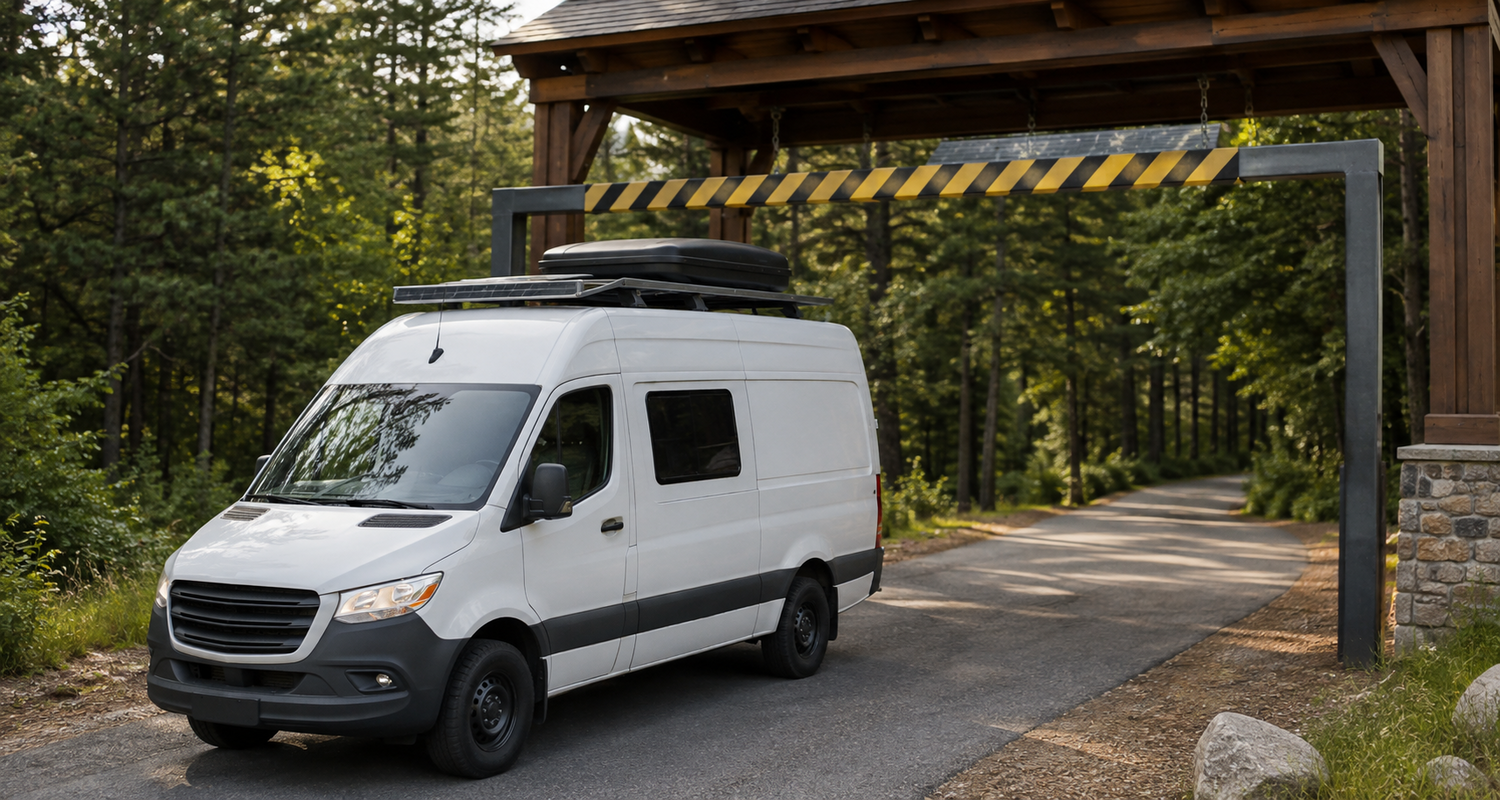
Height clearance affects where the van can go. Know the van's finished height with the rack and any gear before planning routes.
Plan the Entire Roof Before Choosing a Rack
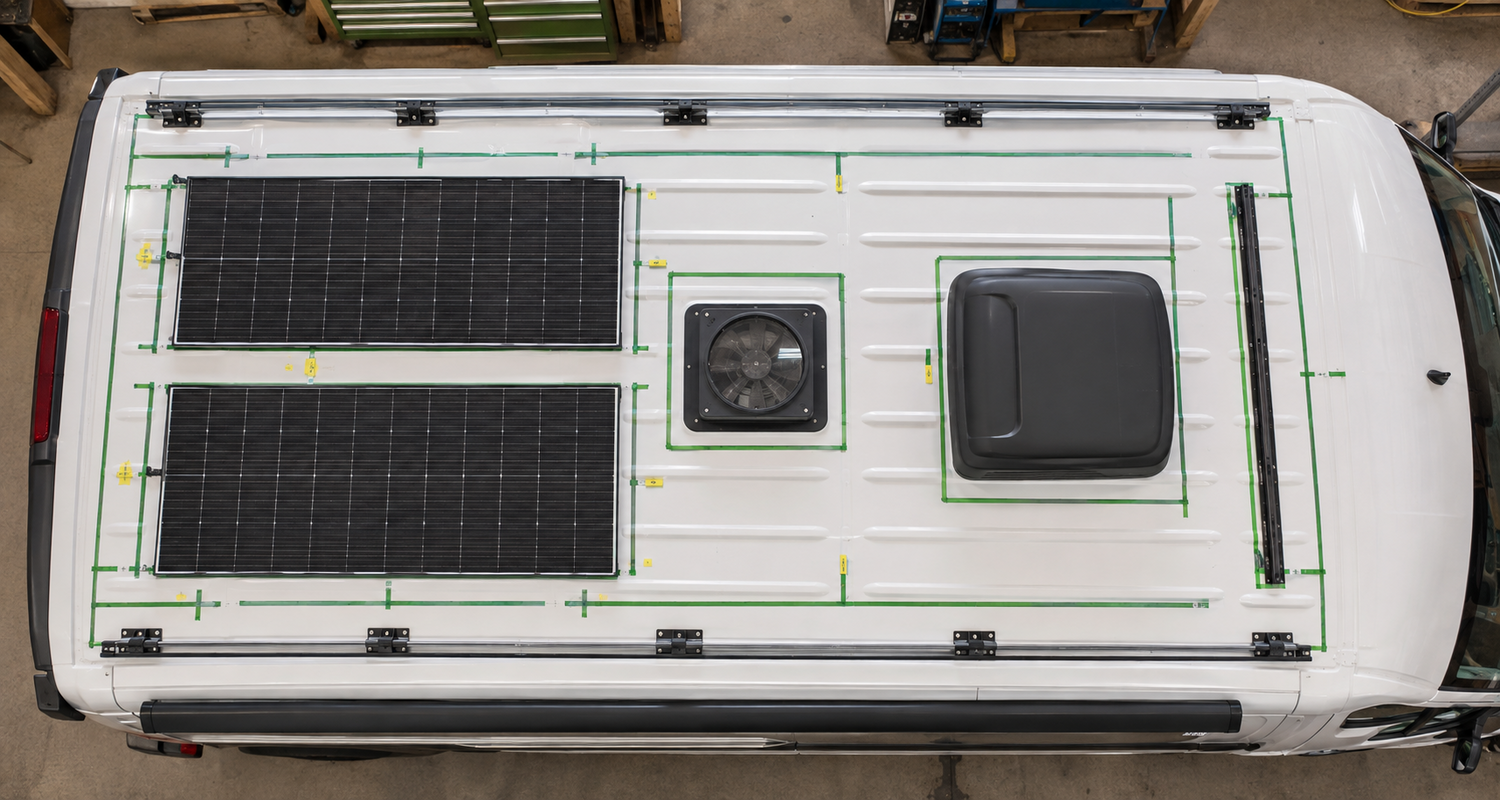
Ordering a rack before locking in the full roof layout is one of the most common mistakes in van builds.
This full roof planning guide explains why rack selection follows roof layout, not the other way around.
Map the entire roof before selecting any individual component. Start with fixed-position items. Vent fans and AC units require specific roof cutouts that determine everything around them. Then plan solar panel placement. Then select a rack that accommodates all of those elements in their correct positions.
Roof insulation and ventilation decisions interact with rack choice too. A ventilated rack design that raises solar panels above the roof surface improves cooling and production.
Professional vs DIY Van Roof Rack Installation
DIY installation is practical for crossbar systems that mount to factory tracks without drilling. It is more demanding for full platform racks that require precise positioning, waterproof roof penetrations, and structural alignment.
A professionally designed van build treats the roof as part of the complete vehicle specification. Rack selection, cutout positioning, solar integration, and waterproofing are coordinated before anything is ordered or installed.
Mango Vans designs and builds custom Sprinter, Transit, and ProMaster conversions out of South Florida. Roof planning is part of the complete build specification from the start. See the completed builds gallery to see how full roof systems are integrated and built.
Frequently Asked Questions
What type of van roof rack is best for a camper van?
For most camper van builds, a full platform or modular rack offers the most flexibility. Crossbar systems suit lighter loads and lower-clearance needs. The best choice depends on what else will go on the roof.
Does a van roof rack affect fuel economy?
Yes. Roof racks increase aerodynamic drag and reduce fuel efficiency. Higher racks with larger surface areas create more drag than low-profile crossbar systems.
Can solar panels be mounted directly on a van roof without a rack?
Yes. Solar panels can be mounted directly to the roof using Z-brackets or adhesive mounts. A rack raises them above the roof surface, which improves airflow and avoids fitment conflicts with vent fans.
What is the difference between static and dynamic roof load ratings?
Static load is what the roof can hold while parked. Dynamic load is what is safe while driving. The dynamic rating is always lower. Always use the dynamic rating when calculating safe roof cargo weight.
Will a van roof rack affect height clearance?
Yes. Any rack adds height above the van's stock roofline. Always measure the van's finished height with the rack before planning routes or accommodations.
Should the roof layout be planned before choosing a rack?
Yes. Vent fan positions, AC unit footprints, and solar panel sizes all affect which rack fits. Ordering a rack before locking in the full roof plan is one of the most common mistakes in van builds.