Preventing Mold and Mildew in a Van: A Practical Guide

Preventing mold and mildew in a van comes down to controlling moisture. Good ventilation, appropriate insulation, adequate airflow under the bed, and daily habits that reduce humidity are the primary defenses. Mold appears because moisture sat long enough in one place for spores to grow. The practical goal is removing moisture quickly and never allowing it to remain trapped.
What Causes Mold and Mildew in a Van?
Mold needs moisture, warmth, and a surface to grow on. A camper van provides all three.
Breathing, cooking, and wet clothing all add water vapor to the interior air. Humidity rises faster in a small enclosed space than in a house. When humid interior air contacts a colder surface such as a window or wall panel, that moisture condenses into liquid. If that liquid does not evaporate, it creates the conditions mold needs.
Inadequate insulation and ventilation both contribute to condensation. Insulation reduces temperature differences between interior surfaces and the air. Ventilation removes humid air before it can condense.
Relative humidity above 60 percent creates conditions that support mold growth. Keeping the interior between 40 and 50 percent relative humidity reduces that risk significantly.
Improve Ventilation and Air Circulation
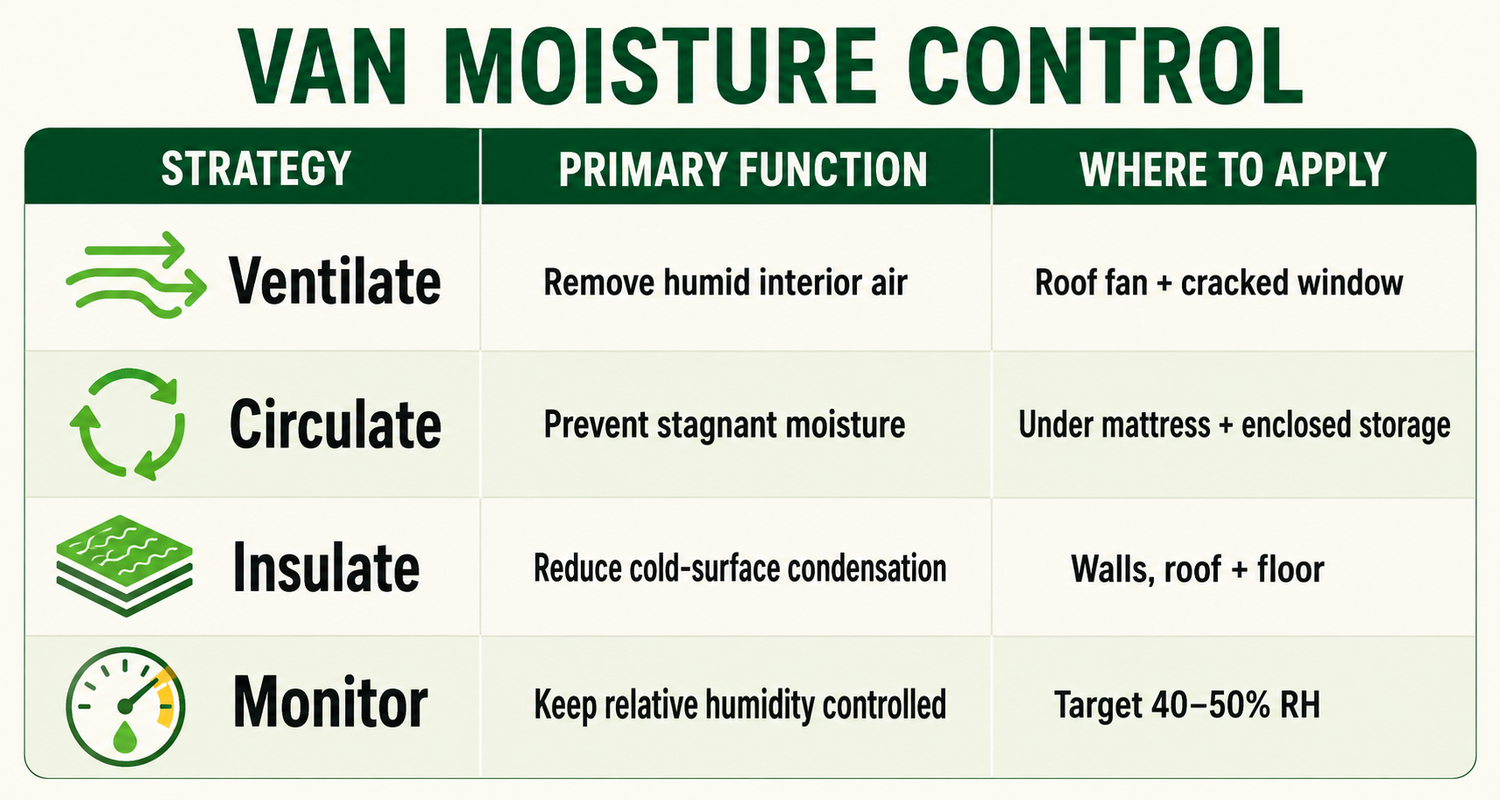
Ventilation and air circulation are related but different. Ventilation means exchanging interior air with outside air. It removes humid air and replaces it with drier air from outside. Air circulation means moving air around the interior without necessarily exchanging it with outdoor air.
Van condensation prevention starts with ventilation. A reversible roof vent fan can exhaust humid air directly out of the van. Running the fan on exhaust while cooking or showering keeps humidity from building up in the interior air.
Running the fan at low speed overnight can reduce the condensation that accumulates during sleep. Cracking a window when outdoor conditions allow creates cross-ventilation that further removes stale, humid air.
Air circulation, using the fan on a lower setting, moves air around the interior and prevents stagnant pockets of moist air in enclosed areas.
Prevent Moisture Under Your Mattress
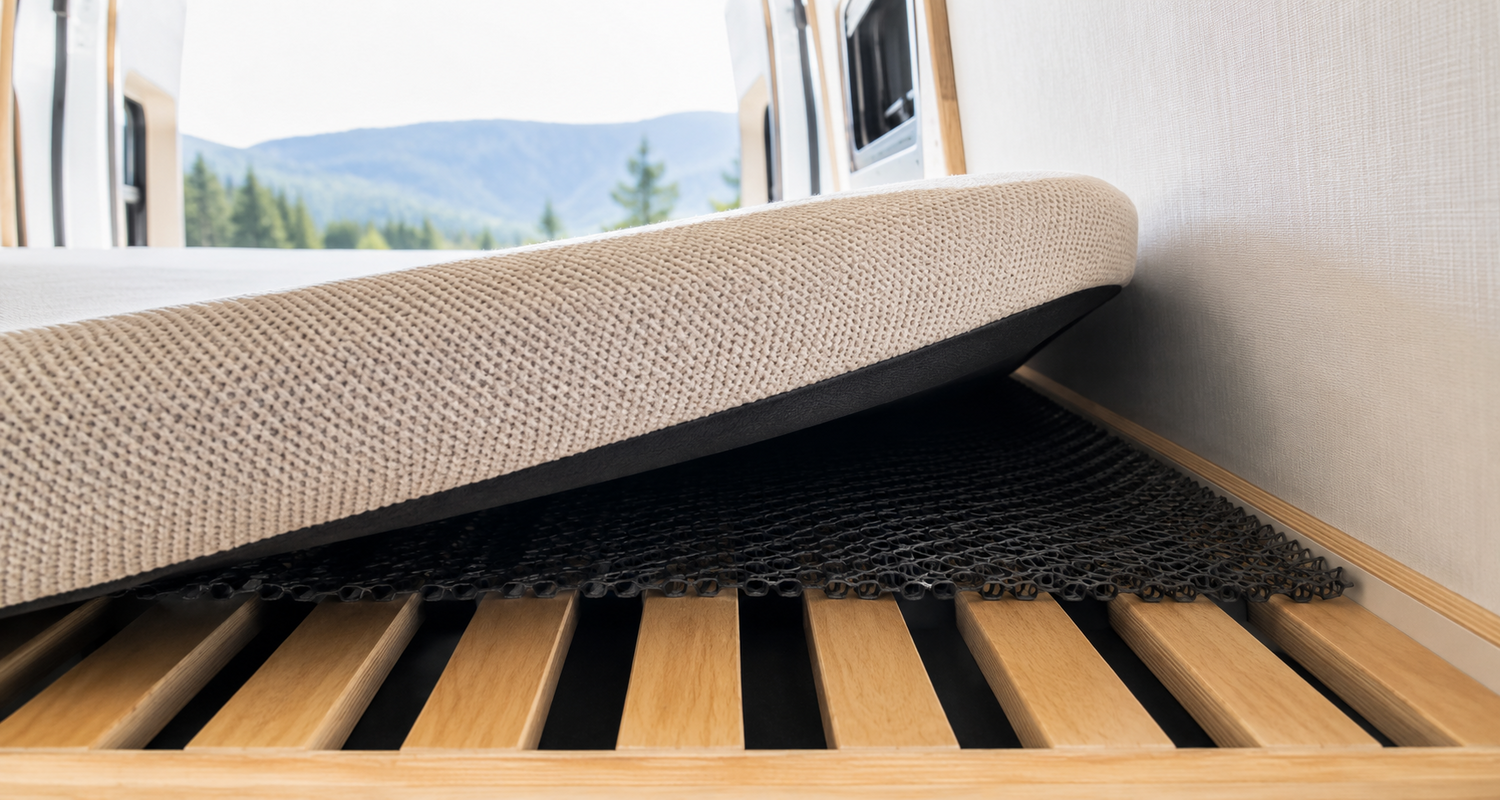
Under-mattress moisture is one of the most common mold sites in a camper van. Body heat and breathing during sleep warm the air around the mattress. That warm, humid air contacts the cooler bed platform beneath, condenses, and collects where there is no airflow.
Under-mattress mold conditions develop predictably on flat solid platforms with no airflow beneath. A ventilated bed platform with slats or drilled holes allows air to move under the mattress. An under-mattress airflow mesh lifts the mattress off the surface and creates a gap for air circulation.
Pulling the mattress away from the wall by a few inches also reduces moisture buildup at the head end. Checking beneath the mattress periodically, particularly after extended humid periods, is the simplest way to catch moisture before it becomes mold.
Plan for Moisture During the Van Build
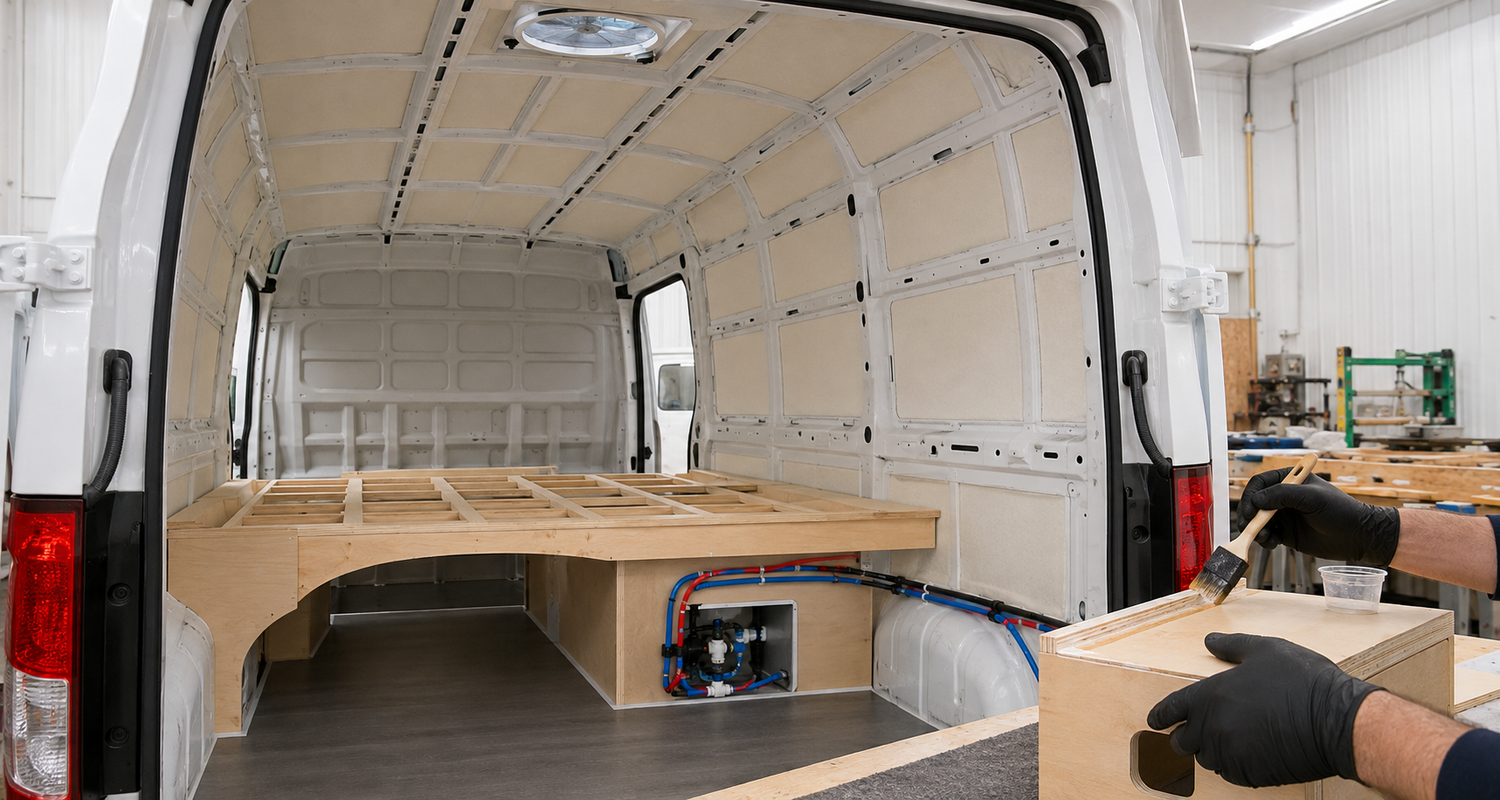
Moisture management should be part of the design process, not a retrofit. Once walls, insulation, subfloor, and cabinetry are installed, most of the van's moisture-vulnerable surfaces become inaccessible.
Moisture during van builds damages metal through rust in the same way it enables mold in insulation and cabinetry. Addressing moisture vulnerability before the interior is enclosed is the most effective point of intervention.

Several build-stage decisions affect mold risk significantly.
Insulation choice and installation. Closed-cell foam does not absorb moisture. Gaps and incomplete coverage create cold spots where condensation concentrates.
Sealing exposed wood. Raw wood in cabinetry, subfloor, and bed platforms absorbs moisture and supports mold growth. Sealed or painted wood reduces that risk.
Bed platform design. A ventilated bed platform can be built in from the start rather than adapted later.
Ventilation placement. Fan position relative to cooking areas and sleeping areas affects how effectively humid air is removed from high-risk zones.
Plumbing and leak risk. Water lines, connections, and tanks should be routed with access in mind and inspected regularly.
Moisture traps are enclosed spaces behind cabinetry or beneath flooring with no drainage or airflow. They are difficult to identify and address after the build is complete. Anticipating them at the design stage prevents inaccessible mold problems later.
Control Humidity During Everyday Van Life
Daily habits matter as much as the build itself.
Use a hygrometer. Monitor relative humidity inside the van. Target 40 to 50 percent where conditions allow.
Ventilate while cooking. Run the roof fan on exhaust whenever the stove is in use. Use lids to reduce steam.
Deal with wet gear outside. Wet towels, rain gear, and wet clothing hanging inside release moisture into the air for hours.
Wipe significant condensation. Window condensation that runs onto sills or walls contributes to mold growth over time.
Inspect hidden areas. Check under the mattress, inside enclosed storage, and behind accessible wall sections periodically.
Supplement, don't substitute. Moisture absorbers help manage residual humidity in enclosed storage. They do not replace ventilation.
Regular van maintenance that includes checking for leaks at windows, roof penetrations, and plumbing connections removes another common moisture source before it creates a persistent problem.
Why Professional Van Design Can Help
A well-designed van manages moisture as a system rather than addressing individual problems after they appear. Ventilation, insulation, material selection, bed platform design, cabinetry construction, and plumbing routing all interact.
Professional van builders can coordinate these decisions before the interior is enclosed. This does not eliminate mold risk entirely. Daily habits and environmental conditions always play a role. A build designed with moisture management in mind starts in a better position than one where it was an afterthought.
Mango Vans designs and builds custom Sprinter, Transit, and ProMaster conversions out of South Florida. Ventilation, insulation, and material choices are part of the complete conversion plan. See the completed builds gallery for examples of full conversions planned from the ground up.
Frequently Asked Questions
How do you prevent mold in a camper van?
Control moisture before it accumulates. Run the roof fan on exhaust, keep relative humidity at 40 to 50 percent, ventilate the bed platform, and dry wet items outside the van.
What humidity level helps prevent mold in a van?
Keeping relative humidity below 60 percent reduces the risk significantly. A target of 40 to 50 percent is practical in most conditions. A hygrometer lets you monitor and respond before humidity becomes a problem.
Why does mold grow under a van mattress?
Warm, humid air from sleeping contacts the cooler bed platform and condenses. Without airflow under the mattress, that moisture cannot dissipate. A ventilated platform or airflow mesh creates the gap needed.
Does insulation prevent mold in a van?
Insulation reduces condensation by keeping interior surfaces closer to air temperature. It is not a substitute for ventilation. Good insulation and adequate ventilation work better together than either one alone.
Do you need a dehumidifier in a camper van?
Not as a primary solution. Ventilation is more effective and uses less power. Dehumidifiers supplement ventilation in humid conditions but do not replace controlling moisture at the source.
Does a roof fan help prevent mold?
Yes. A reversible roof fan on exhaust removes humid air before it can condense on surfaces. It is one of the most effective tools available.