Van Life in National Parks: Rules, Camping and Reservations
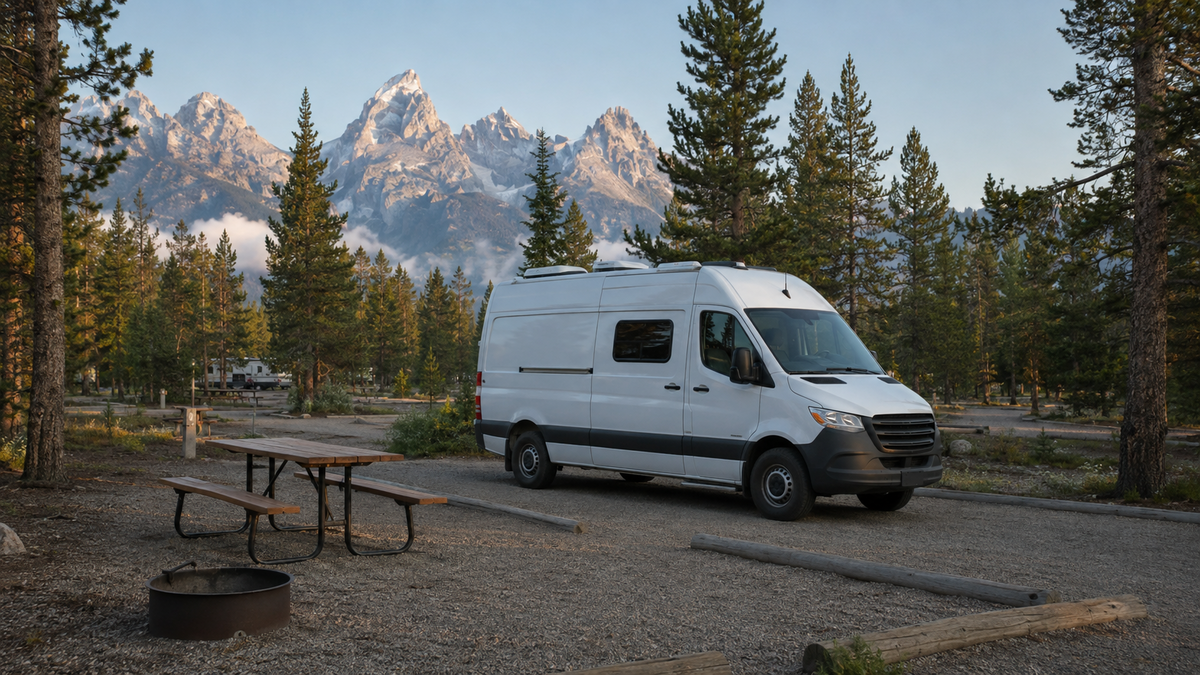
Camper vans offer genuine flexibility for national park travel, but sleeping in a national park is not the same as parking in one. Where you can spend the night, what to reserve, and which roads your van can use all require advance research. This guide covers the core rules for van life in national parks, how reservations work, and how to plan when your first-choice campground is full.
Can You Sleep in a Camper Van in a National Park?
Yes. In designated campgrounds and permitted areas. The key distinction is that being allowed to park somewhere does not mean you are allowed to sleep there. Trailhead lots, scenic pullouts, and visitor center parking areas are for daytime use. Overnight camping in these locations is not permitted.
Overnight van parking rules follow the same principle inside national parks. Without explicit overnight camping authorization from the managing agency, a location is not an appropriate place to sleep in your van.
Designated campgrounds within a national park are where van life in national parks should be based. Most require a campsite reservation during peak season. Individual park websites through the National Park Service list current camping locations and rules.
National Park Reservations: What Do You Actually Need?
"Reservation" can refer to several different requirements that do not substitute for each other.
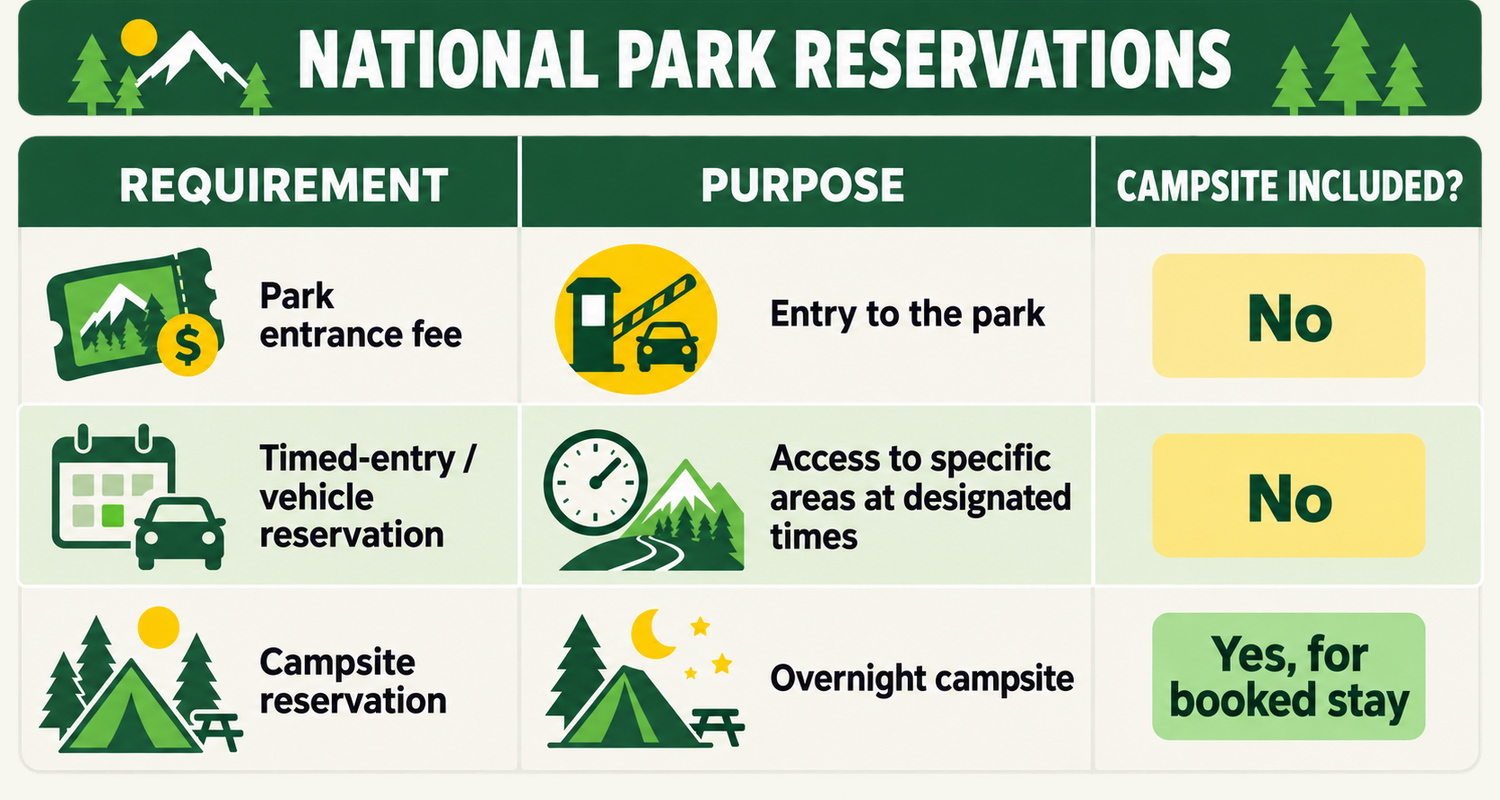
Paying a park entrance fee does not reserve a campsite. A campsite reservation does not automatically satisfy a timed-entry requirement.
Advance national park reservations are required at most popular campgrounds during peak season. Recreation.gov is the primary booking platform for most US national park campgrounds. Reservations at popular parks can open months in advance.
Some campgrounds still operate on a first-come, first-served basis. Verify requirements for the specific park and dates before traveling.
Will Your Camper Van Fit? Check Before You Reserve
Vehicle size matters before booking. National parks vary significantly in the road and campsite dimensions they can accommodate. Check in advance:
Maximum vehicle length for each campground
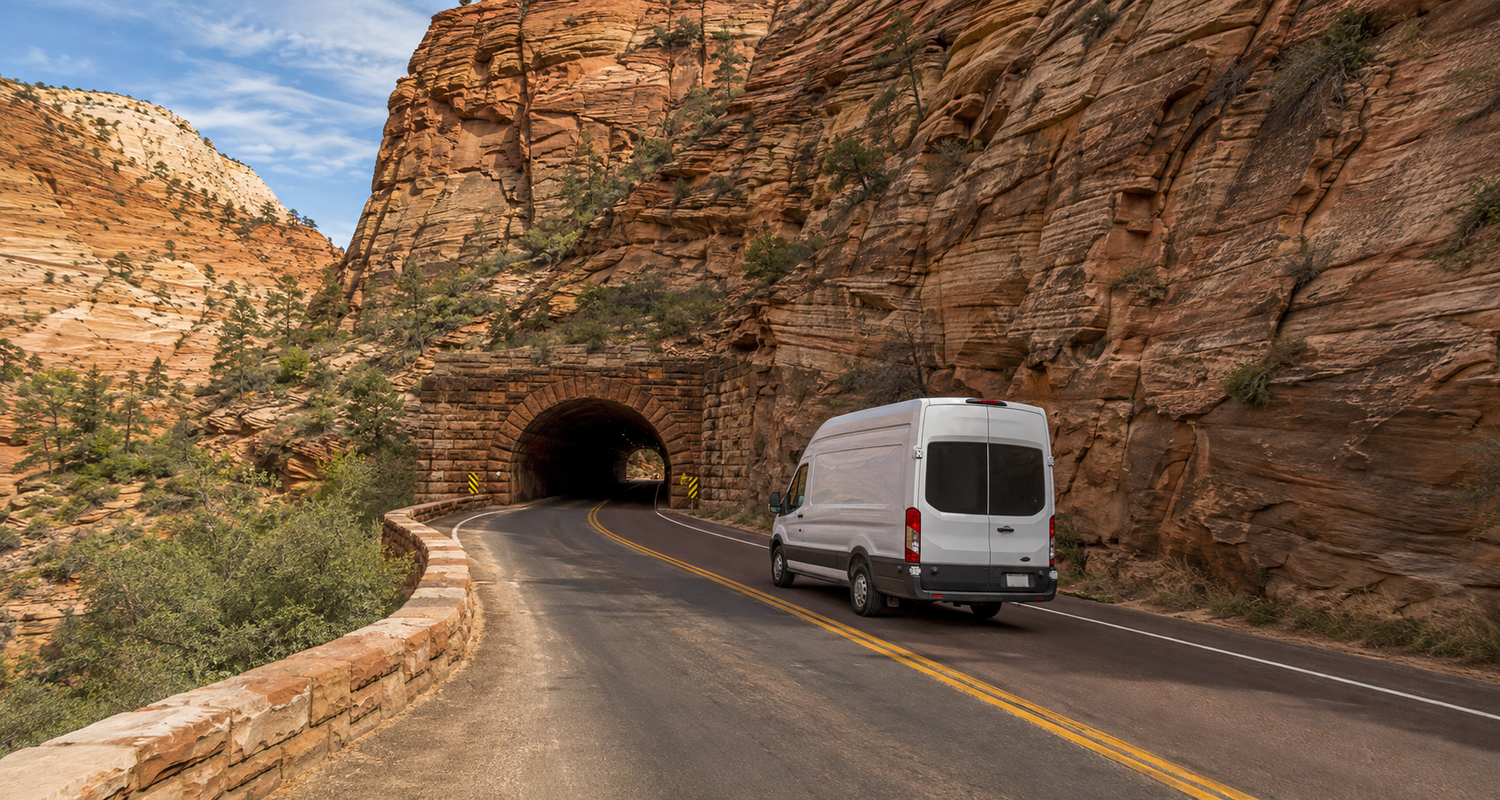
Height restrictions on tunnel roads and historic park routes
Road conditions for the season you plan to travel
Campsite pad dimensions and turning radius requirements
Seasonal road closures
Sprinter van dimensions are a consistent concern for converted van travelers on restricted park roads. Smaller camper vans have an advantage over large motorhomes in national parks. But "camper van" does not guarantee access to every campground or road. Verify specific limits on Recreation.gov or the individual park website before reserving.
A professionally planned conversion accounts for overall vehicle dimensions from the design stage. This reduces compromises when traveling through parks with strict access requirements.
Campground Rules Van Travelers Should Expect
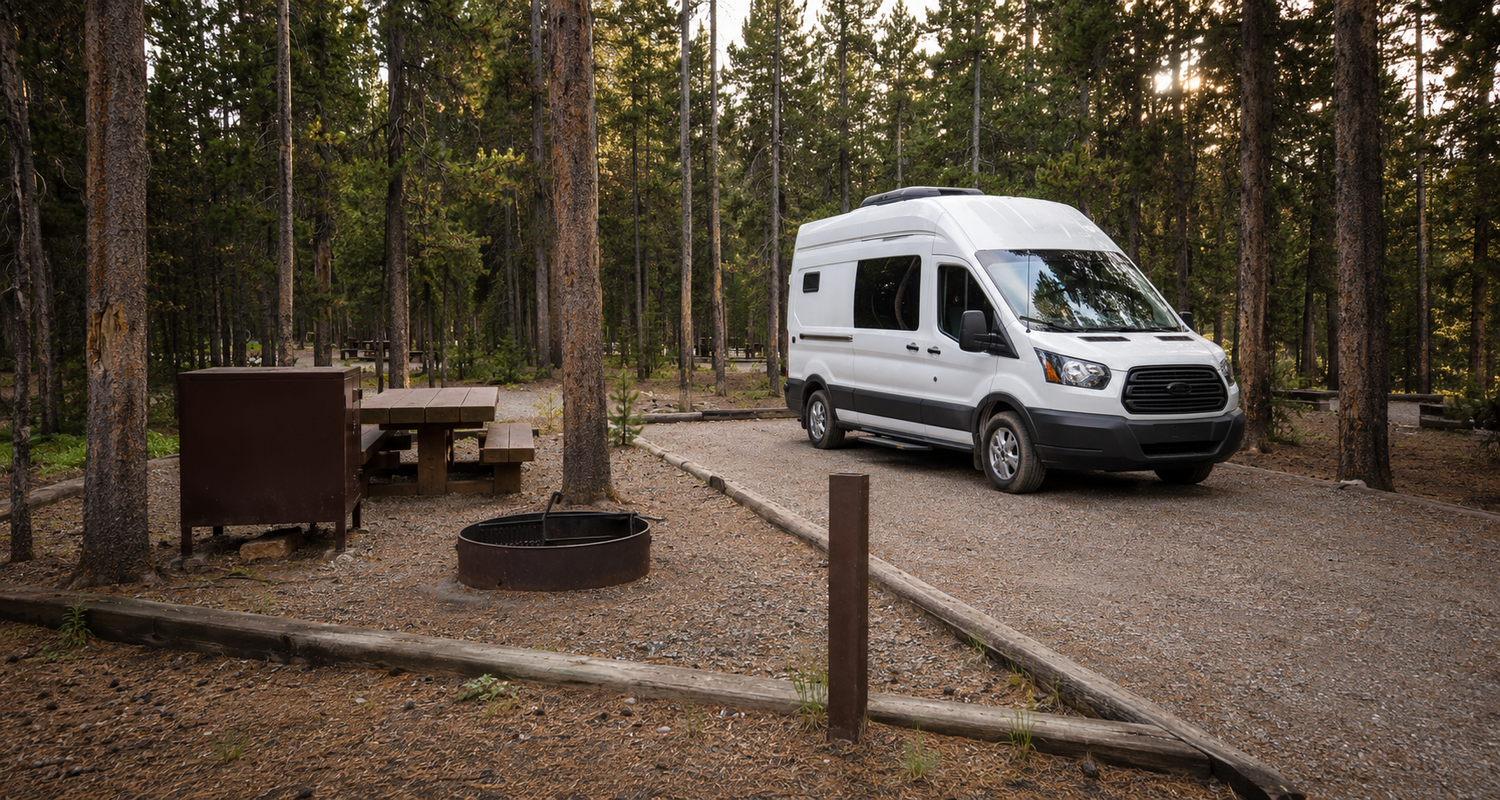
For van life in national parks, campground rules are consistent in broad pattern but vary in specifics.
Quiet hours apply at all campgrounds, typically from 10pm to 6am.
Generator use is restricted to limited hours at most parks. Battery-based electrical systems reduce dependence on generators where restrictions apply.
Food and scented items must be stored in bear boxes or approved containers at campgrounds in bear country.
Site occupancy limits apply to people and vehicles. Most sites allow two vehicles.
Stay limits at most national park campgrounds are capped at 14 consecutive days.
National park access maps can help with route planning across park and public land boundaries.
What If the National Park Campground Is Full?
Fully booked campgrounds do not have to mean abandoning the trip.
Check whether other campgrounds within the same park have availability. Large parks often have multiple campgrounds. Check for legitimate cancellations on Recreation.gov. Popular parks see regular release of canceled reservations.
Consider private campgrounds and developed sites just outside park boundaries. These often have more availability and serve as a base for day trips into the park.
National Forest and Bureau of Land Management (BLM) land frequently surrounds national parks. Some areas may allow dispersed camping. A dispersed campsite guide for public land near a national park is a practical resource for van travelers with off-grid capability.
National Park, National Forest, and BLM land are managed by different agencies with separate rules. Proximity to a national park boundary does not mean camping rules are the same. Identify the managing agency for any land you plan to camp on and verify current rules before your stay.
Prepare Your Van for National Park Travel
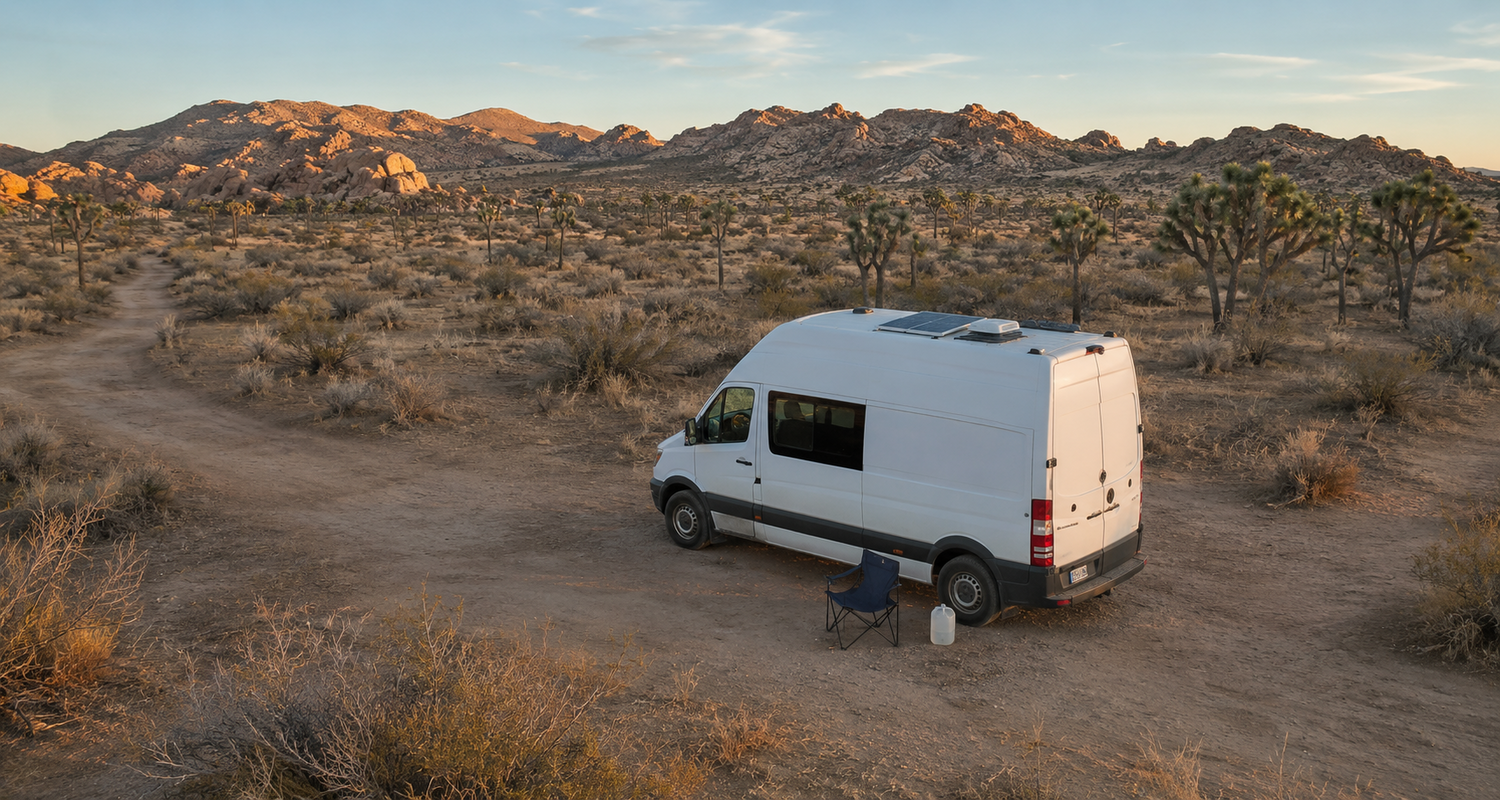
Van life in national parks often involves limited services, areas without cell coverage, food storage requirements, and campgrounds without hookups. A well-prepared van makes the trip more practical.
Electrical capacity. Off-grid solar systems appropriate to daily consumption allow extended stays without generator use.
Water storage. Adequate water capacity reduces dependency on services at campgrounds without refill points.
Food storage. Builds need space for bear-canister-approved containers or planning around bear box access.
Ventilation. A van designed for varying climates handles different park environments.
Efficient layout. Compact, organized storage matters more in a national park setting than interior volume.
Professionally planned van conversions address these systems together rather than as isolated additions. Mango Vans builds custom Sprinter, Transit, and ProMaster conversions out of South Florida designed around real travel requirements. See the completed builds gallery to see how builds are specified for extended travel.
National Park Van Life Checklist
Before your trip:
Confirm current NPS rules for the specific park and campground
Reserve your campsite in advance through Recreation.gov or the park's booking system
Check whether a timed-entry reservation is required separately
Verify your van's length and height against campsite and road limits
Review the park's food storage and wildlife rules
Check generator restrictions and quiet hours
Download offline maps before entering limited-service areas
Identify a legal backup campsite outside the park
Frequently Asked Questions
Can you sleep in a camper van in national parks?
Yes, in designated campgrounds where overnight camping is permitted. Parking areas and trailheads are not authorized camping locations. Check the specific park's NPS page for current rules.
Do you need reservations to camp in national parks?
Most campgrounds at popular parks require advance reservations through Recreation.gov during peak season. Some campgrounds offer first-come, first-served sites. Verify the specific park's requirements.
Does a campsite reservation include park entry?
No. A campsite reservation, a park entrance fee, and any timed-entry reservation are separate requirements.
Are there camper van length restrictions in national parks?
Yes. Length and height limits vary by campground and road. Check Recreation.gov or the specific park website before booking.
Can you camp on BLM land near national parks?
In many cases, yes. National Forest and BLM land near some parks may allow dispersed camping. Identify the managing agency and verify current regulations before your stay.
What should a camper van have for national park travel?
Adequate battery capacity, water storage for hookup-free campgrounds, food storage for wildlife requirements, ventilation for varied climates, and compact organized storage.