What Are Hybrid Camper Vans and Which Options Are Available
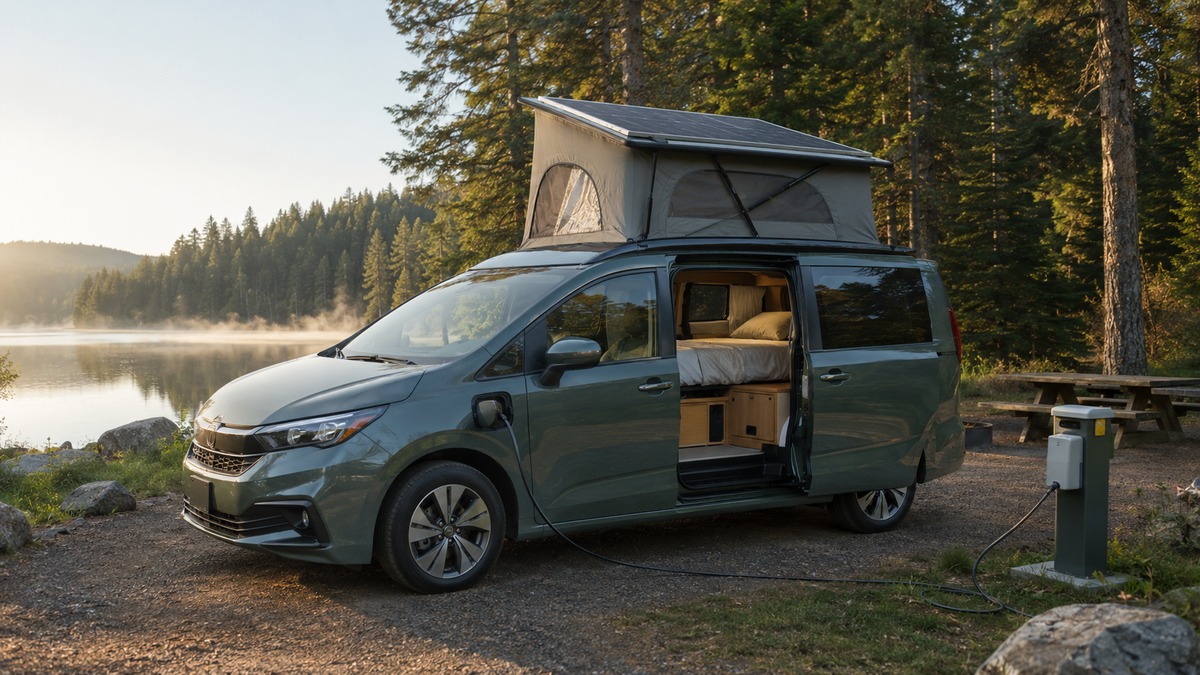
A hybrid camper van combines camper functionality with a vehicle that uses a hybrid or plug-in hybrid drivetrain. The hybrid system powers the vehicle. A separate house electrical system powers the camper's lights, refrigerator, outlets, fans, and other appliances. These two electrical systems are distinct. Factory-built hybrid camper vans remain limited in the US. A growing number of hybrid vehicles are being converted into functional campers.
What Is a Hybrid Camper Van?
A hybrid vehicle uses a gasoline engine and an electric motor together. A standard hybrid (HEV) charges its battery through regenerative braking and the engine. A plug-in hybrid (PHEV) can also charge from an external outlet, allowing limited electric-only driving before the gasoline engine engages.
The key distinction for camper van buyers is the separation between two electrical systems.
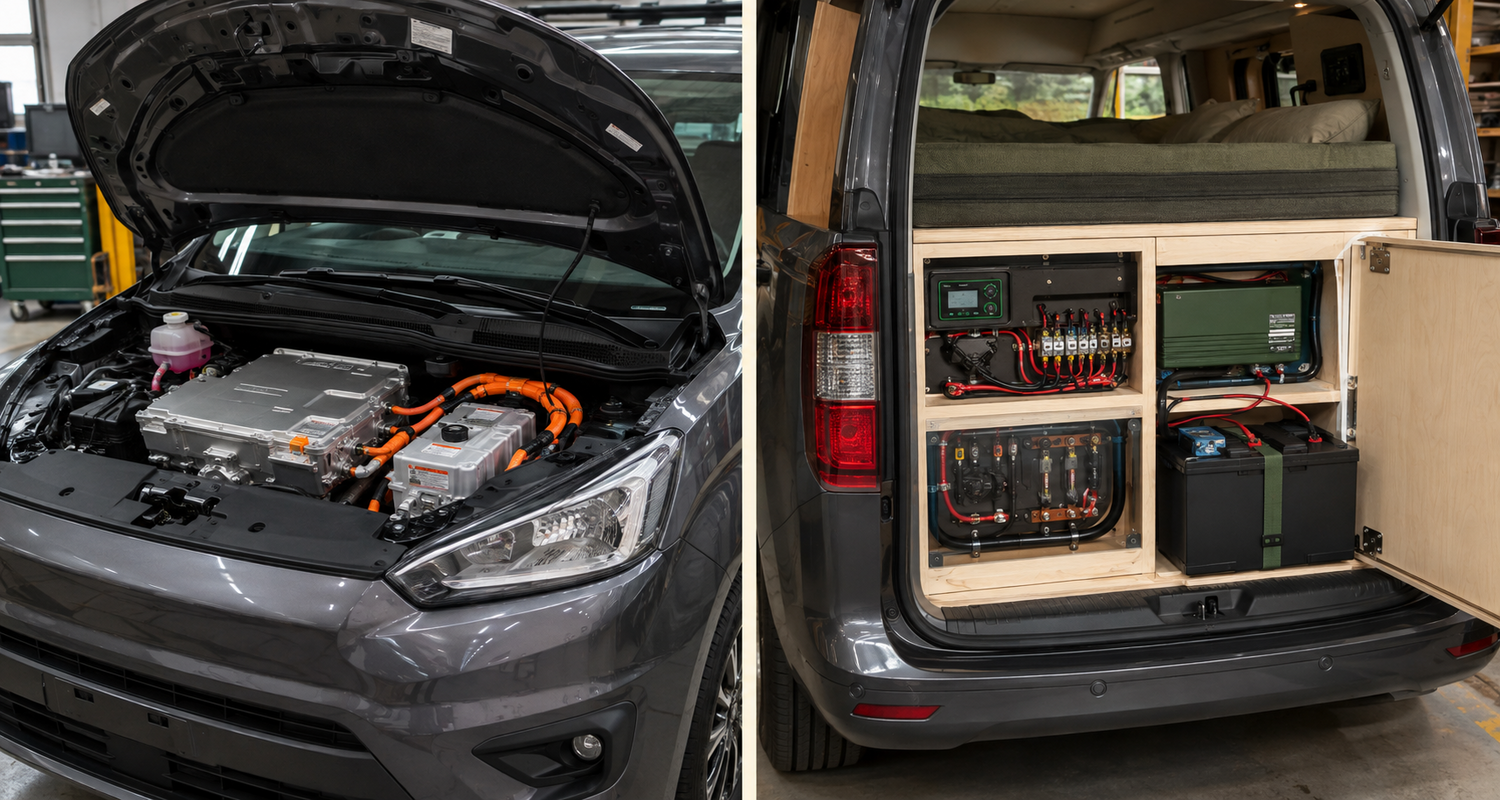
Traction vs house batteries serve different functions and should not be confused. The traction battery drives the electric motor. The house or leisure battery powers camper equipment. Most hybrid vehicle platforms do not support running camper appliances directly from the traction battery. A separate house battery system, typically lithium, is required for the refrigerator, outlets, lighting, and other camper loads.
What Hybrid Camper Van Options Are Available in the US?
Factory-built hybrid camper vans are not currently sold in the US. Purpose-built hybrid campers like the VW California eHybrid and Hillside MVX are European or Australian products. They are not available through US dealers.
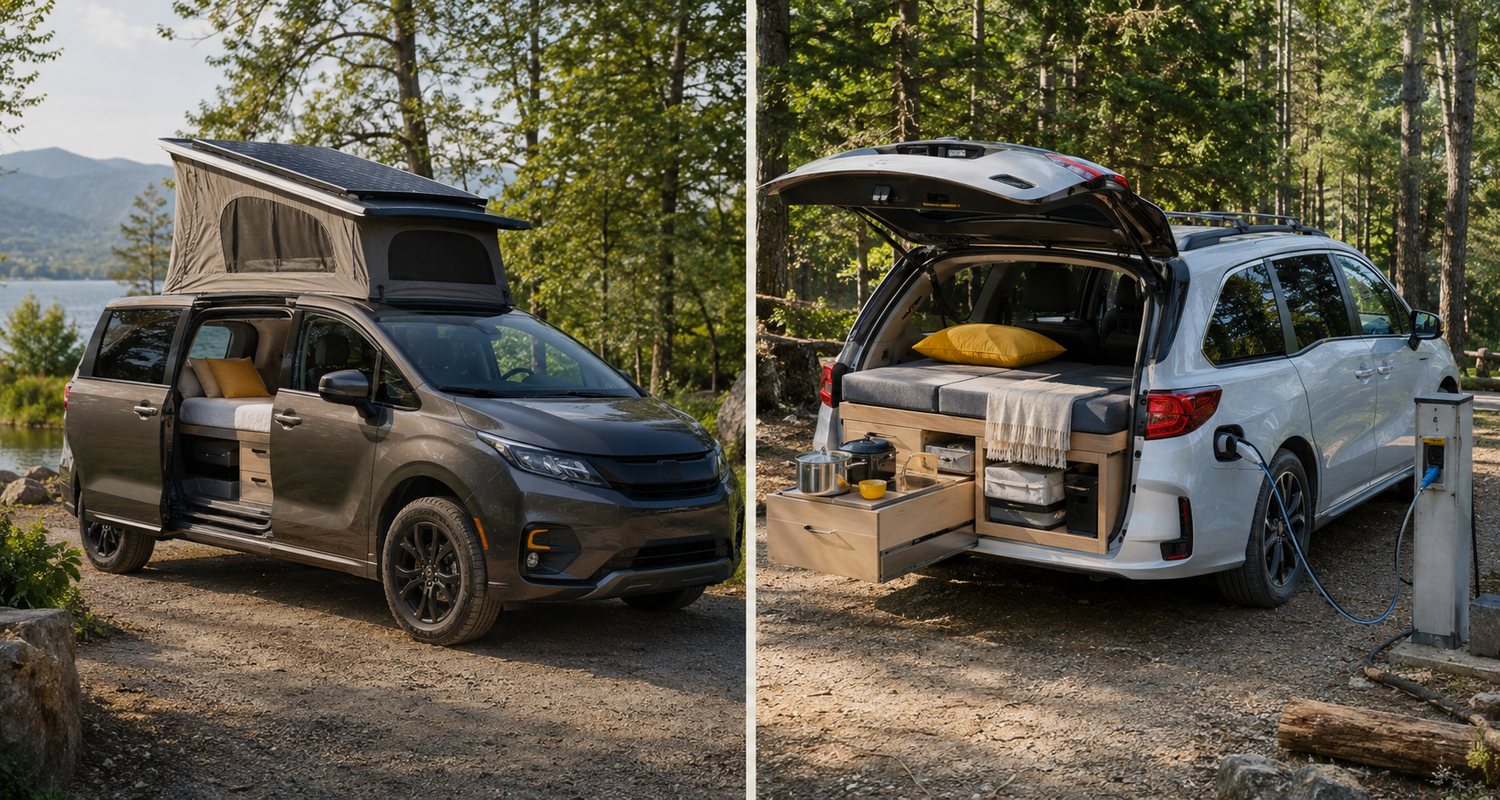
The US hybrid camper van market is a conversion market. Two platforms dominate it.
Toyota Sienna Hybrid
The Sienna hybrid conversion market includes pop-top conversions from Unicamp USA and kit-based systems from several suppliers.
Chrysler Pacifica Plug-In Hybrid
Pacifica PHEV camper conversions are active in the US market. The Pacifica offers up to 32 miles of battery-only electric driving before the gasoline engine engages and comes standard with a 115-volt, 150-watt outlet inside the cabin.
No full-size US cargo van (Sprinter, Transit, or ProMaster) is currently available with a hybrid or PHEV drivetrain. Electric cargo van options (Ford E-Transit, Mercedes eSprinter) exist but are battery-electric, not hybrid.
Why Consider a Hybrid Camper Van?
The primary appeal is fuel efficiency without complete dependence on charging infrastructure.
Diesel and gas campervans are the standard choice for full-size builds. Hybrid platforms offer potentially better fuel economy on mixed driving, quieter low-speed operation, and for PHEVs, short-range electric driving for daily use. These platforms also suit owners who want a vehicle that doubles as both a daily driver and an occasional camper.
Limitations exist. Hybrid minivans offer less cargo volume than full-size cargo vans. Payload capacity must be considered carefully when adding camper furniture, appliances, and a house battery system. Drivetrain complexity may affect long-term service costs and parts availability in some regions.
Hybrid vs Electric Camper Vans
The choice between hybrid and electric depends on travel patterns and access to charging.
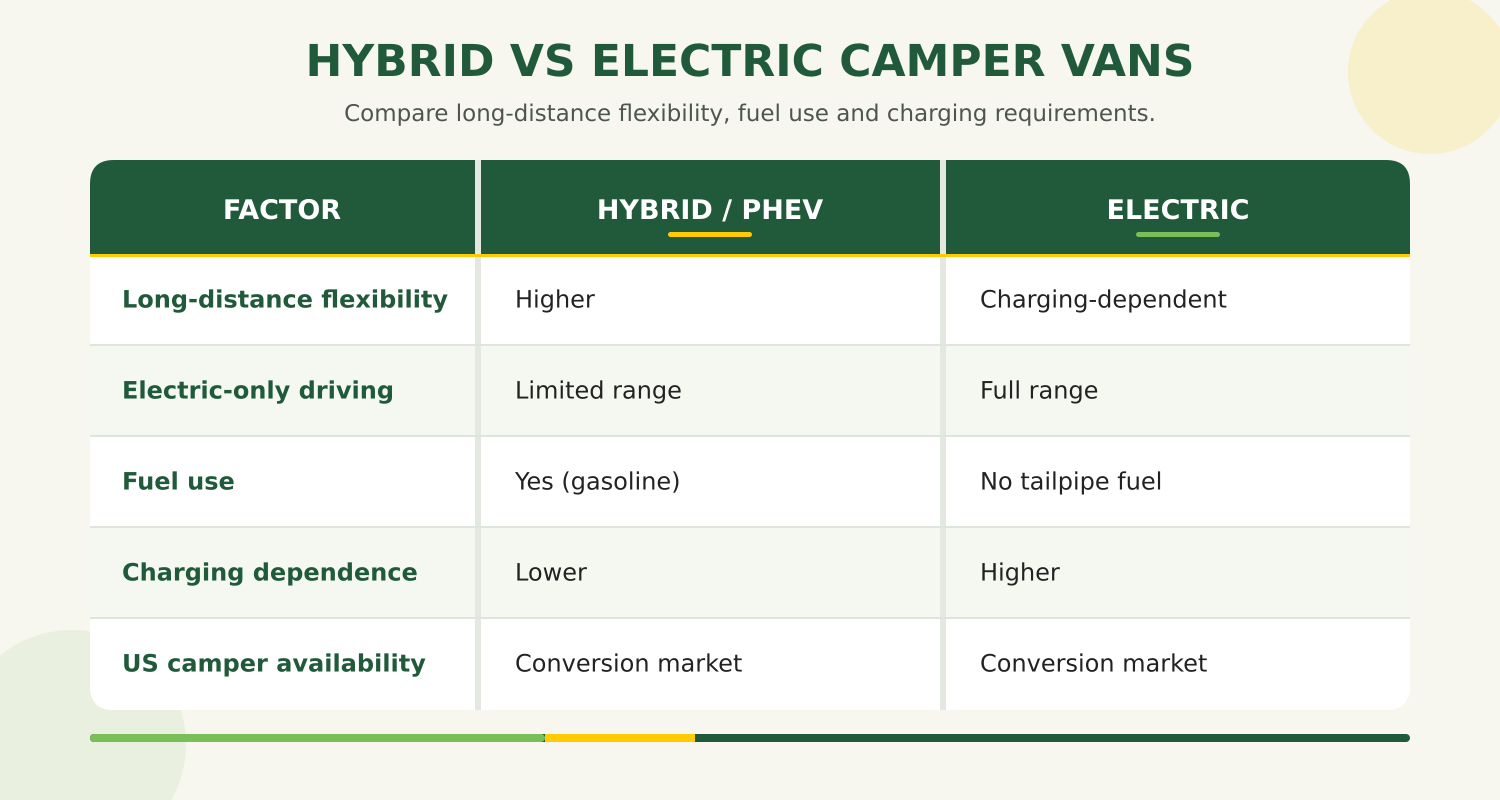
PHEVs suit mixed driving patterns. Short trips run on battery-only power with gasoline backup for longer distances. All-electric camper vans offer zero tailpipe emissions but require charging access at or near camping locations. This limits off-grid flexibility in remote areas.
Converting a Hybrid Van Into a Camper
Converting a hybrid platform requires more planning than a standard cargo van conversion. The hybrid traction system must not be compromised during the build. All modifications should account for safe routing around vehicle components, correct weight distribution, and access to service points.
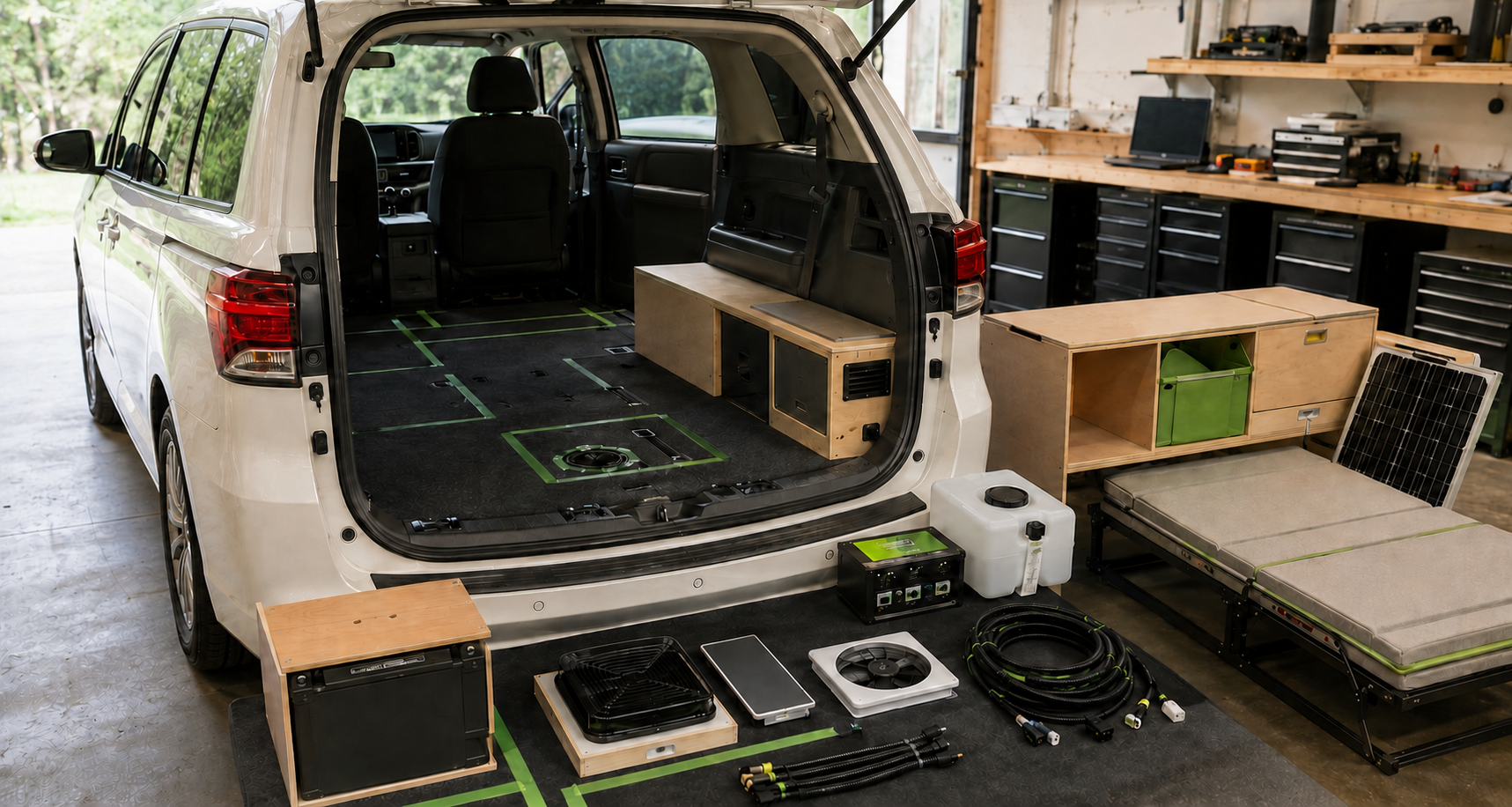
A functional hybrid camper van build requires these systems to be designed together.
A separate house battery sized for the planned appliance loads
Solar panel integration for off-grid charging of the house battery
A ventilation solution appropriate for the vehicle's ceiling height and structure
A layout that respects the vehicle's payload limits
Plumbing if a water system is included
Storage designed around the vehicle's interior geometry
Professionally designed van builds coordinate these systems before any fabrication begins. A hybrid platform's unique drivetrain, interior geometry, and payload limits make upfront planning particularly important.
Is a Hybrid Camper Van Right for You?
A hybrid camper may suit someone who wants fuel efficiency without depending entirely on charging infrastructure. It also suits those who use the vehicle for daily driving as well as camping and are comfortable with a minivan-sized interior.
A conventional cargo van conversion may be the better choice when more interior volume is needed or when long-term full-time travel is the goal.
Planning the electrical system is a central part of any camper van build, hybrid or not. The house battery, solar input, and appliance loads all need to be sized together before the conversion begins.
Mango Vans designs and builds custom Sprinter, Transit, and ProMaster conversions out of South Florida. Calculating daily energy needs is part of every build specification. See the completed builds gallery to see how full builds are planned and completed.
Frequently Asked Questions
What is a hybrid camper van?
A hybrid camper van uses a hybrid or plug-in hybrid vehicle as the base for a camper conversion. The hybrid drivetrain powers the vehicle. A separate house battery powers camper appliances. These are two distinct electrical systems.
Are hybrid camper vans available in the USA?
No factory-built hybrid camper vans are sold in the US. The Toyota Sienna Hybrid and Chrysler Pacifica Plug-In Hybrid are the main US platforms for hybrid camper van conversions.
What are the best hybrid camper vans for the US market?
The Toyota Sienna Hybrid offers up to 36 mpg, available AWD, and an active conversion market. The Chrysler Pacifica PHEV offers up to 32 miles of electric-only driving. Both are being actively converted by builders and kit suppliers.
Can a Toyota Sienna Hybrid be converted into a camper van?
Yes. The 2021 and newer Sienna is hybrid-only and has an established conversion market. Unicamp USA offers a motorized pop-top version. Kit-based conversions are also available.
Is a hybrid camper van more fuel-efficient?
Generally yes on mixed driving routes. The Toyota Sienna reaches up to 36 mpg combined. Fuel economy depends on route, load, driving style, and for PHEVs, how often the vehicle is charged.
Can a hybrid vehicle battery power camper appliances?
Not directly in most cases. The traction battery powers the electric motor, not the camper systems. A separate house battery is required to power lights, refrigerators, outlets, and other appliances in the living space.