Van Battery Chemistry Explained: LiFePO4, AGM, and What the Specs Mean

A 200Ah battery is not always a 200Ah battery. The usable capacity, the cycle count, and the weight all depend on the chemistry inside the cells. Van battery chemistry is one of the most misunderstood parts of any conversion build. Most buyers compare amp-hour ratings and price, stop there, and end up undersized or overspending. Getting this decision right before the build starts prevents expensive corrections afterward.
Why Chemistry Matters More Than Capacity Alone
Every battery type lists a capacity in amp-hours. That number describes the theoretical maximum. It does not describe how much is safely usable, how quickly the battery charges, or how many times it can be cycled.
A converted van with a fridge, lights, a fan, and a charging setup draws power daily for months or years. Sprinter van reliability after conversion depends in part on having an electrical system sized for the actual build load. Battery chemistry determines whether the van hits that mark or falls short.
Lead-Acid and AGM: The Traditional Options
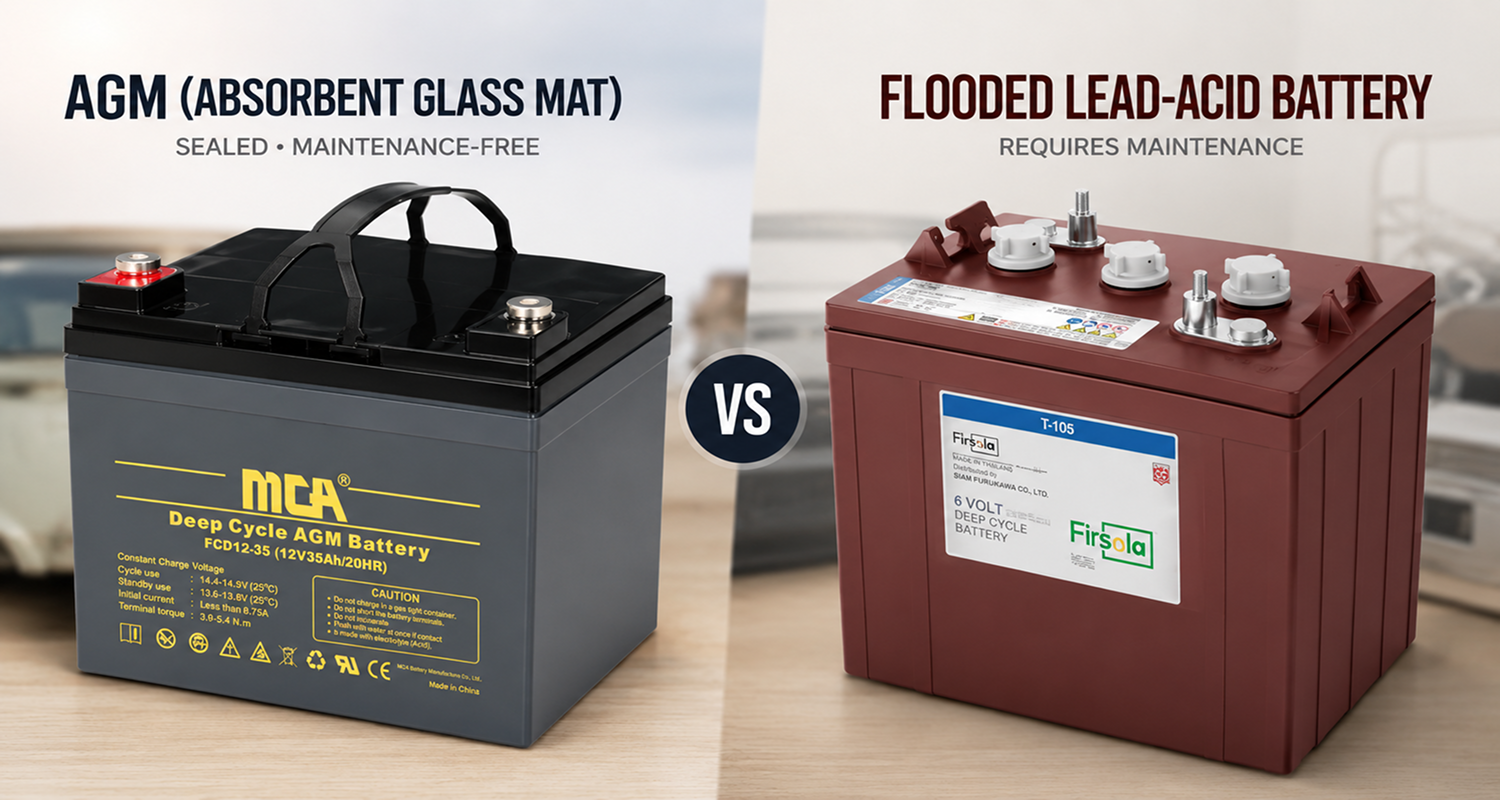
Flooded lead-acid batteries are the oldest and cheapest option. They require ventilation, must stay upright, and should not be discharged below 50 percent of rated capacity without shortening lifespan. Usable capacity is roughly half the stated amp-hour rating.
AGM (Absorbent Glass Mat) batteries are a sealed version of lead-acid batteries. They do not require ventilation and can be mounted in any orientation. They still carry the same 50 percent usable capacity limit. AGM cycle life and cost sit between flooded lead-acid and LiFePO4. Expect 500 to 1,000 cycles, or 4 to 5 years under regular use.
Both chemistries are less expensive upfront than lithium and compatible with most standard converters and chargers. For low-use builds or tight budgets, they remain a practical choice.
LiFePO4: How It Works and Why It Suits Full-Time Builds
LiFePO4 is a specific lithium chemistry chosen for off-grid and van use for its stability, cycle life, and energy density. It is not the same chemistry used in consumer electronics or EV batteries. Those use lithium cobalt or lithium nickel manganese, which offer higher energy density but lower thermal stability.
LiFePO4 can be discharged to around 80 to 95 percent of its rated capacity without damage. A 100Ah LiFePO4 delivers roughly 90 usable amp-hours. A 100Ah AGM delivers roughly 50. That difference affects solar system sizing from the start.
LiFePO4 also accepts charge at a faster rate than AGM. The battery refills from solar or alternator charging more efficiently, which matters most on short driving days.
Comparing the Three on Numbers That Actually Matter
| Factor | Flooded lead-acid | AGM | LiFePO4 |
|---|---|---|---|
| Usable capacity | ~50% of rated | ~50% of rated | ~90–95% of rated |
| Cycle life | 200–500 cycles | 500–1,000 cycles | 3,000–5,000 cycles |
| Weight (per 100Ah) | ~60–65 lbs | ~55–60 lbs | ~25–30 lbs |
| Charge rate | Slow | Moderate | Fast |
| Temperature sensitivity | Low | Low | Moderate (cold limits charging) |
| Upfront cost | Lowest | Moderate | Highest |
| Cost per cycle | Highest | Moderate | Lowest |
Lithium vs AGM capacity works out to roughly twice the usable energy at half the weight. The lithium premium disappears when cost per usable amp-hour is calculated across the battery's life.
What a Battery Management System Does
LiFePO4 batteries require a Battery Management System (BMS). This is a circuit board inside the battery that monitors cell voltages, temperature, and current. It prevents overcharge, over-discharge, and charging in extreme cold.
The BMS is what makes LiFePO4 safe to discharge deeply without permanent capacity loss. It also cuts off charging automatically if the temperature drops below the safe threshold for charge acceptance.
A quality BMS is included in reputable branded batteries. Budget batteries sometimes use inferior BMS components, which affects both safety and long-term performance. Always check the published specification sheet before buying.
Cold Weather and Temperature Limits
All three chemistries are affected by cold, but differently. Lead-acid and AGM lose capacity in cold temperatures but can still accept a charge. LiFePO4 batteries cannot safely accept a charge below freezing without risking cell damage. The BMS cuts off charging to prevent it.
Most LiFePO4 batteries cut off charging below 32F (0C). Some higher-end batteries include self-heating systems that allow charging in colder conditions. For van lifers who travel in winter, this is a critical spec to verify.
Battery performance over seasons is part of good van maintenance. Batteries stored at a low state of charge in cold weather degrade faster regardless of chemistry.
Choosing the Right Van Battery Chemistry for Your Build
The right chemistry depends on three things. How often the van is used, the daily power it needs, and how long the owner keeps it.
For weekend and occasional use with a simple build, AGM is a reasonable choice. The lower upfront cost is easy to justify when the battery is cycled only a few times per month. For full-time van life, LiFePO4 pays back the upfront premium through higher cycle life and lower cost per amp-hour over time.
Daily power for remote work means a laptop, fridge, and charging through an 8-hour day. That demands a battery capable of a full cycle every day. LiFePO4 is built for that. AGM is not.
How Professional Builders Approach Battery Selection
Battery chemistry affects almost every other electrical decision in the build. The solar panel count, charge controller rating, inverter sizing, and wiring gauge all change depending on which chemistry is specified.
Total ownership cost includes electrical system maintenance and replacement. An undersized AGM bank replaced every three years costs more over a decade than LiFePO4 sized correctly from the start.
Mango Vans designs and builds custom Sprinter, Transit, and ProMaster conversions out of South Florida. Battery chemistry is specified as part of the complete electrical system design. See the completed builds gallery to see how electrical systems are integrated into full builds.
Frequently Asked Questions
What is the difference between LiFePO4 and lithium ion batteries?
LiFePO4 is a specific lithium chemistry using iron and phosphate. It is more thermally stable than the chemistries used in phones and EVs, and better suited to off-grid and van use.
Why does van battery chemistry matter more than amp-hour rating?
Because usable capacity varies by chemistry. A 100Ah AGM delivers around 50 usable amp-hours. A 100Ah LiFePO4 delivers around 90. The labeled rating does not show how much power is actually accessible.
Is AGM good enough for van life?
For occasional use and light builds, yes. For full-time van life with daily cycling, AGM wears faster and costs more per usable amp-hour over time than LiFePO4.
What is depth of discharge and why does it matter?
It is how far into total capacity you draw before recharging. AGM should not exceed 50 percent discharge to protect cycle life. LiFePO4 can safely reach 80 to 95 percent without meaningful degradation.
How long do LiFePO4 van batteries last?
Most quality LiFePO4 batteries are rated for 3,000 to 5,000 cycles, or around 8 to 10 years of daily use. AGM typically lasts 500 to 1,000 cycles under regular use.
Can I charge LiFePO4 batteries in cold weather?
Not safely below freezing without a heated battery. The BMS cuts off charge below 32F (0C) to prevent cell damage. Self-heated LiFePO4 batteries allow lower-temperature charging and suit cold-climate van life.
What does a BMS do in a van battery?
A Battery Management System monitors cell voltages, temperature, and current. It prevents overcharge, over-discharge, and charging in extreme cold. These are the features that make LiFePO4 safe for deep, regular cycling.
Is LiFePO4 worth the extra cost for a van build?
For full-time van life with daily cycling, yes. More cycles, more usable capacity, and lower weight offset the higher upfront price over the battery's life. For weekend use, AGM may be the practical choice.
How much does van battery chemistry affect weight?
Significantly. A 100Ah LiFePO4 battery weighs around 25 to 30 lbs. A 100Ah AGM weighs around 55 to 60 lbs. For equal usable capacity, LiFePO4 saves 50 to 70 percent of the weight.
What battery chemistry do most professional van builds use?
LiFePO4 is the standard in professional full-time builds. Its cycle life, weight advantage, and deep discharge capability suit any van designed for long-term daily use.