How Do Camper Van Water Systems Work
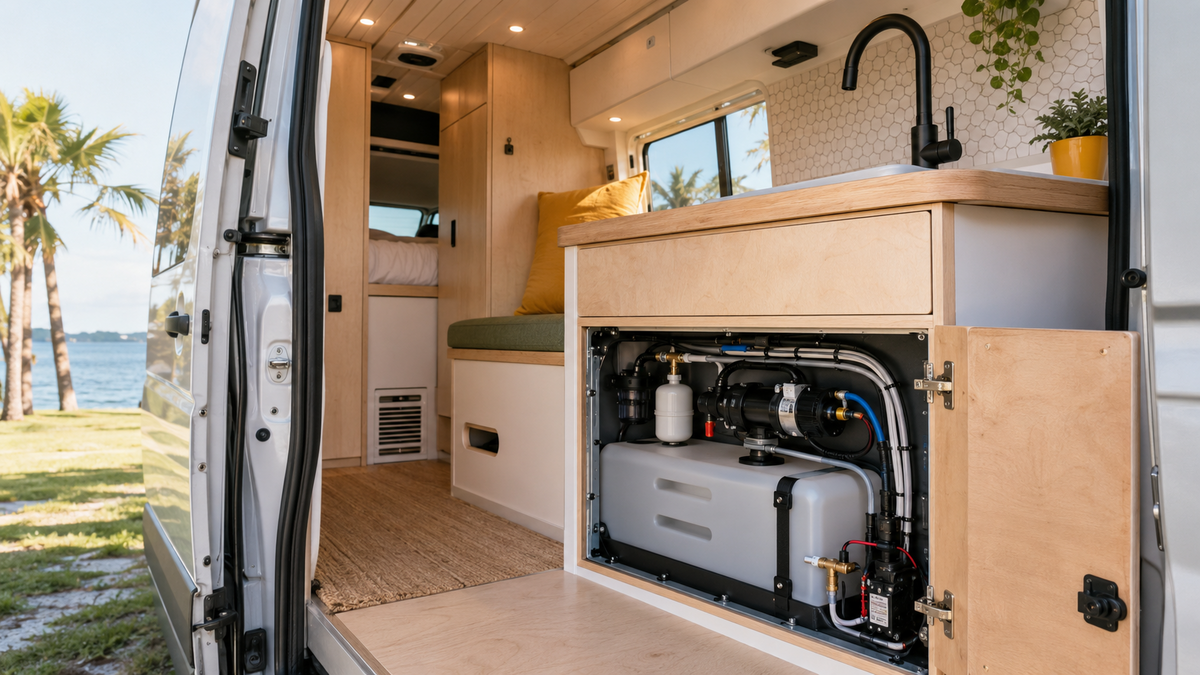
A camper van water system moves fresh water from a storage tank to the faucet using a 12V demand pump. Used water drains into a separate gray water tank. Hot water and accumulators are optional additions. At Mango Vans, water systems are planned as part of the complete van conversion. Tank placement, plumbing, electrical connections, and service access all work together from the start. Understanding how the system works makes it easier to decide what your conversion actually needs.
How Does a Camper Van Water System Work?
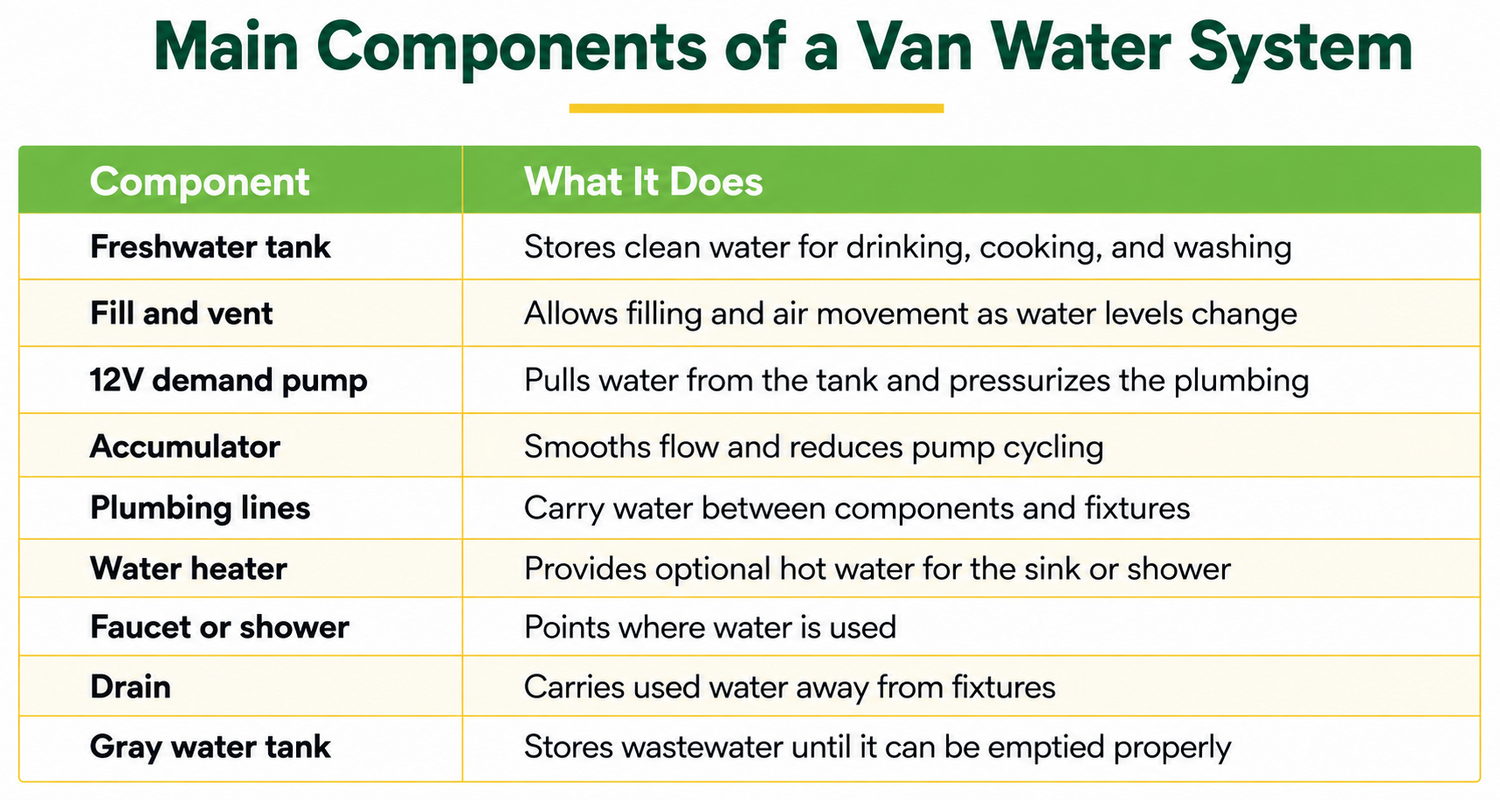
The complete flow from tank to drain follows this sequence.
Fresh water is stored in a built-in freshwater tank.
Opening a faucet causes pressure in the plumbing lines to drop.
A 12V demand pump detects the pressure drop and starts running.
The pump draws water from the tank and pressurizes the plumbing.
Water flows directly to a cold-water fixture or through a water heater.
Used water leaves the fixture, travels through the drain, and collects in a gray water tank.
When the faucet closes, pressure in the lines is restored and the pump stops. This automatic on-off cycle is why these systems are called demand pumps.
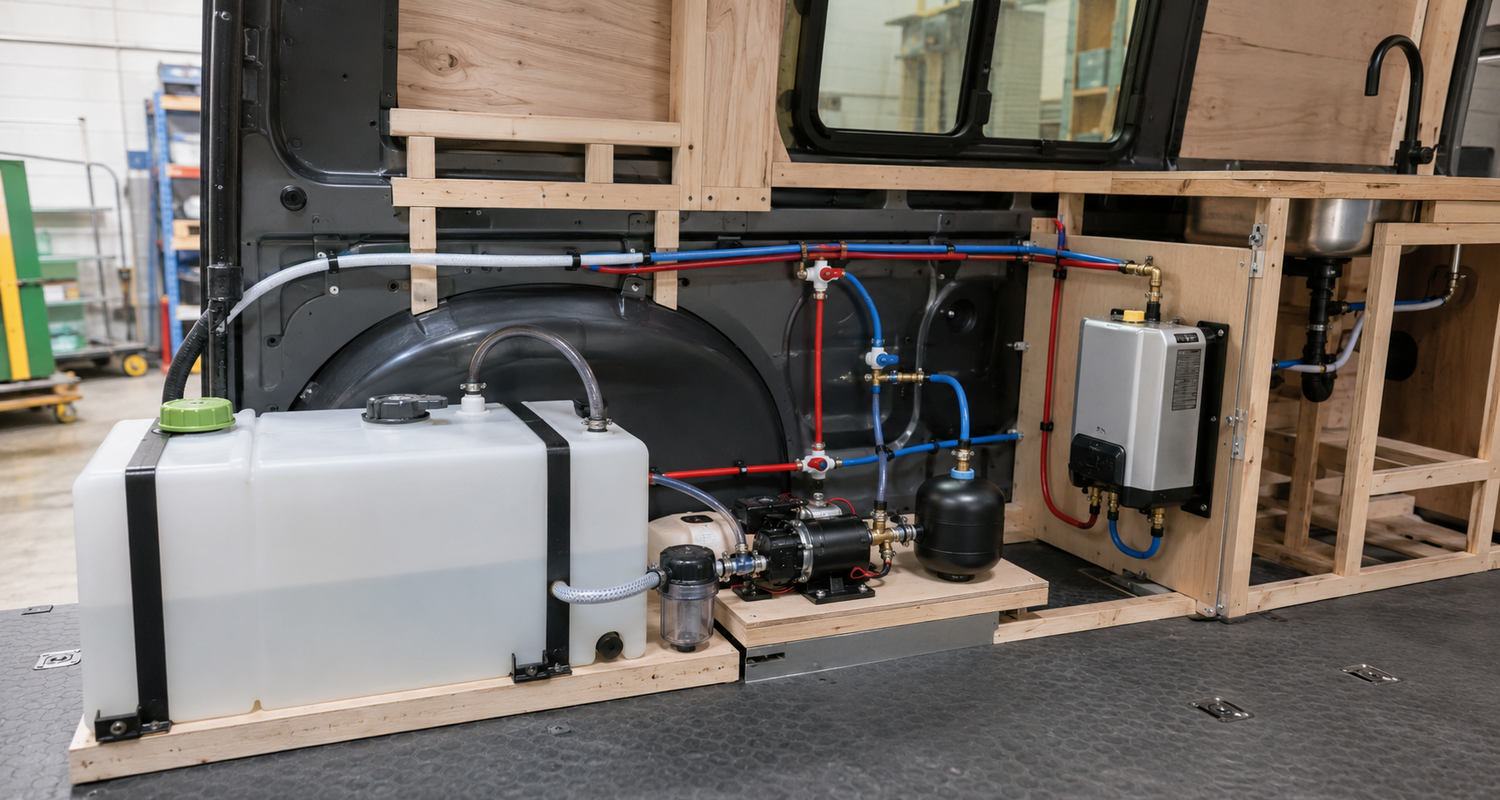
Main Components of a Van Water System
The pump and house battery work together as part of the van's 12V system. Battery capacity affects how much pump run time is available between charges. Most van builds route the pump through a dedicated switch so the system can be depressurized when not in use. This reduces wear on pump components and connections.
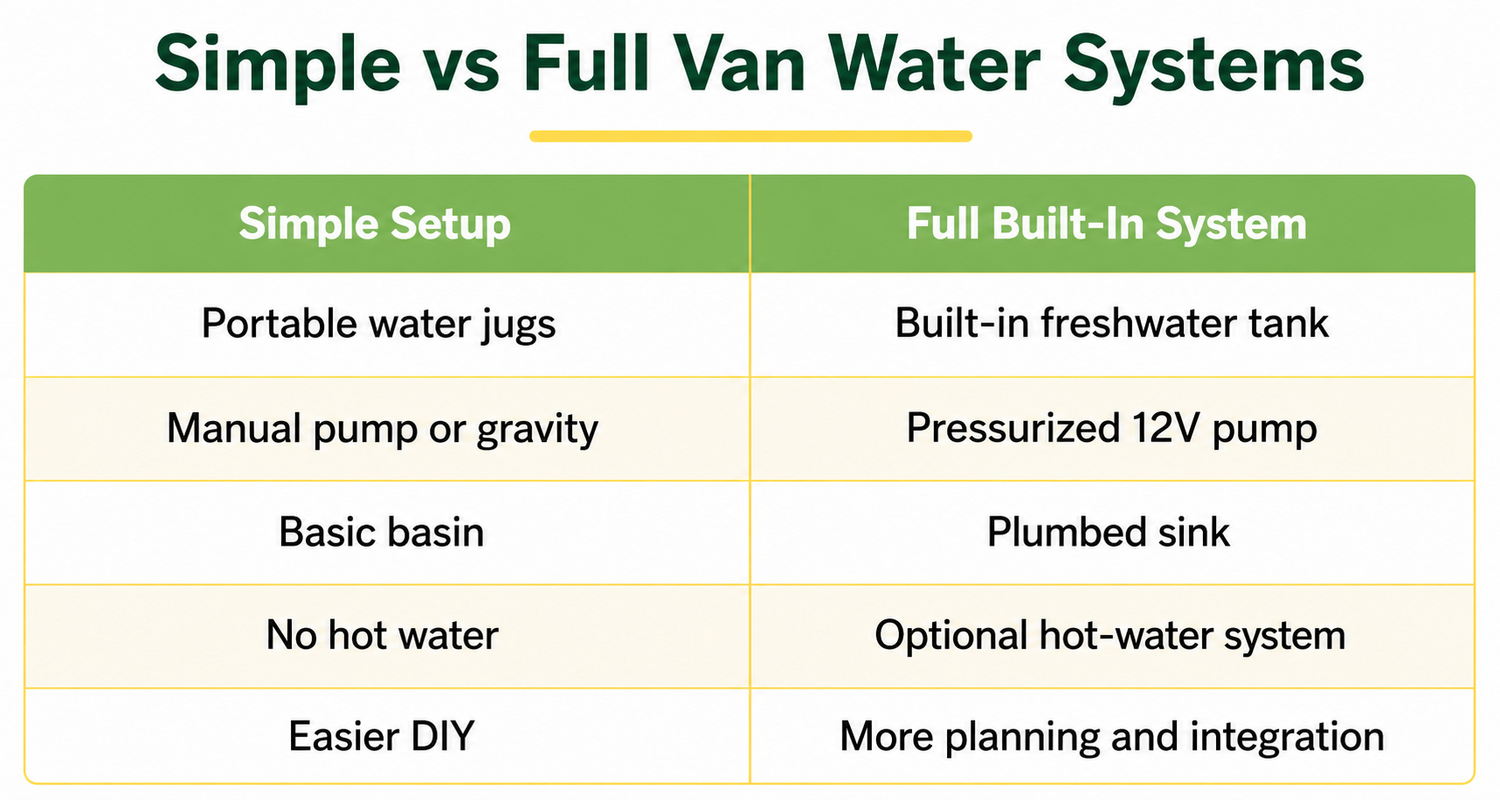
Simple vs Full Van Water Systems
Not every conversion needs a full pressurized plumbing system.
The right choice between simple vs full systems depends on how the van will actually be used. More complexity is not automatically better. A simple system suits weekend use. A full pressurized system suits full-time van life or builds with showers.
What Size Water Tank Does a Van Need?
Tank size depends on the number of people, daily consumption, and how frequently refills will be available.
Multiply people per day by daily consumption by days between refills to find the minimum capacity needed.
Calculating daily consumption follows the same framework for water as for electrical loads. Add up drinking, cooking, dishes, handwashing, and showering. Larger tanks reduce refill frequency but add weight and space. Most builds use between 15 and 40 gallons depending on occupants, trip length, and whether a shower is included.
DIY vs Professional Van Water System Installation
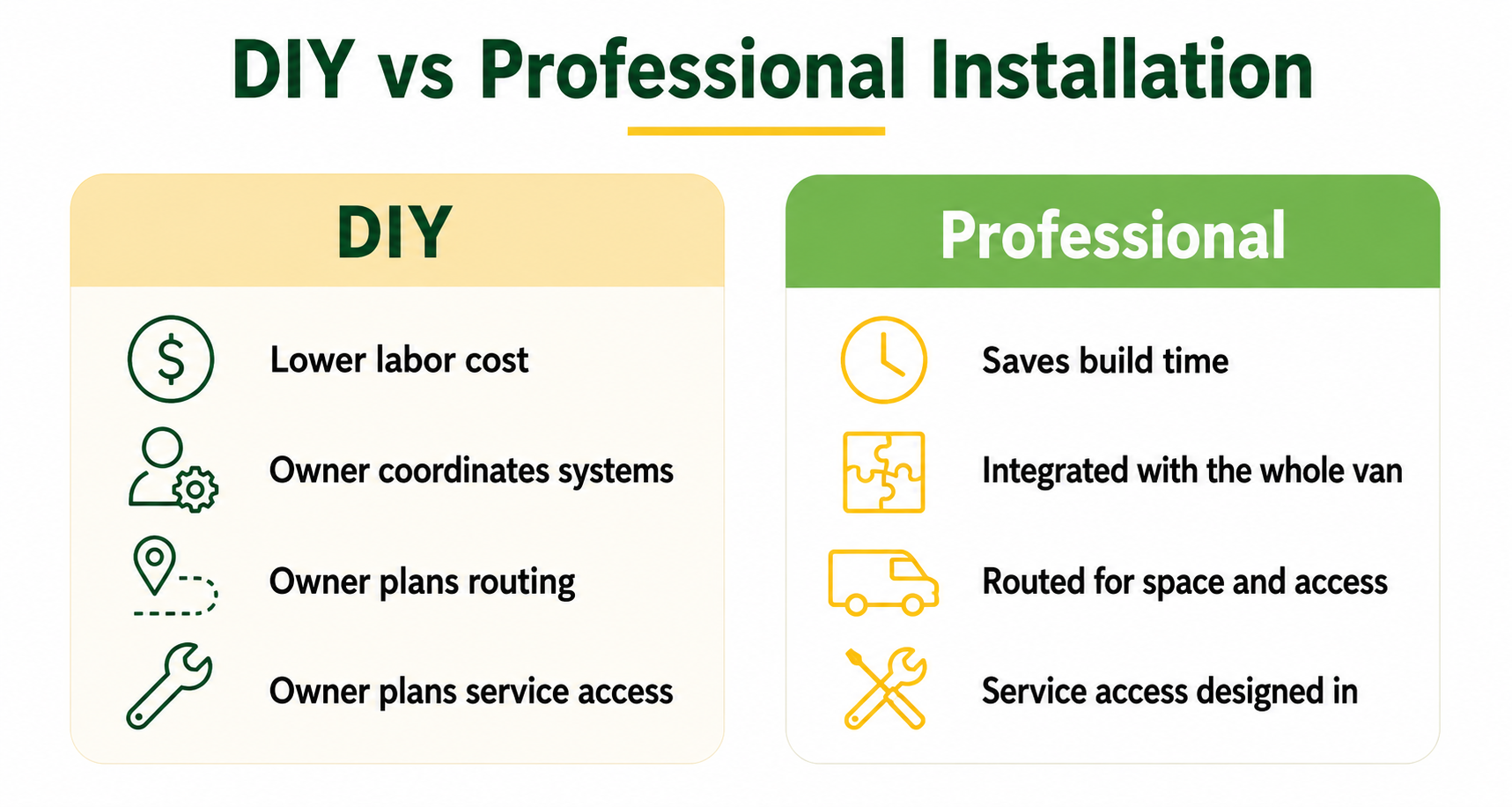
DIY installation is practical for simple systems with one pump, one tank, and a basic sink.
Professional van builds coordinate the water system with electrical planning, cabinetry, and weight distribution before any component is installed. Pumps, tanks, and connections are positioned so they remain accessible after the interior is finished.
Common Van Water System Problems
Van water problems including freeze damage, leaks, and pump wear are the most common issues in van water systems. Most can be prevented with proper installation and maintenance habits.
Common symptoms to watch for.
Pump doesn't start: Check power, switch, and fuse before assuming pump failure.
Pump cycles unexpectedly: Often indicates a small leak or faulty accumulator.
Low or inconsistent pressure: May signal a clogged inlet filter, weak pump, or air in the lines.
Leaks at fittings: Common after temperature changes or vibration loosens connections.
Gray water odors: Usually caused by stagnant water or an inadequate vent.
Turn off the pump when the van is not in use. Running the pump against a closed system or empty tank causes unnecessary wear.
A professionally designed and installed van water system is worth considering for its serviceability. Components should be reachable without dismantling cabinetry or flooring when inspection or repair is needed.
Maintaining the van's water system alongside electrical and mechanical systems prevents small issues from becoming larger problems. Mango Vans builds custom adventure van conversions out of South Florida. Water systems are specified as part of the complete integrated build. Contact Mango Vans to discuss a custom conversion.
Frequently Asked Questions
How does a camper van water system work?
Fresh water is stored in a tank. Opening a faucet drops pressure in the plumbing. A 12V demand pump responds by pressurizing the system. Used water drains into a gray water tank.
How does a 12V water pump work in a camper van?
When a faucet opens, pressure falls. The pump detects the drop and starts. When the faucet closes and pressure is restored, the pump stops.
Do you leave your van water pump on all the time?
Most builders switch the pump off when the van is parked. Running a pressurized closed system adds unnecessary wear. An on/off switch near the faucet is a common setup.
What size freshwater tank do I need for a camper van?
Multiply people per day by daily consumption by days between refills. Most van builds use between 15 and 40 gallons depending on occupants and whether a shower is included.
What happens to wastewater in a camper van?
Used water drains from fixtures into a gray water tank. The tank must be emptied at appropriate dump stations or designated disposal points.
Does a camper van water system need an accumulator?
No, but it helps. An accumulator buffers pressure between the pump and fixtures, reducing pump cycling and extending its service life.
Do camper vans need a water heater?
No. Hot water is optional. It makes sense for builds with showers or frequent hot-water needs. Basic sink-only builds can skip it.
Is it better to DIY or professionally install a van water system?
DIY suits simple single-fixture setups. Professional installation adds value when the system integrates with cabinetry, electrical, a shower, or multiple fixtures.