How Does a Rooftop Air Conditioner for a Van Actually Work and Do You Need It?

Most people who add a rooftop air conditioner to a van discover quickly that it is not plug-and-play. A van rooftop AC works, but only when the electrical, insulation, and installation decisions are made correctly from the start. This guide covers how these units work, what they require, and whether your build justifies the investment.
How a Rooftop Air Conditioner Works
A rooftop air conditioner for a van uses a closed-loop refrigeration cycle. The compressor pressurizes refrigerant, which moves heat from inside the van to the outside. The condenser sits on the roof and releases that heat into the outside air. The evaporator inside the van absorbs heat from cabin air. A fan then circulates the cooled air into the living space.
The key thing to understand is that the unit is not generating cold air. It is moving heat out of the van. A poorly insulated van will let that heat back in as fast as the AC removes it. Proper insulation is the foundation of any effective van cooling system, and without it, a rooftop AC runs constantly without achieving meaningful comfort.
Types of Rooftop AC for Vans
Three main types of rooftop air conditioner are used in van conversions, and they suit very different setups.
120V AC units are the most common and the least expensive. They require shore power or a generator to run. These suit builders who camp at RV parks or carry a generator, but offer no off-grid capability on their own.
12V, 24V, and 48V DC units are designed specifically for battery-powered off-grid builds. They draw directly from the van's house battery bank and can run on solar. They cost significantly more than 120V units but are the only practical choice for full-time or remote van life off-grid.
Inverter-based systems use a 120V unit powered by a pure sine wave inverter drawing from the battery bank. They are more affordable than dedicated DC units but carry efficiency losses through conversion. They also require a large battery and inverter to handle startup surge.
The platform your van is built on affects which unit fits and how it integrates with other systems. The chassis comparison guide covers how van dimensions, roof profiles, and payload ratings affect build decisions including AC installation.

Power Requirements - The Most Important Factor
A rooftop air conditioner for a van is one of the highest-draw systems in any build. A standard 120V unit running at 13,500 BTU draws roughly 1,400 to 1,700 watts while the compressor is running. The startup surge can spike past 3,000 watts for a fraction of a second. That is enough to trip an inverter or drain a battery below safe operating limits.
Running watts vs startup surge is where most first-time builders get caught. A 2,000-watt inverter is often not enough for a standard rooftop unit without a soft-start controller to flatten the surge. With one installed, a 2,000-watt inverter may work. Without it, 3,000 watts is the safer minimum.
A 100Ah AGM battery gives roughly 45 minutes of AC runtime at 50% duty cycle. A 100Ah lithium gives about 90 minutes. Four lithium batteries at 400Ah can sustain around 6 hours. Solar alone is rarely enough to run AC continuously. A 200-watt panel produces roughly 800 to 1,000 watt-hours per day in good conditions. That is not enough to offset even a few hours of AC draw. Engineers who have tested this directly confirm that shore power or a generator remains the most reliable option for 120V units.
12V DC units are more efficient by design. A well-sized 12V unit can run 6 to 8 hours overnight. It needs 200 to 300Ah of lithium and 400 to 600 watts of solar to do it.

How Much Cooling Do You Actually Get?
A rooftop air conditioner for a van can drop interior temperature by 16 to 22 degrees Fahrenheit under reasonable conditions. In a well-insulated van parked in the shade on a warm day, that is comfortable. A poorly insulated van parked in full sun at 100 degrees will overwhelm any unit. The compressor runs non-stop and cannot keep up.
Three factors determine real-world cooling more than BTU rating.
Insulation. A well-insulated van holds cold air and keeps heat out between compressor cycles. A poorly insulated van forces the AC to work continuously.
Sun exposure. Parking in direct sun can add 20 to 30 degrees of heat load. Shade or window covers make a measurable difference.
Van size. A high-roof extended van has more cubic feet to cool than a standard van. BTU requirements scale with interior volume.
Planning your van's cooling system starts at the design stage, not after the build is finished. Designing the layout with insulation, window placement, and electrical capacity in mind from the beginning makes the AC system far more effective.
Installation Basics and Risks
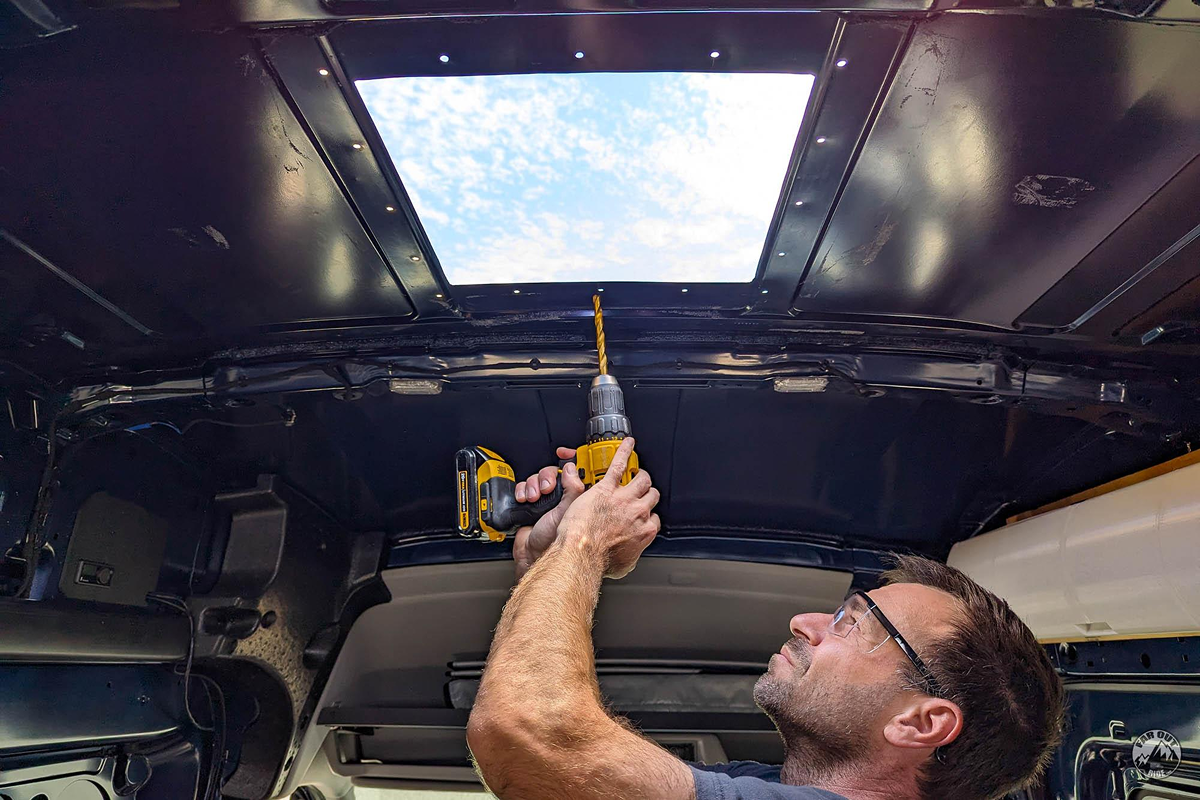
The physical installation of a rooftop air conditioner for a van uses a standard 14-inch by 14-inch roof cutout. This is the same opening used by most roof vent fans. The unit mounts over this opening, sealed against the roof with a gasket and sealant.
What makes installation complex is everything around that cutout. The roof needs to be flat in the mounting area, which varies by van platform. The seal must be watertight and maintained over time. Structural reinforcement is sometimes needed depending on unit weight. All of this happens before the electrical rough-in, which must be planned before walls go up.
Cutting holes for AC and fans is the step with the highest consequence in any van build. Errors in sealing or sequencing are expensive to fix after insulation and wall panels are installed. A leaking roof seal causes mold that may not be visible for months.
The electrical risks are real. Incorrect wiring for an inverter or DC unit can result in fire, damaged batteries, or a system failure. These are the areas where professional installation provides the most protection.
Do You Need a Rooftop AC?
A rooftop air conditioner for a van is not the right answer for every build. The decision comes down to three factors.
Climate. Traveling regularly in the deep South, the desert Southwest, or Florida in summer makes AC close to a necessity. If your route follows cooler elevations or you chase seasons, a quality roof fan and good insulation may be enough.
Use pattern. Full-time van lifers who stay parked for multiple days are the most likely to benefit. Weekend builders who drive daily get passive cooling from airflow and can rely on cooler evenings.
Budget. A complete off-grid rooftop AC setup with unit, batteries, inverter, and installation often runs $5,000 to $10,000 or more. Roof fans with good insulation cost a fraction of that.
Quick decision checklist:
Traveling in hot, humid climates for weeks at a time → AC justified
Weekend use, varied terrain, following cooler weather → roof fan likely sufficient
Pets staying in the van during the day → AC strongly recommended
Common van conversion mistakes often include adding AC late in a build without accounting for the electrical load. The builder discovers the existing battery and solar setup cannot support it.
Mistakes, DIY vs Professional, and Final Thoughts
The most common AC mistakes are planning failures, not unit failures.
Underestimating power needs. A 12V unit chosen without sizing the battery bank drains dead within two hours.
Skipping insulation. AC in a poorly insulated van solves nothing. Insulation must come first.
Poor unit placement. A unit directly over a sleeping area dumps cold air on the sleeper. Placement affects airflow across the whole van.
DIY electrical without experience. High-current DC wiring requires the right gauge wire, correct fusing, and rated connectors. Errors create fire risk.
| Factor | DIY | Professional |
|---|---|---|
| Upfront cost | Lower | Higher |
| Safety | Risky | Reliable |
| Performance | Inconsistent | Optimized |
| Longevity | Variable | Consistent |
A professional builder integrates the AC unit with the electrical system, insulation, and layout from the start. Mango Vans sizes the solar, battery bank, and inverter for the specific unit and usage pattern in each build.
Understanding the full conversion process shows why sequencing matters. The AC, electrical, and insulation decisions are connected. Getting them in the right order is what separates a build that stays cool from one that runs hot.
A rooftop air conditioner for a van can transform comfort on the road. Getting the most from it starts with honest planning around power, insulation, and installation.
Mango Vans designs and builds complete van conversions out of South Florida, with full electrical and cooling integration. See the completed builds for examples of how these systems come together in a finished van.
Frequently Asked Questions
How does a rooftop air conditioner work in a van?
It uses a closed refrigeration loop. The compressor moves refrigerant between the roof condenser and the interior evaporator, pulling heat out and releasing it outside.
Can you run a rooftop AC on batteries?
Yes, but it requires a properly sized lithium bank and inverter. A standard 120V unit at 50% duty cycle drains roughly 100Ah per 90 minutes. Off-grid use demands significant battery capacity and realistic runtime expectations.
How many watts does a van AC use?
A standard 13,500 BTU rooftop unit draws 1,400 to 1,700 running watts. Startup surge can briefly exceed 3,000 watts. 12V DC units typically draw 600 to 1,000 watts equivalent depending on the model.
Is a 12V air conditioner worth it for a van?
For full-time off-grid use in hot climates, yes. The premium buys battery compatibility and efficiency that 120V units cannot match without a large inverter. For shore-power builds, a 120V unit is more cost-effective.
How long can you run AC on a battery?
With 400Ah of lithium at 50% compressor duty cycle, a standard unit runs roughly 6 hours. That drops in extreme heat where the compressor runs more continuously. Good insulation extends battery runtime.
Do I need solar to run a van air conditioner?
Solar helps recharge batteries during the day but typically cannot offset AC draw in real time. A 200 to 400-watt solar setup supports overnight AC from a large lithium bank. Running AC continuously still requires a generator or shore power.
How much does a rooftop AC cost for a van?
A basic 120V unit starts around $700. A quality 12V DC unit runs $3,500 or more. A complete off-grid setup with batteries, inverter, and installation typically totals $5,000 to $10,000.
Can I install a rooftop AC myself?
The physical roof cutout and mounting are manageable for experienced builders. The electrical integration is where DIY risk is highest. Incorrect wiring on a high-current system creates fire risk and can damage expensive batteries.
What size AC do I need for a camper van?
A standard high-roof cargo van needs 6,000 to 9,000 BTU for reasonable cooling in moderate heat. Extreme heat or larger vans may need 12,000 to 13,500 BTU. Insulation quality affects comfort more than BTU rating alone.
What is the best cooling solution for van life?
It depends on climate and use pattern. A quality roof fan with good insulation covers most conditions. A rooftop air conditioner for van life in hot, humid regions is a meaningful upgrade but demands proper electrical planning.