Van Life With a Dog: Tips, Challenges, And Essentials

Dogs and van life go together naturally. The outdoor lifestyle, the constant movement, the early mornings at trailheads. What social media does not always show is how much planning it actually takes. Van life with a dog adds logistics others never have to consider. Temperature management, dog-friendly camping, shedding, and layouts that work alongside your gear. None of it is insurmountable. All of it requires thought before you go.
Is Van Life With a Dog Actually Realistic?
Yes. It is one of the most rewarding ways to do van life. Dogs adapt to van life better than many people expect, particularly high-energy breeds that benefit from more outdoor time. The structure a dog requires also benefits van lifers. Consistent feeding times, daily exercise, and regular outdoor breaks create a routine that makes the lifestyle more grounded.
The realistic challenges are worth naming. Small vans limit indoor movement. Certain national parks and popular trails restrict dogs entirely. Leaving the van unattended with a dog in warm weather limits daily scheduling more than anything else. Van life already demands more adaptability than most people anticipate. Adding a dog amplifies that. It also amplifies what makes the lifestyle worth it.
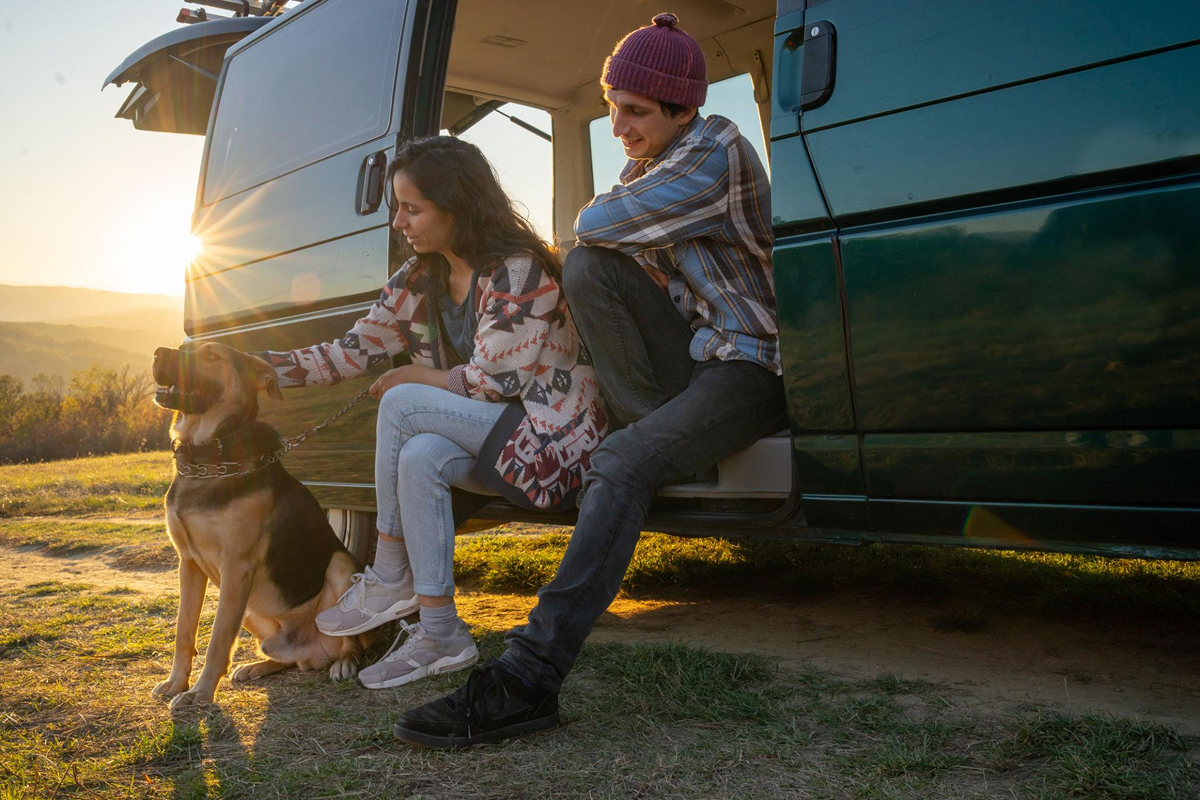
Designing a Dog-Friendly Van Setup
This is where van life with a dog diverges most from standard van builds. Most conversion guides focus entirely on human livability. A dog-friendly build requires deliberate design choices that most first-time builders miss.
Flooring matters more than any other single material choice. Vinyl plank is durable, water-resistant, easy to wipe down, and does not trap hair the way carpet does. It holds up to muddy paws and daily abuse in an enclosed space.
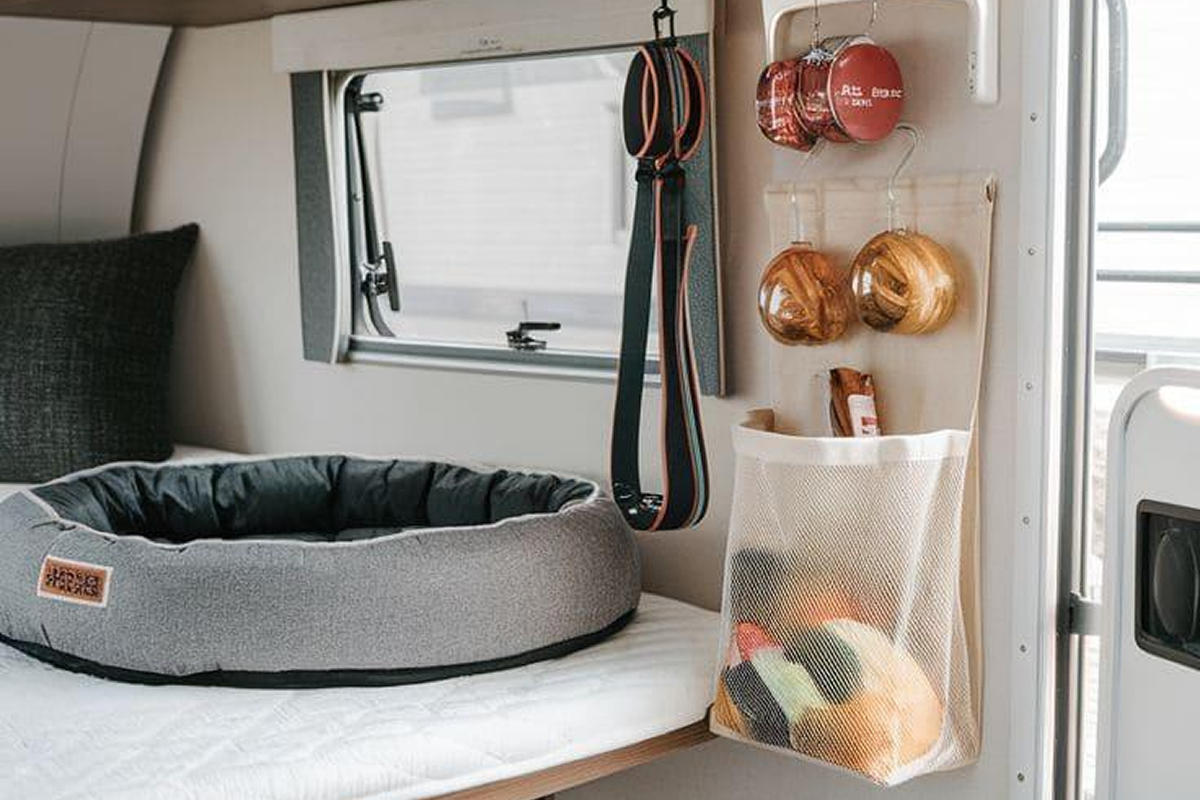
Storage for pet gear needs its own dedicated space. Leashes, harnesses, collapsible bowls, paw cleaners, food bins, and grooming supplies each take up room. Under-bed drawers work well.
Sleeping arrangements require thought. A dog bed in a specific van area works better than sharing the human bed, which causes hair and space problems.
Airflow is critical, especially in warmer climates. Choosing the right van platform for a dog-friendly layout matters. Roof height, wall configuration, and vent placement all affect passive temperature management when the fan is off.
Easy-clean materials throughout the van reduce daily maintenance. Avoid fabric surfaces and exposed foam. Surfaces that wipe clean quickly make a measurable difference over months of travel.
Temperature Control and Safety
Overheating is the most serious risk of van life with a dog. A van interior can reach dangerous temperatures within minutes in direct sun, even on mild days.
Full-time van lifers consistently list temperature management as the most underestimated challenge of traveling with a dog. The core tools are a roof vent fan, a remote temperature monitor with phone alerts, and proper insulation.
A remote temperature monitor alerts your phone if interior temperature exceeds a set threshold. Insulation and ventilation design determine how quickly a van heats up and how well passive airflow keeps temperatures stable. These are build-time decisions that cannot easily be changed later.
In hot climates, park in full shade, use reflective window covers, and time stops around the hottest parts of the day. In cold climates, a diesel heater keeps the dog warm during nights at altitude.
Daily Life on the Road With a Dog
The daily rhythm of van life with a dog is more structured than it sounds. Dogs do best with consistent feeding times, predictable exercise, and regular outdoor access. In practice, that structure improves the van life experience rather than limiting it.
Full-time van lifers with dogs emphasize that the dog shapesthe travel pace in positive ways. Shorter driving days, more frequent stops, and priority on outdoor-accessible camping all make for a richer trip experience. Dogs also add a layer of security at overnight parking spots that solo van lifers genuinely appreciate.
Plan potty breaks every few hours on long driving days. Research dog-friendly trails in each area. Manage wet and muddy paws before they track through the van. Plan grocery stops around ambient temperature rather than convenience.
National park access is the most common limitation. Most national parks prohibit dogs on trails. Research each destination before arrival and plan dog-friendly alternatives nearby.
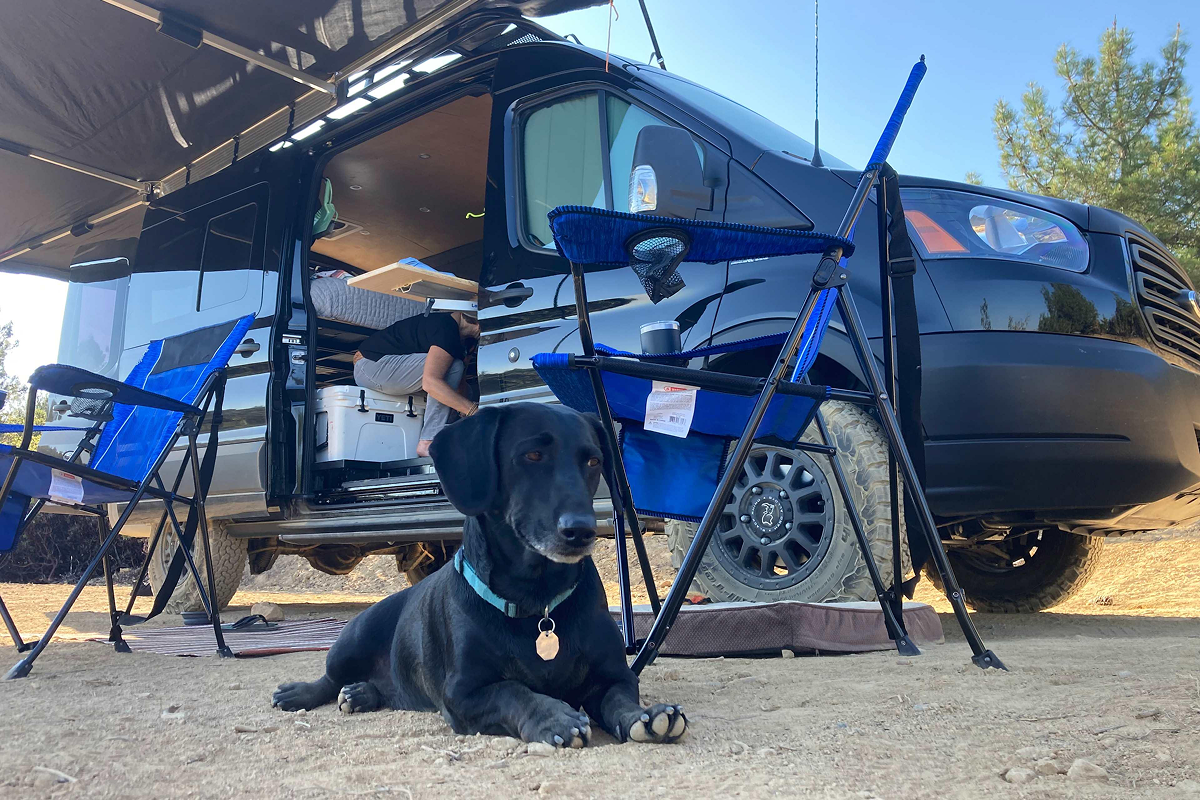
Essential Gear for Van Life With Dogs
The gear list extends well beyond a bowl and a leash. These items make daily life materially easier.
Crash-rated travel harness or crate. A standard collar provides no crash protection. A harness rated for vehicle use does.
Remote temperature monitor. Non-negotiable for any time the dog is left in the van.
Collapsible bowls. Lightweight and packable for hiking and travel stops.
Paw cleaning mitt or portable paw washer. Daily use in wet or muddy conditions.
Dog-specific cooling mat. Useful inside the van during stops in warm weather.
GPS collar tag. Important if the dog runs off at off-leash areas or remote campsites.
Dedicated food and water storage bins. Sealed containers that prevent odor spread in the van.
Portable 12V fan. Supplemental airflow for the sleeping area on warm nights.
Apps and planning tools for van lifehelp identify dog-friendly campgrounds, off-leash areas, and parks in each region. Far more useful than searching in the moment.
Is Van Life Better With a Dog?
For many van lifers, yes. Genuinely and without qualification. The companionship, the shared outdoor routine, and the structure a dog provides make the lifestyle more sustainable for long-term travel.
The tradeoffs are real. Temperature logistics add daily mental load. Certain destinations become harder to access. Van build complexity increases. But most van lifers with dogs say the benefits outweigh the challenges.
Remote work and van life already require thoughtful daily planning. A dog that fits naturally into that routine is not a complication. It is one of the better reasons to be on the road at all.
Mango Vans builds custom van conversions out of South Florida, including layouts designed for travelers who bring pets. The completed builds gallery shows what a functional, livable van interior looks like when planned around real daily use.
Frequently Asked Questions
Can you realistically do van life with a dog?
Yes. Dogs adapt well to van life, particularly active breeds that benefit from more outdoor time. It requires more planning around temperature and daily scheduling, but most dog-owning van lifers consider it more rewarding.
How do you keep a dog cool in a camper van?
A roof vent fan, proper insulation, a remote temperature monitor with phone alerts, and shade-conscious parking. Never leave a dog in a closed, unventilated van in warm weather.
Is van life stressful for dogs?
It depends on the dog and the transition. High-energy dogs that get regular outdoor time typically thrive. Most dogs adapt within weeks once a consistent daily routine is established.
What are the best dog breeds for van life?
High-energy, adaptable breeds do well. Australian Shepherds, Border Collies, Labrador Retrievers, and widely socialized mixed breeds all adapt readily. Brachycephalic breeds are more vulnerable to heat and need extra precautions.
Can you leave a dog alone in a van safely?
Briefly, with the right precautions. Vent fan running, temperature monitor active, parked in shade, with a clear plan if the alert fires. Long unattended periods in warm weather are not safe.
What should you pack for van life with a dog?
Crash-rated harness or crate, remote temperature monitor, collapsible bowls, paw cleaning tools, GPS tag, cooling mat, and sealed food storage. A dog-specific sleeping area in the van layout reduces daily friction significantly.
How do you manage dog hair and dirt in a van?
Vinyl plank flooring, a handheld vacuum daily, a mat at the van entry for paw cleaning, and easy-wipe surfaces throughout. A good grooming routine reduces shedding volume.
Are national parks dog friendly for van travelers?
Partially. Most allow dogs in campgrounds but prohibit them on trails. Research each park before arrival and identify nearby state parks or BLM land with dog-friendly trail access.
What features make a van better for dogs?
Vinyl flooring, a dedicated dog sleep area, under-bed storage for pet gear, a quality roof vent fan, and good insulation. A layout designed around the dog's daily needs makes van life with a dog significantly easier.
How much space does a dog need in a camper van?
Enough for a comfortable sleeping spot and room to stand and turn around. Most mid-size dogs adapt well to high-roof full-size cargo vans. Large breeds need more deliberate layout planning.