The Best Vanlife States for Camping, Weather and Full-Time Travel
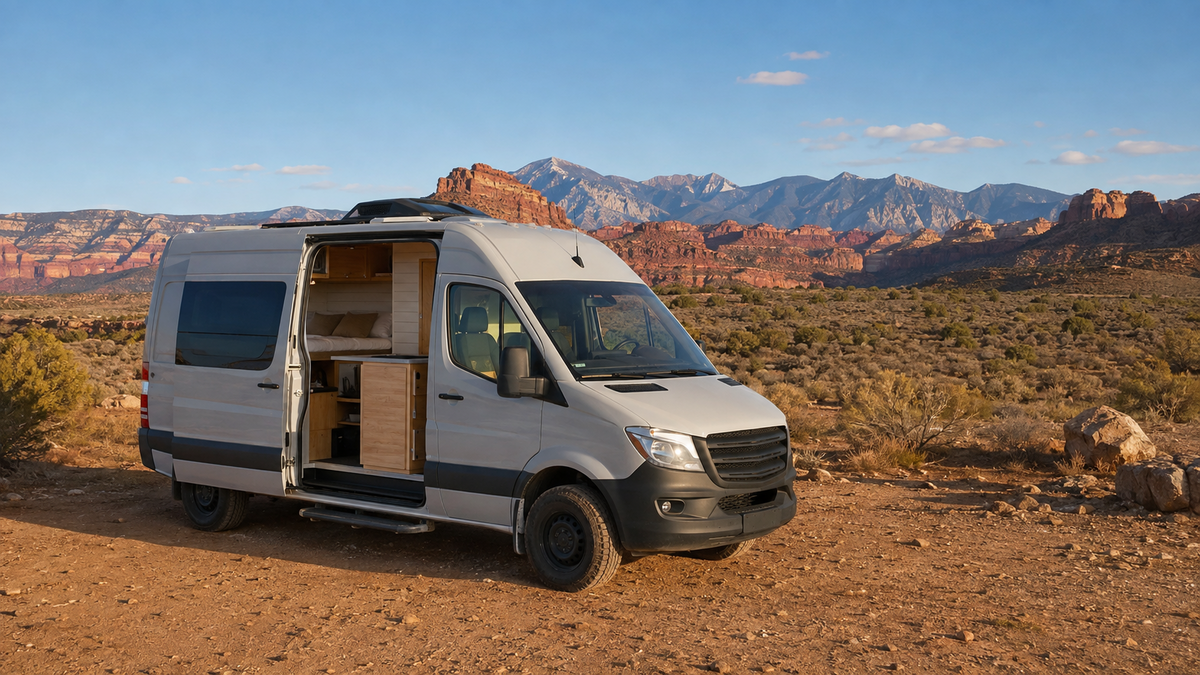
There is no single best state for van life. The right destination depends on the season, terrain, and how your van handles changing conditions. California, Utah, Arizona, and Oregon come up most often because they offer the most variety. But each works best at a specific time of year.
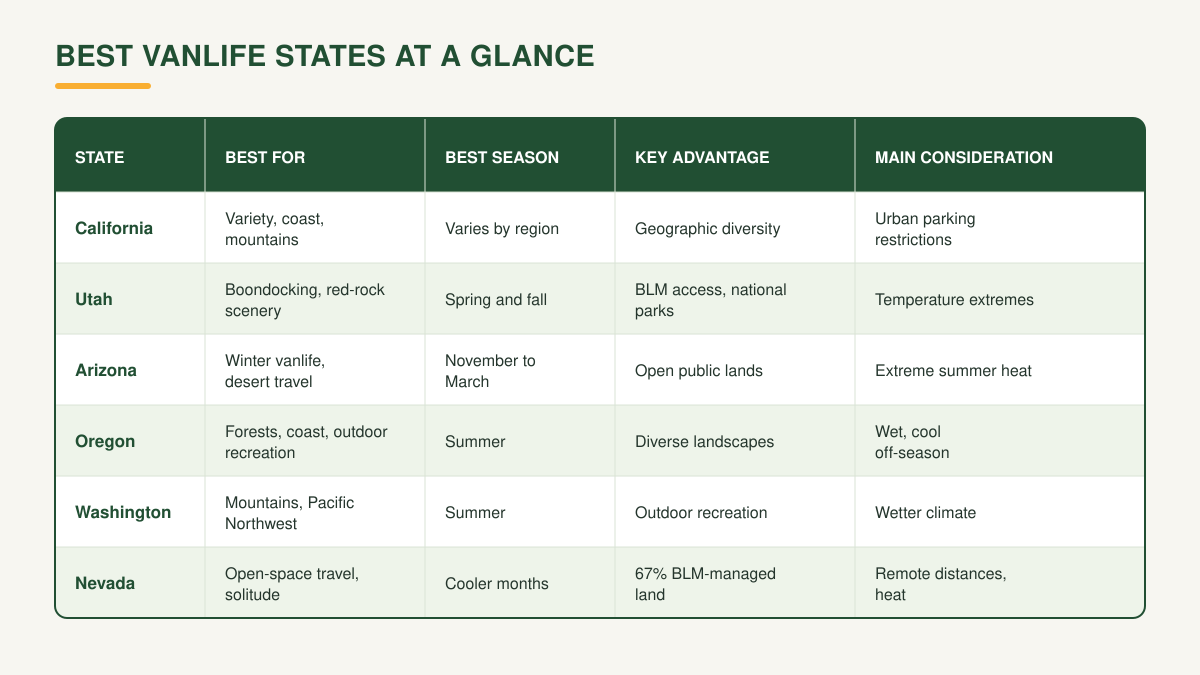
Best Vanlife States at a Glance
Overnight parking rules vary by state, county, and city. Public land access is the most consistent advantage western states have.
The Best Vanlife States
California
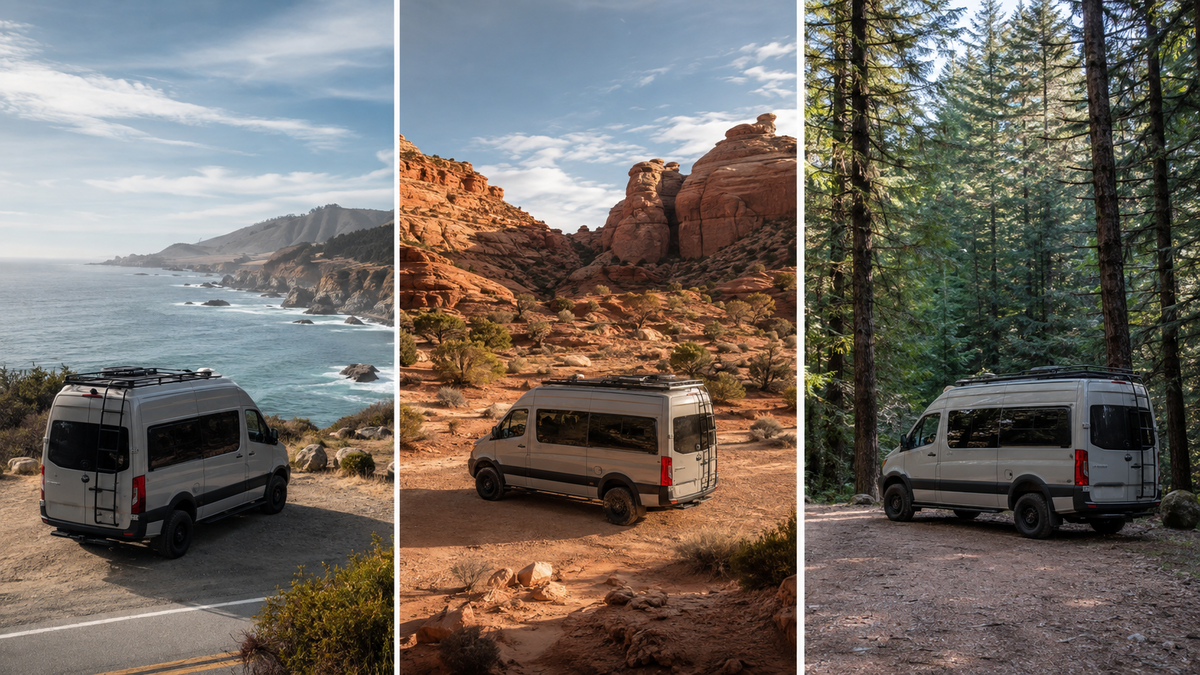
California is the most geographically diverse of the best vanlife states. Highway 1 runs the coast from Oregon to San Diego. US-395 cuts through the eastern Sierra and high desert. Southern California offers desert camping in winter and the Sierra is accessible in summer.
The tradeoff is urban parking. California cities have some of the strictest vehicle habitation laws in the country. Van life realities are more manageable than most people expect. But planning around urban areas matters more in California than almost anywhere else.
Utah
Utah offers more access to concentrated outdoor destinations than any other western state. Moab, Zion, Arches, Canyonlands, and Bryce Canyon are all within a few hours of each other. BLM land surrounds many destinations and allows dispersed camping for up to 14 days within any 28-day period.
Spring and fall are the sweet spots. Summer temperatures in southern Utah regularly exceed 100°F. Winter brings ice and road closures at elevation. Utah BLM camping is some of the most accessible free camping in the country. Some corridors near Zion are facing increasing restrictions.
Arizona
Arizona is the premier winter vanlife destination. The desert climate keeps temperatures comfortable from November through March. Quartzsite draws tens of thousands of van lifers and RVers each winter. It has become the hub of the North American nomad community.
Public lands around Quartzsite, the Sonoran Desert, and areas near Flagstaff offer extensive dispersed camping. Summer in Arizona changes the equation entirely. Phoenix and the lower desert are not viable for van life without serious cooling capability.
Oregon
Oregon suits travelers who prefer forests and coastline over desert. The Oregon coast is accessible and scenic through summer. Bend serves as a hub for high desert and mountain recreation in central Oregon. The Cascades offer significant public land access in summer.
Oregon is cooler and wetter than the southwestern states for much of the year. Fall through spring brings consistent rain along the coast and in the mountains. Summer is the clear window for comfortable travel.
Washington
Washington is a summer state for most van lifers. The North Cascades, Olympic Peninsula, and Mount Rainier offer world-class outdoor recreation from June through September. The Pacific Northwest draws travelers looking for dramatic mountain scenery and dense forests.
Rainfall defines Washington from October through May. This limits solar production and makes extended stays uncomfortable without proper insulation and electrical planning.
Nevada
Nevada offers the most open-space camping of any state. Roughly 67 percent is BLM-managed and most allows dispersed camping at no cost. The absence of crowds is Nevada's primary appeal.
Travel in the cooler months. Summer temperatures are extreme. The Great Basin is particularly remote, which demands more electrical and water capacity than destinations with more amenity access.
Choose a State Based on the Season
Experienced van lifers think in seasonal circuits. Moving with the weather is more sustainable than staying in one state year-round.
The best vanlife states work as a seasonal circuit. Arizona in winter, Utah in spring, the Pacific Northwest through summer, and back south as temperatures drop in fall.
Public land access is shifting as high-traffic areas see increased closures. Sedona, the Zion corridor, and parts of the Mojave have seen dispersed camping restricted in recent years. Always check with the local BLM field office before arriving.
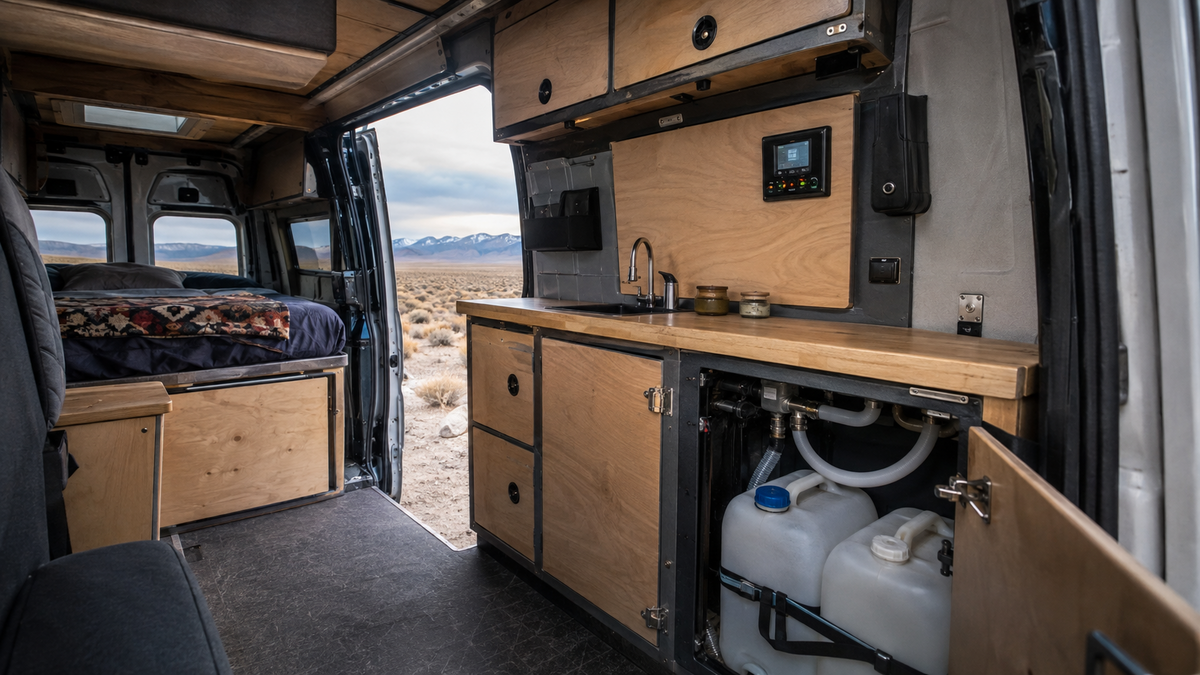
Van insulation quality determines how much of the year a van stays comfortable across the elevation and temperature swings of seasonal travel.
Your Van Matters as Much as Your Destination
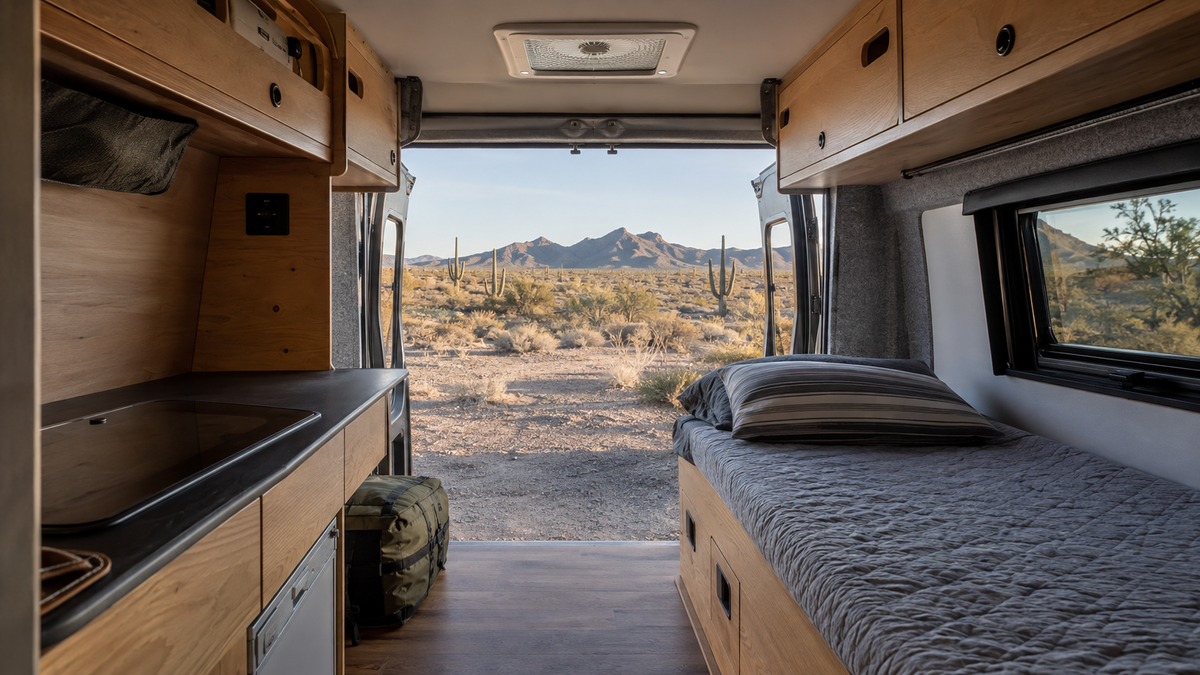
Traveling between Arizona's desert, Utah's canyon country, Oregon's coast, and Nevada's high desert puts different demands on a camper van. Insulation, ventilation, electrical capacity, and water storage all get tested differently.
Off-grid solar systems sized for actual daily use allow camping in remote Nevada and Utah canyon lands where hookups do not exist. Planned maintenance schedules keep systems running across the climate swings that multi-state travel brings.
Mango Vans designs and builds custom Sprinter, Transit, and ProMaster conversions out of South Florida with travel-ready specifications. See the completed builds gallery to see how builds are specified for varied climates and terrains.
Frequently Asked Questions
What is the best state for van life?
There is no single best answer. California, Utah, Arizona, and Oregon stand out consistently. The right choice depends on season, camping style, and terrain preference.
What is the best state for van life in winter?
Arizona. Its desert climate, public lands, and nomad destinations like Quartzsite make it the most practical cold-season option.
What are the best states for summer vanlife?
Oregon and Washington. Both offer forests, mountains, and coastline at their best from June through September. Utah works in spring before canyon heat peaks.
Which states are best for boondocking?
Utah and Nevada offer the most accessible free dispersed camping on BLM land. Nevada has the highest proportion of BLM-managed land of any state.
Is it legal to live in a van full-time?
Living in a van is not illegal. Overnight parking, vehicle habitation, and dispersed camping are each governed differently at the state, county, and city level.
Where can you park overnight while traveling?
BLM and National Forest land allow dispersed camping for up to 14 days within any 28-day period. City streets and private property operate under separate local rules.
Is California good for van life?
Yes, particularly for geographic variety. Highway 1, the Sierra, and the southern desert offer distinct environments. Urban parking restrictions require more planning than other western states.
Is Utah good for van life?
Utah is outstanding for outdoor recreation and boondocking. Moab, Zion, Arches, and Bryce Canyon are all within reach, with BLM land surrounding each destination.
Do you need a professionally converted van for van life?
No, but a professional conversion can improve reliability, comfort, system integration, and suitability for long-term multi-climate travel.
What should a van have for multi-state travel?
Reliable electrical systems, insulation, ventilation, water capacity, and a layout suited to the best vanlife states you plan to travel.