Work Van Shelving Ideas to Maximize Space & Efficiency

A disorganized work van costs more than time. Every minute spent searching for a tool is a minute not billed. Multiply that across a full crew and a full week and the number gets uncomfortable fast. The right work van shelving ideas do not just tidy up a cargo space. They change how efficiently a tradesperson operates from the moment the rear doors open.
This guide covers shelving types, workflow-based layout strategy, trade-specific setups, and cost ranges.
Why Smart Van Shelving Matters
A well-organized van communicates professionalism before a word is spoken. When a technician reaches for the right tool in seconds, it builds confidence. When that same technician spends three minutes moving boxes to find a fitting, it does the opposite.
Beyond image, shelving affects safety. Unsecured tools shift during transit and become hazards in sudden stops. A properly designed van shelving system keeps weight balanced, tools secured, and access clear from both access points.
The same workflow thinking that drives a well-organized van also applies to other types of mobile setups. Those considering how a van can function as a full living or working platform will find that interior organization is the common thread running through every successful build, regardless of purpose.

8 Work Van Shelving Ideas That Actually Work
1. Modular shelving systems
Pre-built modular units bolt directly to the van walls without permanent modification. Units can be reconfigured or transferred to a new vehicle as the business grows.
Best for: Businesses running multiple vans or expecting to scale.
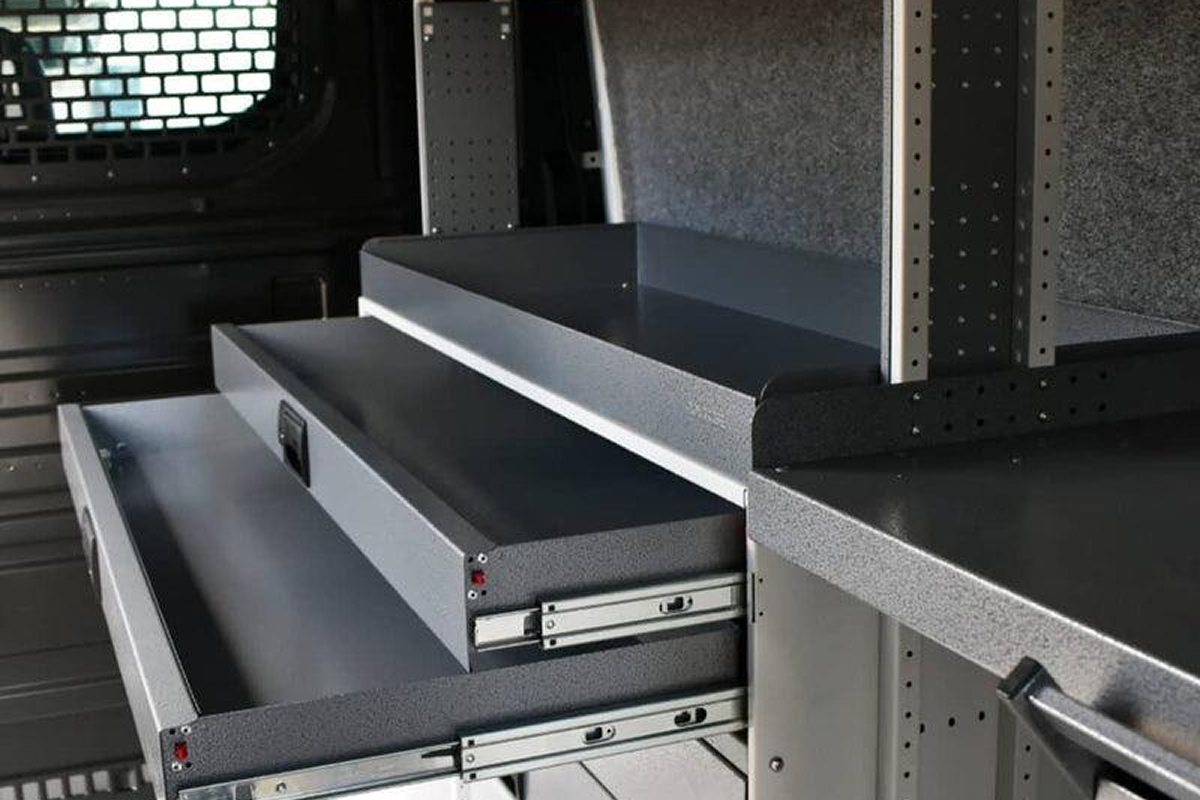
2. Drawer-based storage systems
Full-extension drawers keep tools organized by category and prevent stacking. High-quality drawer systems include weight ratings and locking mechanisms for transit security.
Best for: Electricians and HVAC technicians managing small parts and components.
3. Floor-to-ceiling shelving
Open-bay shelving running wall to ceiling maximizes cubic footage. Works best on one side, leaving the opposite wall or floor clear for larger items.
Best for: General contractors carrying bulky materials alongside smaller tools.
4. Adjustable shelving units
Slotted upright systems allow shelf heights to be reconfigured as job types change. More adaptable than fixed shelving but slightly less rigid under heavy load.
Best for: Tradespeople whose inventory changes seasonally or by project type.
5. Door-mounted storage racks
Panels mounted to van doors turn dead space into organized storage for hand tools, fasteners, and frequently grabbed items.
Best for: Any trade where speed of access at the rear door matters.
6. Overhead storage solutions
Shelving installed above head height uses space most systems ignore. Works best for lightweight, infrequently accessed items like documentation, spare parts, and safety gear.
Best for: Tradespeople who have already maximized wall and floor space.
7. Sliding shelving systems
Pull-out shelving slides forward when rear doors open, bringing the back of the van within reach without climbing inside. Reduces strain and speeds up retrieval.
Best for: Solo operators regularly needing items stored deep in the van.
8. Trade-specific bin systems
Modular bin systems with labeled compartments keep small parts sorted and visible. Particularly effective for trades managing hundreds of fasteners, fittings, or electrical components.
Best for: Plumbers, electricians, and HVAC technicians.
The RAM ProMaster ranks among the most popular platforms for commercial work van shelving ideas because of its flat walls and wide interior floor. Both features simplify the installation of standard modular units without custom modification.
How to Design Your Van Shelving Layout
Most work van shelving ideas fall short not because the hardware is wrong but because the layout ignores workflow. A workflow-first approach fixes this.
Step 1 - Map your daily tasks Before ordering any shelving, list every item carried in the van and how often it gets used each day. Tools touched multiple times daily need to be reachable without moving anything else. Items grabbed weekly can go in upper or rear storage.
Step 2 - Group tools by usage frequency High-frequency items belong at waist height near the primary access door. Low-frequency items belong in overhead bins or deep in rear shelving. Mixing them forces unnecessary movement on every job.
Step 3 - Optimize your access points Side door access and rear door access serve different purposes. Side-door shelving works for frequently grabbed hand tools and fasteners. Rear-door access suits larger power tools, materials, and equipment that need to be loaded and unloaded at each job site.
Step 4 - Balance the weight Heavy tools on one side create handling imbalance and accelerate tire wear. Distribute weight evenly between driver and passenger sides, and keep the heaviest items low. Modular van interiors that account for weight distribution during planning produce a more durable result.
Designing a multi-purpose van interior that accommodates both tool storage and workspace needs requires the same workflow mapping. Inventory first, layout second, hardware last.
DIY vs Professional Van Shelving
Both routes produce working storage. The outcomes differ by quality, time, and long-term reliability.
| Factor | DIY shelving | Professional upfitting |
|---|---|---|
| Upfront cost | Lower | Higher |
| Customization | High | High |
| Installation time | Days to weeks | Hours to days |
| Durability | Variable | Consistent |
| Resale value impact | Low | Higher |
| Compliance / weight rating | Self-managed | Verified |
DIY shelving suits budget builds, simple setups, and tradespeople with the time and skill to build to a quality standard. Plywood van shelving works well for custom configurations when properly sealed and supported.
Professional upfitting suits businesses running the van daily, managing multiple vehicles, or needing verified weight ratings for compliance. A professional custom van build produces an integrated layout where shelving, electrical, and lighting work together.
Work Van Shelving by Trade and Cost
Plumbers
Plumbers need pipe storage along one wall, a bin system for fittings by size, and secure storage for power tools. Shelving that separates copper, PVC, and flexible supply lines prevents job-site scrambles.
Electricians
Electricians benefit most from drawer-based systems with small-part organizers and vertical storage for conduit. Cable management inside the van matters as much as the shelving. Loose cables create snagging hazards and slow retrieval.
General contractors
General contractors carry the widest variety of tools and benefit from adjustable shelving that changes by project type. A mix of open shelving, drawers, and overhead bins covers the range from framing to finish work.
Experienced tradespeople who have refined their van organization emphasize that the system needs to match the workflow, not the other way around. A setup that holds up under daily use starts with how you actually work, not with what looks organized.
Work van shelving cost ranges:
| Setup type | Estimated cost |
|---|---|
| Basic DIY plywood build | $100–$500 |
| Mid-range modular kit | $300–$1,000 |
| Professional steel/aluminum system | $1,000–$3,000+ |
The right work van shelving ideas pay for themselves. A tradesperson spending 20 minutes per day searching for tools loses over 80 hours annually. At any billable rate, that is a significant number.
Common Mistakes and When to Hire a Professional
Common mistakes that undercut even good shelving systems:
Overloading shelves beyond weight ratings. Most van shelving is rated between 100 and 500 pounds per shelf. Check the specification before loading.
Building around the wrong access point. Shelving designed for rear-door retrieval does not work when a job site only allows side-door access.
Choosing materials for cost over durability. Particle board warps in humidity and fails under vibration. Steel and aluminum hold up. Low-grade wood often does not.
Ignoring future needs. A shelving system that maxes out capacity on day one leaves no room to grow.
Blocking emergency access. Shelving that fully blocks the rear interior creates a safety and insurance problem.
Maintaining a van conversion properly includes the shelving systems inside it. Fastener tightness, drawer slider condition, and bin wear are worth a quarterly check.
Signs a professional upfit is the right call:
The van runs six or more days per week
Multiple technicians access the same vehicle
The business carries expensive equipment needing secure, padded storage
Client-facing professionalism is a business priority
The van is financed and resale value matters
Mango Vans builds custom commercial van interiors out of South Florida around real workflow, not generic layouts. See the completed builds gallery to see what purpose-built commercial interiors look like.
Frequently Asked Questions
What is the best shelving for a work van?
Modular steel or aluminum shelving with drawer units offers strong durability, solid weight ratings, and easy adaptability for most trades. The right system depends on tools carried and daily access frequency.
Is it cheaper to build or buy van shelving?
DIY plywood shelving typically costs $100 to $500 in materials. Mid-range modular kits run $300 to $1,000. Professional upfitting starts around $1,000 and increases with system complexity.
How do I organize a small work van?
Prioritize vertical space with floor-to-ceiling shelving on one side. Use door-mounted racks for frequently grabbed items and keep the floor clear for bulky tools and materials.
What materials are best for van shelving?
Steel and aluminum are the most durable for high-use commercial vans. Plywood works for DIY builds when properly sealed and supported. Avoid particle board and MDF in van applications.
How much weight can van shelves hold?
Most commercial modular shelving is rated between 100 and 500 pounds per shelf. Always verify the rating before loading and account for additional dynamic load during transit.
What is modular van shelving?
Modular shelving uses pre-built units that bolt to the van walls without permanent modification. Units can be reconfigured and transferred between vehicles as fleet needs change.
How long does it take to install van shelving?
A basic DIY build takes a weekend or more. A modular kit installs in a few hours. A full professional upfit typically takes one to three days.
Can I customize shelving for my trade?
Yes. Trade-specific layouts are a primary advantage of custom van upfitting. Plumbers, electricians, HVAC technicians, and general contractors all benefit from shelving built around their specific tools.
Is professional van upfitting worth it?
For tradespeople running their van daily, yes. Efficiency gains, reduced tool damage, and a professional image typically recover the upfront cost within the first year.
How do I maximize space in a cargo van?
Use floor-to-ceiling shelving on one wall. Add door-mounted racks and overhead bins for lightweight items. Place the most-used tools at waist height near the primary access door.