How Van Solar Systems Work Together with Shore Power and Alternator Charging
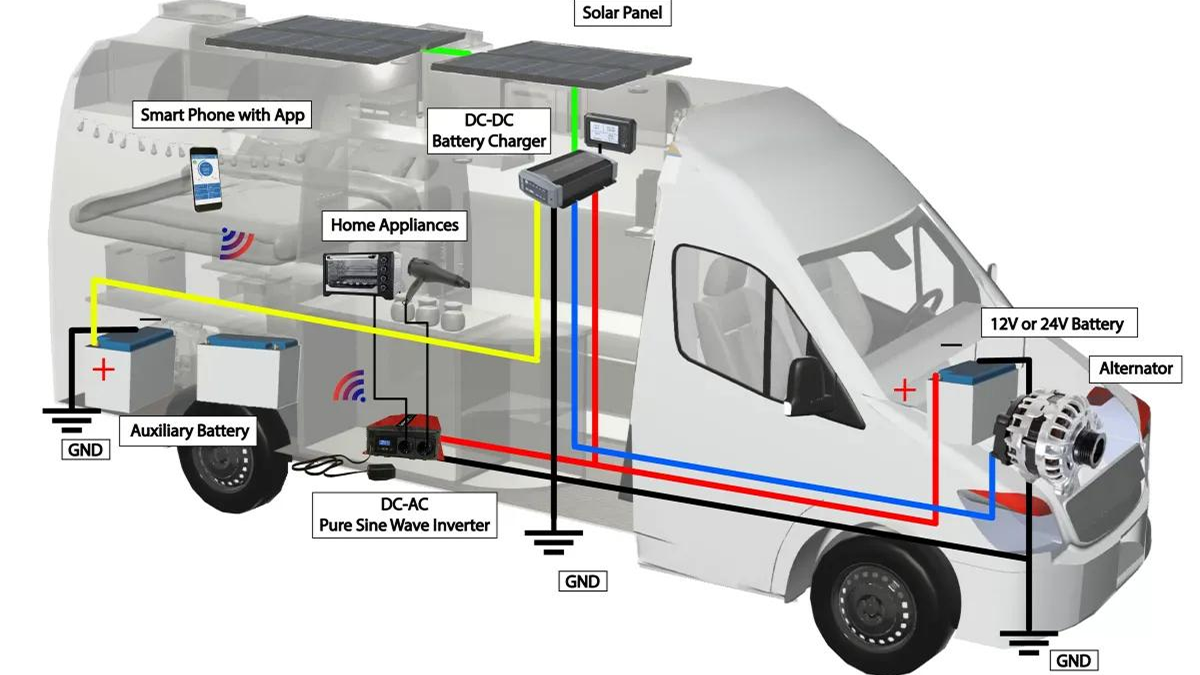
Van solar systems are the primary power source for most full-time van builds. But solar alone has real limits. Cloudy weeks, short driving days, and high-draw appliances all strain a solar-only setup. A properly designed van electrical system uses three charging sources. Solar panels on the roof, a shore power inlet at campgrounds, and a DC-to-DC charger on the alternator. Each fills a different gap, and understanding how they interact separates a reliable system from one that regularly runs flat.
Why Van Solar Systems Alone Are Not Always Enough
Solar depends on sunlight. When consecutive overcast days hit, or when the van sits in tree cover, production falls short of daily consumption. High-draw appliances compound the shortfall.
Sprinter alternator reliability is designed to work within specific load tolerances. Relying on solar alone pushes those limits when production is low.
How Solar Functions as the Primary Charging Source
Van solar systems convert sunlight to DC electricity through roof-mounted panels. An MPPT charge controller regulates that electricity and sends it to the battery bank at the correct voltage and profile for the battery chemistry. The battery bank stores the power and supplies it to all 12V and 120V loads throughout the day and night.
The solar system sizing guide covers how panel wattage, roof layout, and battery capacity need to match the actual daily load. Van solar systems cover most daily needs when the sun is available.
The Battery Bank as the System Hub
The battery bank sits at the centre of all three charging sources. Solar, shore power, and alternator charging each feed into it through their respective controllers or converters. The battery bank stores that energy and releases it to loads regardless of which source is active.
Battery chemistry and charging rates determine how each source feeds the bank and at what speed. LiFePO4 accepts a faster charge rate than AGM and benefits more from simultaneous sources.
How Alternator Charging Works in a Van
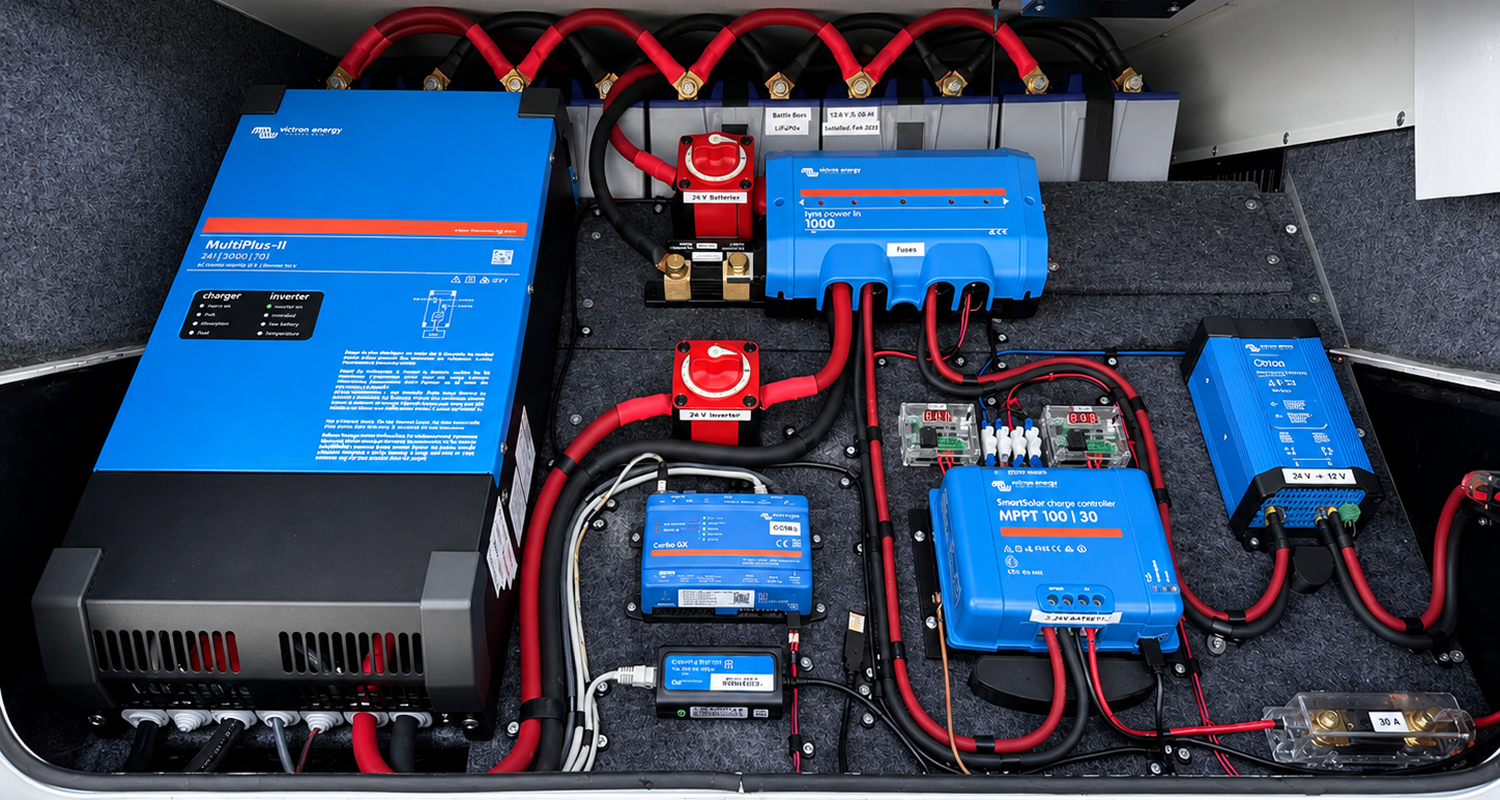
When the van is driven, the alternator produces DC electricity that charges only the starter battery by default. A DC-to-DC charger connects the starter battery circuit to the house battery bank and converts the alternator output into the correct charging profile.
DC-to-DC charger sizing typically limits current draw to 20 to 40 amps, preventing the house battery from overloading the alternator. It also boosts voltage if the alternator output falls below the level needed to fully charge the house batteries. On modern vans with smart alternators, a DC-to-DC charger is required rather than optional.
Alternator charging is most valuable on driving days when solar is low, or the battery bank was heavily depleted overnight.
How All Three Sources Work Together
In a correctly designed system, all three sources operate simultaneously without conflict. Each feeds the battery bank through its own dedicated device. The MPPT controller manages solar input. The inverter/charger manages shore power. The DC-to-DC charger manages alternator input.
Parallel charging inputs each contribute to the battery bank based on availability. When plugged in at a campground with the engine off, shore power charges the bank through the inverter/charger. When driving with no shore connection, the DC-to-DC charger takes over. When parked off-grid with the engine off, solar handles the load.
Source Priority and How the System Manages It
No manual switching is needed between sources in a well-designed system. Shore power takes priority when plugged in because it delivers the highest and most stable charge rate. Solar and the DC-to-DC charger continue to operate in parallel.
When unplugged, the MPPT controller and DC-to-DC charger manage solar and alternator inputs independently. Neither can overcharge the battery bank. Each device monitors state of charge and tapers current as the bank approaches full.
The BMS in a LiFePO4 battery adds a final layer of protection. It cuts off input from all sources if the battery reaches a state that risks damage.

Planning a Multi-Source System
A multi-source system requires all three charging devices to be sized for the installed battery bank. An inverter/charger too small cannot fully charge the bank from shore power in a reasonable time. A DC-to-DC charger rated too low adds little on driving days.
Maintaining charging connections in van solar systems includes checking cable terminals, verifying charge settings after battery replacement, and confirming all controllers are programmed for the installed chemistry.
How Professional Builds Integrate All Three Sources
Integrating three charging sources requires wiring, component selection, and configuration that work as a complete system. Sizing mistakes in any one device affect the others. Planned vs retrofitted builds show the cost of adding shore power or alternator charging as afterthoughts to a solar-only design.
Mango Vans designs and builds custom Sprinter, Transit, and ProMaster conversions out of South Florida. All three charging sources are integrated as part of the complete electrical specification. See the completed builds gallery to see how multi-source electrical systems are designed and installed.
Editor note: Add internal link to the shore power article (confirm URL with Luke) in H2 5 alongside the Dirtbags with Furbags external link.
Frequently Asked Questions
What are the three main charging sources for a van solar system?
Solar panels through an MPPT controller, shore power through an inverter/charger, and alternator charging through a DC-to-DC charger. All three feed the battery bank and can operate together.
Can van solar systems run without shore power or alternator charging?
Yes, in adequate sunlight. Most full-time van lifers supplement solar with at least one additional source to cover cloudy days or high-demand periods.
What is a DC-to-DC charger and why does a van need one?
It converts alternator output into the correct voltage and profile to charge the house battery bank. On modern vans with smart alternators, it is required to charge the house batteries effectively.
Do all three charging sources work at the same time?
Yes. Each operates through its own controller or converter. The battery bank accepts current from all three simultaneously.
How does shore power interact with a van solar system?
Shore power enters through an inverter/charger, which charges the battery bank and passes 120V power to appliances. Solar and alternator charging continue to operate alongside it.
What size DC-to-DC charger does a van build need?
Most van builds use a 20 to 40 amp unit. The correct size depends on alternator capacity, battery bank size, and the desired alternator load while driving.
How does battery chemistry affect multi-source charging?
LiFePO4 accepts a higher charge rate than AGM and benefits more from simultaneous sources. Each controller or charger must match the installed chemistry's charging profile.
What happens if one charging source fails?
The other two continue to operate. Solar and shore power still charge the battery bank if the DC-to-DC charger fails. The redundancy is a key advantage of a three-source system.
Does a van need all three charging sources?
Not every build does. Occasional campers can rely on solar and shore power. Full-time van lifers who drive regularly benefit most from all three integrated sources.
How do professional builders integrate multiple charging sources?
They size all three devices to the same battery bank specification, configure each to match the battery chemistry, and wire the system for simultaneous operation.