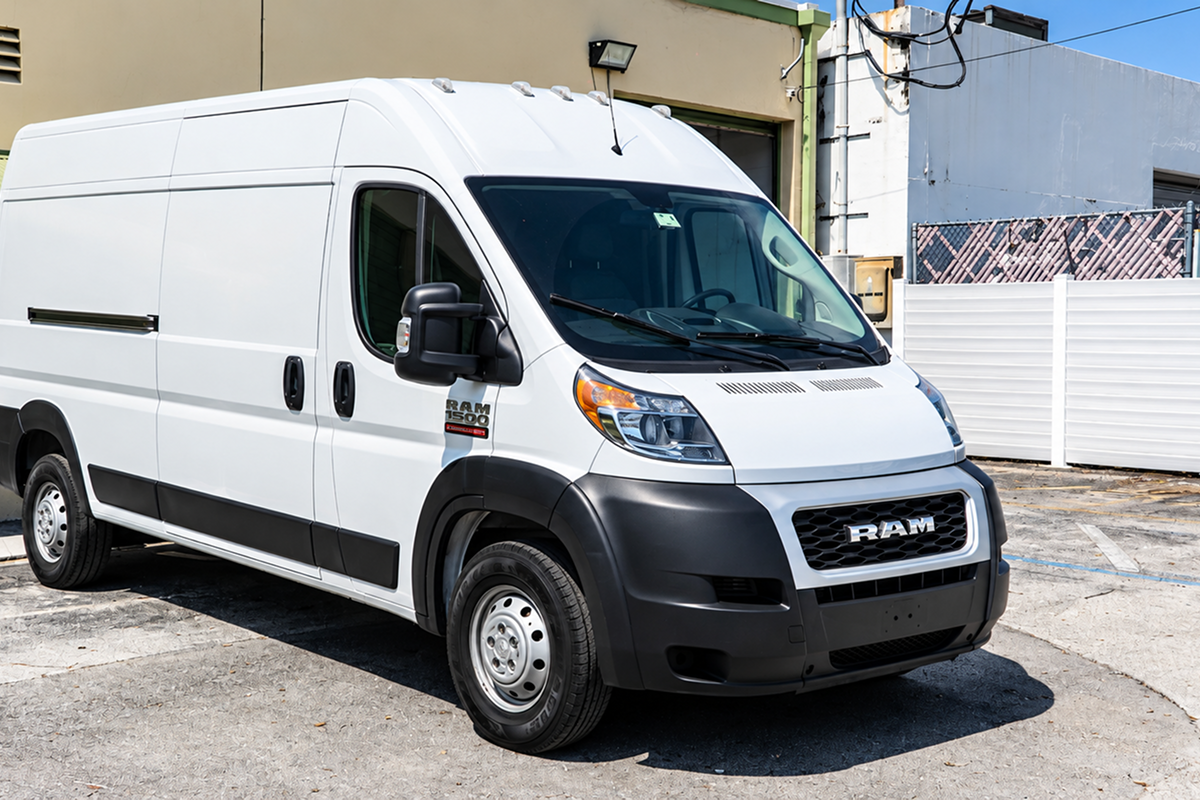
RAM ProMaster reliability comes up in almost every first conversation about a work van or camper built on Ram's platform. The van's simple layout and widely used gas V6 give it a solid foundation, but how long it stays dependable depends on payload, maintenance, and the quality of the build itself. At Mango Vans, we convert ProMasters for businesses and travelers, so here is what we watch for before and after a build.
What Sits Under the Hood?
Every ProMaster cargo van uses Ram's 3.6L Pentastar V6, rated at about 276 horsepower and 250 lb-ft of torque. Ram's ProMaster fact sheet pairs it with a TorqueFlite nine-speed automatic, and Ram's buyer's guide lists regular unleaded fuel and a chain-driven valvetrain rather than a timing belt.
That combination keeps the powertrain relatively uncomplicated. There is no turbocharger to maintain and no diesel exhaust fluid to refill, and Stellantis uses this engine family across many of its trucks and SUVs, so most dealers and independent shops have worked on it. Ram lists a maximum oil change interval of 10,000 miles, though heavy loads and Florida heat are good reasons to change it sooner.
Why Front-Wheel Drive Changes the Equation
The ProMaster is the only one of the three major cargo vans that sends power to the front wheels. Ram packages the engine, transmission, and drive components ahead of the cargo area, so there is no driveshaft or rear differential under the floor. That keeps the load floor low and leaves fewer moving parts beneath a finished build.
For RAM ProMaster reliability, the trade-off sits at the front axle. The same two tires steer, brake, and drive the van, so they tend to wear faster than the rears, especially under a heavy build. A layout that piles weight behind the rear axle also takes load off those front tires, which can reduce traction on steep, wet, or loose surfaces. There is no AWD version, so owners who expect snow, sand, or rough roads usually look elsewhere.
Where Do ProMasters Need the Most Attention?
Good RAM ProMaster reliability usually comes down to a few habits. Owners rotate and replace front tires on schedule, keep the alignment in check, and service the automatic transmission according to Ram's maintenance guide. The brakes include electronic wear sensors that warn the driver before the pads run thin, which helps prevent a small job from turning into a rotor replacement.
Buying used adds a few steps. Run the VIN through NHTSA's recall lookup, review the service history, and have a technician inspect the front end, brakes, and fluids. Older ProMasters used a different automatic transmission, so records matter more than the badge.
How Does a Conversion Affect RAM ProMaster Reliability?
A build changes the van more than most owners expect. Cabinets, batteries, water tanks, and passengers all count against payload, and a van that runs near its limit every day wears through tires, brakes, and suspension parts faster. Planning the layout around the van's payload rating protects RAM ProMaster reliability more than any single component choice.
Electrical design matters too. A house battery system that charges from the alternator should be sized and wired so it never drains the starting battery. Ram offers a higher-output alternator on many ProMasters, and our electrical and alternator charging upgrades are built around Victron components for exactly that reason. Every roof penetration and body fastener is also a potential leak or rust point, so how a build is mounted matters as much as what goes into it.
Is the ProMaster the Right Platform for You?
The ProMaster earns its place with width, a low load floor, and a straightforward gas powertrain. Those traits make it a strong base for campers that sleep crosswise and for businesses where customers step aboard, which is why the mobile retail store we built for a global athletic apparel company rides on one. Our post on why the ProMaster suits mobile businesses covers the commercial case in more detail.
It is a weaker fit for off-pavement travel, since there is no AWD option. If your plans include trailheads and forest roads, a Sprinter or Transit with AWD may serve you better. Size matters as well, and our guide to RAM ProMaster dimensions shows how each wheelbase and roof affects the layout of custom adventure vans.
Reliability Starts Before the Build
RAM ProMaster reliability is less about the badge and more about how the van is chosen, loaded, and maintained. Match the platform to your routes, keep the build within payload, and stay ahead of tires, brakes, and fluids, and a ProMaster can carry a business or a household for a long time. If you would like help deciding whether a ProMaster fits your plans, our team is happy to talk it through.
Frequently Asked Questions
Are RAM ProMasters reliable?
RAM ProMaster reliability rests on a widely used 3.6L V6, a nine-speed automatic, and a simple front-wheel-drive layout. Like any work van, it stays dependable when owners keep up with maintenance and stay within payload.
What engine does the RAM ProMaster use?
The ProMaster cargo van uses Ram's 3.6L Pentastar V6, rated at about 276 horsepower and 250 lb-ft of torque, paired with a nine-speed transmission.
How long do RAM ProMaster vans last?
Service life depends on maintenance, load, and driving conditions. Regular fluid changes, tire care, and staying under the payload rating give any ProMaster the best chance at a long working life.
Is the ProMaster available with AWD?
No. Every ProMaster is front-wheel drive. Owners who need AWD for snow, sand, or rough roads usually look at the Mercedes-Benz Sprinter or Ford Transit instead.
How often does a ProMaster need an oil change?
Ram lists a maximum recommended interval of 10,000 miles for this V6. Heavy loads, towing, and extreme heat are good reasons to change the oil sooner.
Does a camper conversion hurt ProMaster reliability?
It can if the build overloads the van or is poorly mounted. A layout planned around payload, with proper wiring and sealed roof penetrations, adds comfort without adding mechanical strain.
What should I check before buying a used ProMaster?
Run the VIN through NHTSA's recall lookup, review the service records, and inspect the front tires, brakes, and fluids. A pre-purchase inspection by a technician familiar with Ram vans is worth the time.
Is a ProMaster easier to maintain than a Sprinter?
A gas ProMaster avoids diesel exhaust fluid and diesel emissions parts, and many independent shops already service this V6. Actual costs still depend on mileage, load, and how well the van is maintained.